
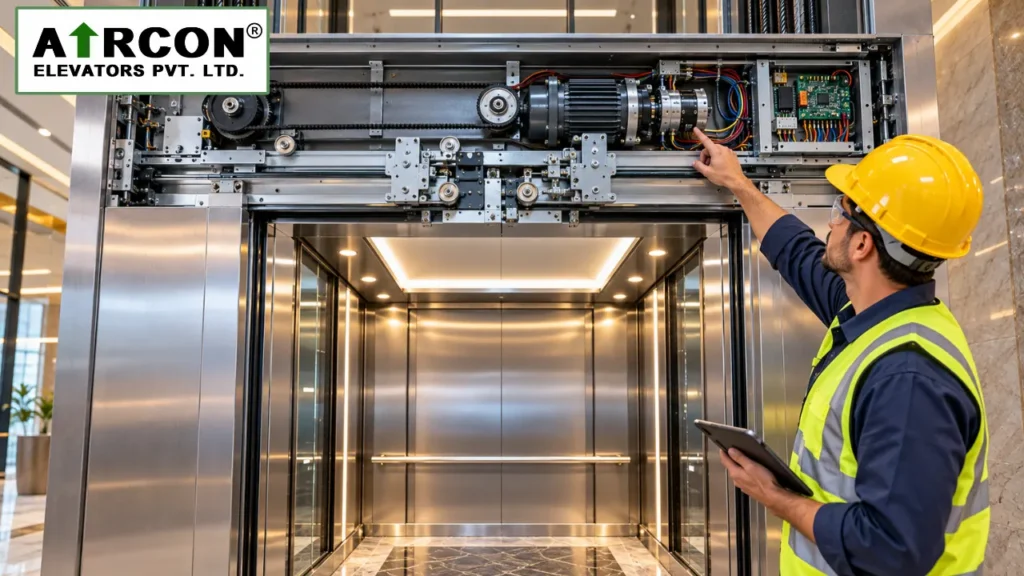
Elevator door operators are one of the most important components of any modern elevator system. Every time an elevator arrives at a floor, opens its doors smoothly, waits for passengers to enter or exit, and closes safely before moving again, the entire process is controlled by the elevator door operator. Although passengers rarely notice this hidden mechanism, it plays a critical role in ensuring safe, reliable, and comfortable elevator operation.
Whether you’re a homeowner installing a home elevator, a builder planning a new project, a facility manager responsible for elevator maintenance, or simply interested in elevator technology, understanding how an elevator door operator works helps you appreciate one of the most important safety systems inside every automatic elevator. In addition, it helps you understand why proper maintenance is essential. Moreover, a properly functioning door operator improves passenger convenience, reduces downtime, minimizes maintenance costs, and enhances overall elevator safety.
In this guide, you’ll learn what an elevator door operator is, how it works, its main components, different types, common problems, maintenance tips, and when replacement becomes necessary.
What Is an Elevator Door Operator?
An elevator door operator is an electromechanical device installed on top of the elevator cabin that controls the opening and closing of the elevator doors. It receives commands from the elevator controller and converts electrical signals into precise mechanical movement, allowing the doors to open and close automatically. As a result, passengers experience smooth and reliable door operation.
In contrast, automatic elevators rely on the door operator to manage door movement accurately and safely, while manual elevator doors require passengers to slide or pull the gate themselves.
Firstly, the door operator performs several important tasks:
- Opens the elevator doors smoothly when the cabin reaches the selected floor.
- Closes the doors safely before the elevator starts moving.
- Controls the opening and closing speed.
- Detects obstructions through safety sensors.
- Reopens the doors automatically if someone or something blocks the entrance.
- Coordinates with the elevator controller to ensure the elevator only moves after the doors are completely closed and locked.
Therefore, without a properly functioning door operator, an automatic elevator cannot operate safely or efficiently.
Why Is the Elevator Door Operator Important?
Many people believe that the elevator motor is the most important part of an elevator. While the traction machine moves the elevator cabin, the door operator is responsible for one of the most frequently used functions of the entire system.
For example, in a busy commercial building, elevator doors may open and close thousands of times every day. Each cycle must be accurate, smooth, and safe to prevent accidents and reduce wear on mechanical components.
A high-quality elevator door operator offers several important benefits:
1. Improves Passenger Safety
The door operator works together with door sensors and safety circuits to prevent the doors from closing on passengers. If an object or person is detected in the doorway, the system immediately reopens the doors.
Furthermore, modern elevators also integrate advanced safety features with Elevator Door Sensor Technologies to detect even small obstructions, improving passenger protection in residential and commercial buildings.
2. Provides Smooth and Quiet Door Operation
Modern door operators use intelligent motor control technology that allows the doors to accelerate and decelerate smoothly.
Instead of slamming shut, the doors move with controlled speed, reducing vibration, noise, and mechanical stress. Consequently, passengers enjoy a smoother ride.
As a result, this controlled movement creates a better passenger experience while extending the lifespan of the entire door system.
3. Prevents Elevator Downtime
A malfunctioning door system is one of the most common reasons elevators become temporarily unavailable.
Therefore, regular inspection and preventive maintenance help identify worn door operator components before they fail, reducing unexpected breakdowns and costly emergency repairs.
Building owners who already follow a regular Elevator Maintenance Checklist often experience fewer door-related service interruptions.
4. Reduces Mechanical Wear
Modern door operators continuously adjust motor torque and door speed based on operating conditions.
This intelligent control reduces unnecessary force on components such as:
- Rollers
- Belts
- Tracks
- Door panels
- Clutch mechanisms
As a result, maintenance costs remain lower over the life of the elevator.
5. Improves Passenger Comfort
Similarly, one of the first things passengers notice when using an elevator is how smoothly the doors operate.
Smooth, quiet, and accurate door movement creates a premium user experience, while noisy or jerky doors often indicate maintenance issues.
For example, this is especially important in:
- Luxury residential buildings
- Hotels
- Hospitals
- Shopping malls
- Corporate offices
6. Supports Overall Elevator Safety
Meanwhile, the elevator controller continuously communicates with the door operator throughout every journey.
Before allowing the elevator cabin to move, the controller verifies that:
- The doors are fully closed.
- The door locks are securely engaged.
- No obstruction is detected.
- All safety circuits are functioning correctly.
After that, once the controller confirms these conditions, the elevator can begin moving.
This coordination makes the door operator one of the most important safety systems in a modern elevator.
Where Is the Elevator Door Operator Installed?
Manufacturers typically mount the elevator door operator on the top of the elevator cabin, directly above the cabin doors. From this position, it can efficiently control the opening and closing mechanism through belts, arms, rollers, or linkages connected to the door panels.
As a result, passengers usually never see this equipment during normal elevator operation because it remains above the cabin.
For instance, depending on the elevator design, the door operator may be installed in:
- Passenger elevators
- Home elevators
- Hospital elevators
- Commercial elevators
- Machine Room-Less (MRL) elevators
- High-speed elevators
Although the installation location remains similar, the design, motor capacity, and control technology may vary depending on the elevator’s size, speed, and intended application.
Main Components of an Elevator Door Operator
An elevator door operator consists of several mechanical and electrical components that work together to ensure the doors open and close smoothly, accurately, and safely. Moreover, each component has a specific function, so even a minor fault in one part can affect the entire door system.
Now, let’s understand the main components one by one.
1. Door Operator Motor
The door operator motor is the driving force behind the entire door mechanism. It converts electrical energy into rotational motion, allowing the elevator doors to open and close automatically.
Moreover, modern elevators commonly use energy-efficient AC or VVVF-controlled motors because they provide:
- Smooth acceleration and deceleration
- Quiet operation
- Better energy efficiency
- Longer service life
- Precise speed control
Depending on passenger traffic and operating conditions, the controller automatically adjusts the motor speed to ensure the doors move smoothly, accurately, and without sudden impact.
2. Door Controller
The door controller acts as the brain of the door operator system.
It receives commands from the main elevator controller and determines exactly when the doors should:
- Open
- Stop
- Remain open
- Close
- Reopen if an obstruction is detected
It also monitors motor performance and ensures the doors move at the correct speed. Meanwhile, it continuously communicates with the main controller.
3. Drive Belt or Timing Belt
The motor transfers its rotational movement to the doors through a specially designed drive belt or timing belt.
As a result, the belt helps provide smooth door movement while minimizing vibration and mechanical wear.
A worn or loose belt may cause:
- Jerky door movement
- Delayed opening
- Unusual noise
- Door slipping
Therefore, regular inspections help prevent unexpected failures.
4. Door Rollers
Similarly, door rollers allow the elevator doors to slide smoothly along the guide track.
High-quality rollers reduce:
- Friction
- Noise
- Vibration
- Mechanical stress
Consequently, worn rollers can eventually cause rough door movement or door misalignment.
5. Door Guide Track
Similarly, the guide track keeps the doors moving in a straight and stable path.
It prevents unwanted movement and ensures both door panels remain properly aligned during opening and closing.
Furthermore, any dirt, dust, or physical damage to the track can affect door performance.
6. Door Clutch Mechanism
The clutch is responsible for connecting the elevator cabin door with the landing door.
When the elevator reaches a floor, the clutch engages both doors so they open together.
As the doors close, the clutch disengages automatically before the elevator begins moving.
Most importantly, this synchronization ensures that passengers can only access the landing when the elevator cabin is present.
7. Door Sensors
Modern elevator door operators work closely with door safety sensors to detect passengers or objects in the doorway.
If something blocks the entrance, the sensors immediately send a signal to the controller, which stops the closing action and reopens the doors automatically.
Therefore, this feature significantly improves passenger safety.
To understand these safety devices in greater detail, you can also read our guide on Elevator Door Sensor Technologies.
8. Encoder (Position Feedback Device)
In addition, many modern elevator door operators include an encoder attached to the motor.
The encoder continuously sends position and speed feedback to the controller, allowing it to:
- Monitor door movement
- Adjust motor speed
- Stop the doors accurately
- Detect abnormal movement
In addition, this feedback helps the system achieve smooth, quiet, and consistent door operation.
How an Elevator Door Operator Works (Step-by-Step)
In other words, passengers only see the doors opening and closing, but several control and safety processes occur within those few seconds.
Next, here’s how the complete system works.
Step 1: Elevator Reaches the Selected Floor
As the elevator approaches the destination floor, the main controller gradually slows the cabin and brings it to a precise stop.
Only after confirming accurate leveling does the controller begin the door-opening sequence.
Step 2: Controller Sends an Opening Command
Once the elevator is safely positioned, the controller sends an electrical signal to the door operator.
This signal instructs the door motor to start rotating in the opening direction. Then, the opening sequence begins.
Step 3: Motor Drives the Door Mechanism
After that, the motor transfers its rotational movement through the timing belt or drive mechanism.
This movement pulls the door panels smoothly along their guide tracks.
Instead of opening suddenly, the doors accelerate gradually to provide a comfortable passenger experience.
Step 4: Door Sensors Continuously Monitor the Entrance
While the doors are opening and while they remain open, safety sensors continuously scan the entrance.
For example, if someone is entering or exiting, the controller can extend the door-open time automatically.
If an object blocks the doorway while the doors are closing, the sensors immediately stop the movement and command the doors to reopen.
During this process, the controller also receives continuous position feedback from the door encoder, allowing it to monitor door movement in real time. This intelligent coordination helps ensure accurate door operation while reducing the risk of passenger injuries.
Step 5: Door Closing Begins
After the preset waiting time expires, the controller instructs the motor to close the doors.
Next, the doors move toward each other with carefully controlled speed.
Meanwhile, as the doors approach the fully closed position, the motor slows them down to reduce impact and mechanical wear.
Step 6: Door Lock Verification
Once the doors are completely closed, the locking mechanism engages.
The elevator controller verifies that:
- The cabin doors are fully closed.
- The landing doors are securely locked.
- All door safety circuits are functioning normally.
Finally, after receiving these confirmations, the controller allows the elevator to move to the next floor.
Simple Example to Understand the Working
Imagine an automatic sliding glass door at a shopping mall.
A motor opens the door, sensors detect people, and the controller decides when the door should close.
An elevator door operator works on the same basic principle—but with much higher precision, additional safety circuits, and strict synchronization with the elevator controller to ensure passenger safety.
Types of Elevator Door Operators
Different elevators use different types of door operators depending on the building, traffic volume, elevator speed, and performance requirements. Therefore, selecting the right type is important. However, although their basic function remains the same, the technology used to control the doors can vary significantly.
The most common types include the following:
1. AC Door Operator
Traditionally, the AC door operator is one of the most common door operating systems found in older elevators and some budget-friendly installations.
It uses an AC motor to open and close the doors. While it performs the basic operation effectively, it offers less precise speed control compared to modern systems.
Advantages
- Simple design
- Lower installation cost
- Easy maintenance
- Suitable for low-rise buildings
Limitations
- Less energy efficient
- Slightly noisier operation
- Limited speed control
- More mechanical wear over time
2. VVVF Door Operator
The VVVF (Variable Voltage Variable Frequency) door operator is the most commonly used system in modern elevators.
Instead of running the motor at a fixed speed, the VVVF controller continuously adjusts voltage and frequency to achieve smooth and accurate door movement.
Advantages
- Smooth opening and closing
- Quiet operation
- Energy efficient
- Reduced mechanical stress
- Longer component life
- Better passenger comfort
As a result, VVVF technology is widely used in residential, commercial, and high-rise elevators because it provides smoother and more precise door control.
3. Linear Door Operator
A linear door operator moves the doors using a direct linear motion mechanism instead of relying on conventional rotating drive systems.
This design offers:
- High positioning accuracy
- Faster response
- Reduced mechanical complexity
- Smooth operation
Therefore, manufacturers commonly use linear systems in premium elevators where precision and reliability are priorities.
4. Heavy-Duty Door Operator
Likewise, heavy-duty door operators are specifically designed for elevators that experience frequent use or carry heavy loads.
These are commonly installed in:
- Hospitals
- Shopping malls
- Airports
- Hotels
- Industrial buildings
- Commercial complexes
They use stronger motors, reinforced belts, durable rollers, and robust mechanical components to withstand thousands of operating cycles every day.
Common Elevator Door Operator Problems
Since elevator doors operate continuously throughout the day, the door operator is naturally subject to wear and tear. Therefore, regular inspections are essential. Recognizing these issues at an early stage allows maintenance teams to address them before they develop into major faults, reducing both unexpected downtime and repair expenses.
Like any mechanical system, an elevator door operator can develop faults over time due to continuous daily operation. Below are some of the most common problems technicians encounter during inspection and maintenance.
1. Doors Open Slowly
If the doors take longer than usual to open, For example, For example, possible causes include:
- Weak motor performance
- Loose drive belt
- Low operating voltage
- Controller calibration issues
- Mechanical resistance
2. Doors Close Very Slowly
Slow door closing may result from:
- Dirty guide tracks
- Excessive friction
- Worn rollers
- Incorrect controller settings
- Motor speed reduction
3. Doors Reopen Repeatedly
Sometimes the doors begin closing but immediately reopen without anyone standing in the entrance.
For example, possible causes include:
- Dirty safety sensors
- Misaligned sensors
- Faulty sensor wiring
- Controller communication issues
Consequently, if this problem continues, the elevator may become temporarily unavailable until technicians resolve the fault.
4. Jerky Door Movement
Jerky or uneven movement usually indicates excessive mechanical wear.
Similarly, common reasons include:
- Damaged rollers
- Loose timing belt
- Worn bearings
- Improper lubrication
- Misaligned guide track
If these warning signs are overlooked, minor issues can gradually develop into more serious mechanical problems that require extensive repairs.
5. Excessive Door Noise
Unusual sounds during door movement often indicate maintenance is required.
For instance, noise may come from:
- Dry rollers
- Loose hardware
- Worn bearings
- Belt slipping
- Track contamination
Timely maintenance can often correct these conditions early, helping avoid more extensive repairs and reducing long-term maintenance costs.
6. Doors Fail to Open
If passengers press the hall button but the doors remain closed, the cause may include:
- Door motor failure
- Electrical supply interruption
- Controller fault
- Damaged belt
- Encoder malfunction
A trained elevator technician should thoroughly inspect the system and confirm that it is functioning safely before returning the elevator to normal operation.
7. Doors Do Not Close Completely
An elevator will not start moving until the doors are fully closed and locked.
Typical causes include:
- Obstruction in the doorway
- Faulty door clutch
- Misaligned rollers
- Mechanical damage
- Incorrect door alignment
Common Causes of Elevator Door Operator Failure
Although door operators are designed for long-term operation, several factors can shorten their lifespan.
The most common causes include the following. For example:
- Lack of preventive maintenance
- Dust and dirt accumulation
- Worn drive belts
- Damaged rollers
- Loose electrical connections
- Faulty door sensors
- Poor lubrication
- Continuous heavy usage
- Water or moisture exposure
- Aging electrical components
Routine inspections make it easier to detect developing issues early, allowing corrective action before they impact the elevator’s performance or reliability.
Elevator Door Operator Maintenance Checklist
A structured maintenance schedule improves reliability and extends the life of the entire door system.
Firstly – Weekly Inspection
- Check door opening and closing speed.
- Listen for unusual sounds.
- Clean visible dust from tracks.
- Verify smooth door movement.
Secondly – Monthly Inspection
- Inspect drive belt condition.
- Check door rollers for wear.
- Test safety sensors.
- Tighten loose fasteners.
- Inspect electrical wiring.
Next – Quarterly Inspection
- Verify motor performance.
- Check clutch alignment.
- Inspect guide tracks.
- Test controller response.
- Examine encoder feedback if installed.
Finally – Annual Inspection
- Replace worn rollers if required.
- Inspect all moving components.
- Test complete door safety operation.
- Calibrate controller settings.
- Perform a comprehensive preventive maintenance inspection.
Following a regular Elevator Maintenance Checklist helps reduce unexpected failures and extends the service life of door operator components.
Repair or Replacement: Which Is the Better Option?
Not every problem requires replacing the complete door operator.
Generally, repair is recommended when:
- The drive belt is worn.
- Rollers need replacement.
- Sensors require cleaning.
- Minor wiring faults are found.
- Lubrication is needed.
- Controller settings need adjustment.
Technicians can usually complete these repairs quickly and cost-effectively. In many situations, repairing individual components is more economical than replacing the complete door operator. However, when several major parts have reached the end of their service life, replacing the entire assembly can provide better long-term reliability, improved performance, and lower maintenance costs.
However, replacement may be necessary when:
- The motor has failed completely.
- The controller is beyond repair.
- Multiple major components are severely worn.
- Spare parts are no longer available.
- The system has become unreliable due to age.
In older elevators, upgrading to a modern door operator can improve reliability, reduce maintenance costs, and enhance passenger comfort. Building owners considering a system upgrade may also benefit from exploring Elevator Modernization Services to improve overall elevator performance.
Tips to Extend the Life of an Elevator Door Operator
An elevator door operator is designed to perform thousands of opening and closing cycles every month. However, its lifespan depends largely on proper maintenance and timely inspections.
Therefore, following these best practices can significantly improve reliability and reduce long-term maintenance costs.
1. Perform Regular Preventive Maintenance
As a result, routine inspections help identify worn components before they lead to major failures. A preventive maintenance schedule reduces unexpected downtime and improves passenger safety.
2. Keep Door Tracks Clean
Dust, dirt, and small debris can accumulate inside the guide tracks, increasing friction and causing rough door movement.
Additionally, cleaning the tracks regularly helps maintain smooth operation.
3. Inspect Rollers and Belts Periodically
Door rollers and timing belts experience continuous movement throughout the day.
Replace worn components before they begin affecting door performance.
4. Test Door Sensors Frequently
Most importantly, door sensors are essential for passenger safety.
Ensure they correctly detect people and objects and reopen the doors whenever an obstruction is present.
5. Lubricate Moving Components
Only lubricate the parts recommended by the elevator manufacturer.
Avoid excessive lubrication, as it may attract dust and increase wear.
6. Tighten Loose Hardware
Continuous vibration can gradually loosen bolts, brackets, and fasteners.
Regular inspections help prevent unnecessary mechanical problems.
7. Respond Quickly to Unusual Noise
Grinding, squeaking, or knocking sounds often indicate worn mechanical parts.
Consequently, ignoring these warning signs can result in more expensive repairs later.
8. Schedule Annual Professional Inspection
Above all, even if the elevator appears to operate normally, annual inspections by qualified elevator technicians help ensure the entire door operator system remains safe and reliable.
Additionally, Maintenance Tips for Building Owners
Besides professional servicing, building owners and facility managers can also help extend the lifespan of an elevator door operator by following a few simple practices.
Firstly, keep the doorway and guide tracks free from dust and debris.
Secondly, never force elevator doors open manually.
Report unusual noises or jerky door movement immediately.
Avoid repeatedly blocking the doors while they are closing.
Ensure preventive maintenance is carried out on schedule.
Frequently Asked Questions (FAQs)
An elevator door operator is a mechanical and electrical assembly mounted above the elevator cabin that controls the automatic opening and closing of the elevator doors. It works through a combination of a drive motor, electronic controller, belts, and built-in safety devices to ensure smooth and reliable door movement.
Manufacturers usually mount it on the top of the elevator cabin above the cabin doors, where it controls both the cabin and landing door movement.
When the elevator reaches the selected floor, the main controller sends an operating command to the door operator. The motor then transfers motion through belts or mechanical linkages, allowing the elevator doors to open or close in a controlled manner. Safety sensors continuously monitor the doorway, and the doors only close when the entrance is clear.
During the closing cycle, the safety sensors continuously monitor the doorway. If they detect a person or any obstruction, the control system instantly reverses the closing action and opens the doors again to help ensure passenger safety.
Common signs include:
Slow door movement
Jerky opening or closing
Excessive noise
Doors not closing completely
Frequent reopening
Door-related fault codes
Technicians should perform visual inspections regularly and follow the preventive maintenance schedule recommended by the elevator manufacturer.
Yes. Many issues such as worn belts, rollers, sensors, or electrical connections can usually be repaired. However, severely damaged motors or obsolete systems may require complete replacement.
In Conclusion
Although passengers rarely notice it, the elevator door operator performs one of the most critical functions in every automatic elevator. From controlling smooth door movement to working with safety sensors and the elevator controller, it plays a vital role in ensuring safe, reliable, and efficient elevator operation.
A properly maintained door operator not only enhances passenger comfort but also reduces mechanical wear, minimizes unexpected downtime, and extends the lifespan of the entire elevator system. Whether you own a home elevator or manage elevators in a commercial building, understanding how this system works enables you to make smarter maintenance and modernization decisions.
In conclusion, following a preventive maintenance schedule, responding quickly to early warning signs, and replacing worn components when necessary can improve elevator reliability and support safe operation for years to come.
For buildings in India, elevator installation, operation, and maintenance should always comply with the applicable safety requirements issued by the Bureau of Indian Standards (BIS).