
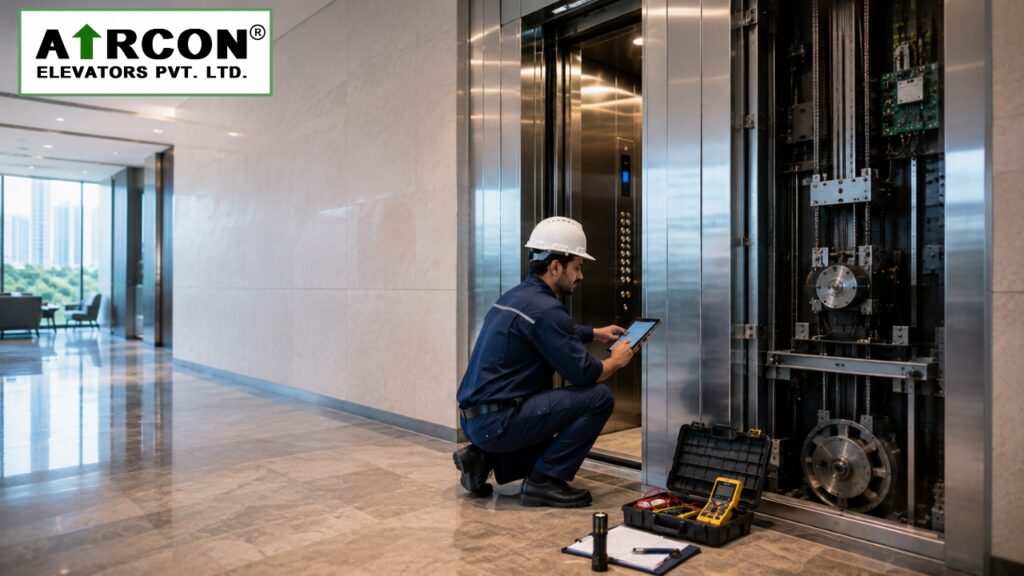
Elevators play an important role in residential apartments, offices, hospitals, hotels, and commercial buildings. Since they operate throughout the day, normal wear and tear is unavoidable. However, many major elevator failures begin as small issues that building owners often overlook.
The good news is that preventive maintenance can identify these problems early, improve safety, reduce downtime, and extend the elevator’s service life. Regular inspections, cleaning, lubrication, testing, and timely replacement of worn components help prevent unexpected breakdowns.
Let’s look at the most common elevator problems and how preventive maintenance helps solve them.
1. Elevator Doors Don’t Open or Close Properly
Door-related issues are among the most common reasons for elevator service calls. Dirty tracks, worn rollers, faulty sensors, or misaligned doors can prevent smooth operation.
How Preventive Maintenance Helps
During scheduled maintenance, technicians:
- Clean door tracks and rollers
- Check door sensors and interlocks
- Adjust door alignment
- Replace worn door components if needed
Regular servicing keeps the doors operating smoothly and reduces unexpected shutdowns.
2. Jerky Ride or Unusual Noise
If passengers notice shaking, vibration, grinding, or squeaking sounds, the elevator may have worn mechanical parts or lubrication issues.
Ignoring these signs can lead to more expensive repairs later.
How Preventive Maintenance Helps
Technicians inspect and lubricate moving parts, tighten loose components, and check the drive system, guide rails, bearings, and motor for wear.
Fixing minor mechanical issues early improves ride comfort and prevents further damage.
3. Elevator Stops Between Floors
An elevator that suddenly stops or fails to respond can result from electrical faults, control system problems, or worn mechanical components.
How Preventive Maintenance Helps
Routine inspections include testing:
- Control panels
- Electrical connections
- Safety circuits
- Emergency communication systems
- Automatic Rescue Device (ARD), where installed
Early detection of electrical faults helps reduce unexpected breakdowns and improves passenger safety.
4. Incorrect Floor Leveling
When an elevator stops above or below the floor level, passengers may face a tripping hazard, especially older adults and people with mobility challenges.
How Preventive Maintenance Helps
Technicians inspect the leveling system, controller, drive, and sensors to ensure accurate stopping at every floor.
Regular calibration helps maintain smooth and precise floor leveling while improving passenger comfort.
5. Rising Maintenance Costs
Many building owners continue repairing the same elevator repeatedly without addressing the root cause.
Over time, emergency repairs become more expensive than planned maintenance.
How Preventive Maintenance Helps
Preventive maintenance identifies worn parts before they fail completely. Replacing components during scheduled service visits reduces emergency call-outs, lowers repair costs, and minimizes downtime.
A maintenance log also helps technicians track recurring issues and plan future repairs more effectively.
Benefits of Preventive Elevator Maintenance
A well-planned maintenance program offers several long-term advantages:
- Improves passenger safety
- Reduces unexpected breakdowns
- Extends elevator lifespan
- Lowers repair expenses
- Improves ride quality
- Helps maintain reliable daily operation
Regular maintenance is an investment that protects both your elevator and your building occupants.
How Aircon Elevators Can Help
At Aircon Elevators Pvt. Ltd., we provide professional elevator maintenance, inspection, repair, and modernization services for residential, commercial, industrial, and institutional buildings.
Our experienced engineers inspect every major system, identify potential issues before they become serious, and recommend practical solutions that improve safety, reliability, and performance.
With a proactive maintenance plan, you can reduce downtime and keep your elevator operating smoothly throughout the year.
Frequently Asked Questions
Most commercial elevators benefit from monthly preventive maintenance, although the schedule may vary depending on usage, manufacturer recommendations, and local regulations.
Door malfunctions are among the most common elevator issues because doors operate thousands of times every week.
Yes. Regular inspections identify small issues early, helping building owners avoid major repairs and unexpected breakdowns.
No. Grinding, vibration, or jerky movement often indicate mechanical wear and should be inspected by a qualified technician as soon as possible.
Most elevator problems don’t appear overnight. They usually begin as small issues that grow worse when maintenance is delayed.
By investing in preventive elevator maintenance, building owners can improve safety, reduce repair costs, extend equipment life, and provide a smoother experience for passengers.
If your elevator shows signs of poor performance or frequent breakdowns, a professional inspection from Aircon Elevators Pvt. Ltd. can help identify the problem before it becomes a costly failure.