
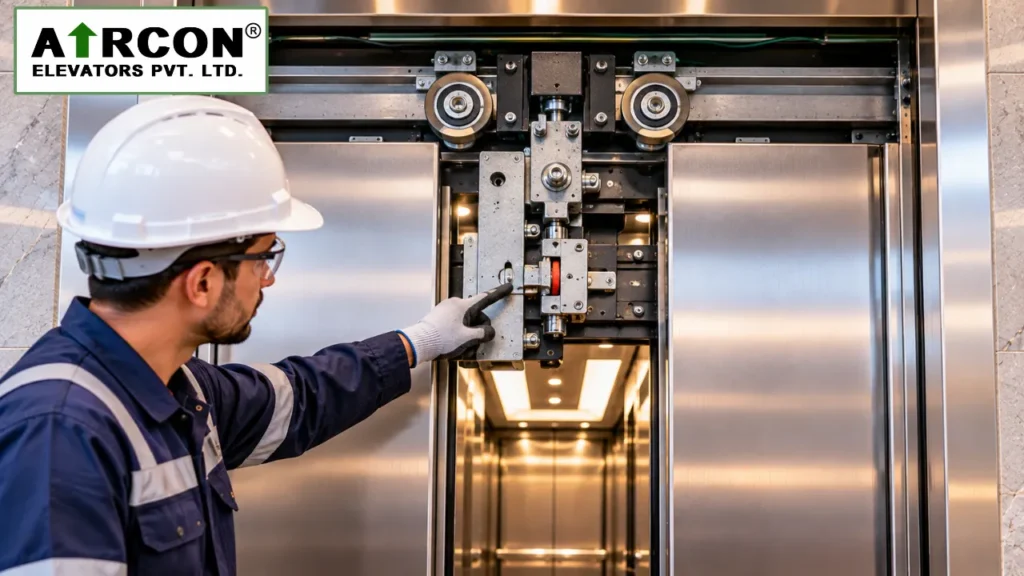
Every time an elevator stops at a floor, the cabin doors and the landing doors open together in perfect synchronization. Most passengers assume the doors simply slide open automatically, but a hidden mechanical component makes this coordinated movement possible—the elevator door clutch.
Although it is rarely visible to passengers, the elevator door clutch plays a critical role in every automatic elevator. It connects the moving cabin door with the landing door only when the elevator reaches the correct floor. Without this mechanism, the landing doors would remain locked, passengers could not enter or exit safely, and the elevator would not function as intended.
Whether you own a home elevator, manage a commercial building, or simply want to understand elevator technology, learning how an elevator door clutch works can help you appreciate one of the most important safety and door-operating components inside an elevator system. Moreover, understanding its operation can help identify common issues early, reduce maintenance costs, and improve long-term reliability.
In this guide, you’ll learn what an elevator door clutch is, how it works, its key components, different types, common problems, maintenance tips, and when repair or replacement becomes necessary.
What Is an Elevator Door Clutch?
An elevator door clutch is a mechanical coupling device installed on the elevator cabin door system. Its primary function is to temporarily connect the cabin doors with the landing doors whenever the elevator reaches a designated floor. As a result, both sets of doors open and close together in a smooth, synchronized motion.
Unlike manual elevator systems, where passengers operate the landing gate themselves, automatic elevators depend on the door clutch to transfer the cabin door movement to the landing doors safely and accurately.
In other words, the door clutch acts as a bridge between the moving elevator cabin and the stationary landing doors. It engages only when the elevator is correctly positioned at a floor and disengages before the elevator starts moving again.
A properly functioning elevator door clutch performs several important tasks:
- Couples the cabin door with the landing door.
- Opens both doors simultaneously.
- Ensures smooth and synchronized door movement.
- Helps maintain proper door alignment.
- Supports safe passenger entry and exit.
- Works with the door operator and safety systems before every trip.
Without a properly adjusted door clutch, an automatic elevator cannot operate efficiently because the landing doors will not open correctly.
Why Is the Elevator Door Clutch Important?
Many people think the elevator door operator alone controls the entire door system. However, the door operator can only move the cabin doors directly. The elevator door clutch is the component that transfers this movement to the landing doors, allowing both doors to operate together.
Because elevators complete hundreds or even thousands of door cycles every day, the clutch must engage and disengage accurately during every trip. Consequently, even a small mechanical issue can affect door performance and passenger convenience.
Below are the major reasons why the elevator door clutch is so important.
1. Synchronizes Cabin and Landing Doors
Firstly, the primary purpose of the door clutch is to connect the cabin door with the landing door at the correct time.
As soon as the elevator reaches a floor, the clutch engages the landing door mechanism, allowing both doors to move together.
As a result, this synchronized movement ensures smooth passenger entry and exit while maintaining safe operation.
2. Improves Passenger Safety
Above all, passenger safety depends heavily on proper door operation.
The door clutch helps ensure that landing doors open only when the elevator cabin is correctly positioned at that floor. Therefore, it prevents accidental access to an empty elevator shaft.
Modern elevators also combine the clutch mechanism with advanced Elevator Door Sensor Technologies, creating multiple layers of protection during every door cycle.
3. Supports Smooth Door Operation
A properly adjusted door clutch allows the cabin and landing doors to move together without unnecessary friction or impact.
As a result, passengers experience quieter, smoother, and more reliable door operation while mechanical stress on the system remains lower.
4. Reduces Mechanical Wear
When the clutch engages correctly, the forces acting on the door panels remain balanced.
Consequently, components such as rollers, guide shoes, tracks, and linkages experience less wear over time.
Consequently, this helps extend the service life of the complete door assembly.
5. Helps Prevent Elevator Downtime
Door-related faults are among the most common reasons elevators become temporarily unavailable.
Regular inspection of the door clutch allows technicians to detect worn or misaligned components before they develop into larger mechanical failures.
For this reason, preventive maintenance helps reduce unexpected service interruptions and expensive emergency repairs.
6. Works with Other Door Safety Components
The elevator door clutch does not work independently.
Instead, it operates together with several important systems, including:
- Door Operator
- Door Sensors
- Landing Door Lock
- Door Rollers
- Guide Tracks
- Elevator Controller
Together, these components ensure that every door cycle remains smooth, accurate, and safe.
Where Is the Elevator Door Clutch Installed?
The elevator door clutch is generally mounted on the top section of the elevator cabin door assembly, close to the door operator mechanism. This location allows it to engage the landing door mechanism whenever the elevator stops at a floor.
Although passengers cannot normally see the clutch during everyday operation, it becomes visible when technicians inspect the top of the elevator cabin during maintenance.
Depending on the elevator design, the door clutch is commonly installed in:
- Passenger elevators
- Home elevators
- Commercial elevators
- Hospital elevators
- Machine Room-Less (MRL) elevators
- High-rise elevators
Although the installation position remains similar across most elevator types, the clutch design may vary depending on the door configuration, opening mechanism, and manufacturer specifications.
Main Components of an Elevator Door Clutch
An elevator door clutch consists of several precision-engineered parts that work together to engage, release, and synchronize the cabin and landing doors. Each component has a specific role, and proper coordination between them ensures smooth, safe, and reliable door operation.
Let’s understand the main components one by one.
1. Elevator Door Clutch Arms
First of all, the clutch arms are the primary moving parts of the mechanism.
They extend outward when the elevator reaches a floor and engage the landing door rollers or locking mechanism. Afterward, they retract automatically before the elevator begins moving again.
Therefore, proper alignment of the clutch arms is essential for smooth door operation.
2. Elevator Door Clutch Rollers
Clutch rollers reduce friction during engagement and disengagement.
They allow the clutch arms to make smooth contact with the landing door mechanism while minimizing wear on both components.
Moreover, high-quality rollers also help reduce noise and improve long-term reliability.
3. Elevator Door Clutch Linkage Mechanism
The linkage mechanism transfers movement from the door operator to the clutch assembly.
As a result, the clutch engages and disengages at precisely the right moment during every door cycle.
As a result, a worn linkage may cause delayed or inconsistent door operation.
4. Return Springs
Return springs automatically bring the clutch arms back to their normal position after the landing doors have closed.
In addition, these springs help ensure consistent engagement during every elevator cycle.
If the springs weaken over time, the clutch may fail to disengage correctly.
5. Mounting Bracket
Moreover, the mounting bracket securely supports the entire clutch assembly on the elevator cabin.
A rigid mounting position keeps the mechanism properly aligned and minimizes vibration during continuous operation.
Therefore, loose brackets can lead to poor clutch engagement and increased mechanical wear.
6. Guide Rollers and Sliding Parts
Several guide rollers and sliding components help stabilize clutch movement.
These parts keep the mechanism aligned while reducing resistance during repeated opening and closing cycles.
Likewise, regular cleaning and inspection help maintain smooth operation and extend component life.
How an Elevator Door Clutch Works (Step-by-Step)
Although passengers simply see the elevator doors opening and closing, several mechanical actions take place within a few seconds. The elevator door clutch plays a vital role in synchronizing the cabin doors with the landing doors during every trip.
Let’s understand the complete working process step by step.
Step 1: The Elevator Reaches the Selected Floor
As the elevator approaches the selected floor, the main controller gradually slows the cabin and stops it at the correct landing level.
Only after the controller confirms accurate leveling does it begin the door-opening sequence.
Consequently, this ensures that the cabin aligns perfectly with the landing entrance before any door movement starts.
Step 2: The Door Operator Receives an Opening Command
Once the elevator is correctly positioned, the main elevator controller sends a command to the door operator.
Next, the door operator motor begins rotating and prepares to open the cabin doors.
At the same time, the door clutch moves into its engagement position.
Step 3: The Door Clutch Engages the Landing Door
As the cabin doors begin moving, the door clutch arms extend toward the landing door mechanism.
The clutch grips the landing door rollers or coupling assembly, temporarily connecting the landing doors with the cabin doors.
As a result, both doors become mechanically linked and move together as a single system.
Therefore, this engagement occurs only when the elevator is correctly aligned at the landing.
Step 4: Both Doors Open Together
After the clutch engages successfully, the door operator continues pulling the cabin doors.
Because the landing doors are now connected through the clutch, they move simultaneously with the cabin doors.
Consequently, passengers experience smooth and synchronized door opening without noticing the hidden mechanical process.
Step 5: Passengers Enter or Exit the Elevator
Once the doors reach the fully open position, the elevator remains stationary for a preset period.
During this time, passengers can safely enter or leave the elevator.
Meanwhile, the door sensors continuously monitor the entrance.
If someone is still walking through the doorway, the controller extends the door-open time automatically.
Step 6: The Doors Begin Closing
When the preset door-open time ends, the elevator controller instructs the door operator to begin the door-closing cycle.
The cabin doors begin moving toward the closed position.
Since the landing doors remain connected through the clutch, both sets of doors close together in perfect synchronization.
Step 7: The Door Clutch Releases the Landing Door
After both the cabin and landing doors are fully closed, the clutch releases the landing door mechanism automatically to complete the operating cycle.
The landing doors lock securely in place.
Afterward, the cabin doors remain closed while the elevator prepares for its next journey.
Step 8: Safety Checks Are Completed
Before allowing the elevator to move, the controller verifies several safety conditions.
These include:
- Cabin doors are completely closed.
- Landing doors are fully locked.
- Door clutch has disengaged properly.
- Safety circuits are functioning correctly.
- No door faults are detected.
Only then does the controller permit the elevator to travel to the next floor.
Simple Example to Understand the Working
For example, imagine two sliding doors connected by a temporary hook.
When you pull the first door, the hook grabs the second door, causing both doors to move together.
Once both doors close, the hook automatically releases, allowing each door to remain independent again.
The elevator door clutch works in a very similar way. It temporarily connects the moving cabin doors with the landing doors only while the elevator is safely positioned at a floor.
Types of Elevator Door Clutches
Different elevator manufacturers use different clutch designs depending on the elevator model, door configuration, and application. However, every clutch performs the same basic function—connecting the cabin doors with the landing doors during each stop.
Below are the most common types of elevator door clutches used today.
1. Mechanical Door Clutch
The mechanical door clutch is the most widely used design in conventional elevators.
It relies on mechanical arms, rollers, springs, and linkages to engage the landing doors.
As the cabin doors move, the clutch automatically couples with the landing doors and releases them once the doors close.
Advantages
- Simple construction
- Reliable performance
- Easy maintenance
- Cost-effective replacement
- Long service life
Applications
- Residential elevators
- Passenger elevators
- Commercial buildings
- Mid-rise buildings
2. Adjustable Door Clutch
An adjustable door clutch allows technicians to fine-tune the engagement position during installation and maintenance.
Because proper alignment directly affects door performance, this design makes servicing easier.
Advantages
- Improved alignment
- Smoother engagement
- Easier maintenance
- Reduced mechanical wear
Applications
- Modern passenger elevators
- High-traffic commercial buildings
3. Heavy-Duty Door Clutch
In addition, heavy-duty door clutches are designed for elevators that operate continuously throughout the day.
These clutches use reinforced mechanical components to withstand thousands of opening and closing cycles.
Applications
- Hospitals
- Shopping malls
- Airports
- Hotels
- Industrial buildings
- Commercial complexes
Advantages
- Higher durability
- Increased load capacity
- Longer operating life
- Better resistance to wear
4. Manufacturer-Specific Door Clutches
Many elevator manufacturers design customized door clutch systems specifically for their own elevator models.
Although their appearance may differ, the operating principle remains largely the same.
These systems are engineered to provide:
- Precise engagement
- Smooth synchronization
- Better reliability
- Compatibility with proprietary door operator systems
Factors That Affect Door Clutch Performance
Even a high-quality elevator door clutch requires proper operating conditions to perform efficiently.
For instance, several factors influence its performance, including:
- Correct mechanical alignment
- Proper lubrication
- Roller condition
- Door operator adjustment
- Guide track cleanliness
- Door panel alignment
- Regular preventive maintenance
- Operating frequency
- Environmental dust and moisture
Therefore, routine inspection helps ensure consistent door operation while reducing the risk of unexpected faults.
How the Door Clutch Works with Other Elevator Components
The elevator door clutch does not work alone. Instead, it operates as part of an integrated door system where every component performs a specific role.
For example:
- The door operator provides the force required to move the cabin doors.
- The door clutch transfers that movement to the landing doors.
- The door sensors monitor the entrance for passengers or obstructions.
- The landing door lock keeps the landing doors securely locked until the cabin arrives.
- The elevator controller coordinates every action in the correct sequence.
Together, these components ensure safe, reliable, and smooth door operation during every elevator journey.
Common Elevator Door Clutch Problems
Since the elevator door clutch engages and disengages during every elevator stop, it experiences continuous mechanical movement throughout its service life. Over time, normal wear, poor maintenance, or incorrect alignment can affect its performance. Recognizing these problems early helps building owners prevent unexpected breakdowns and reduce repair costs.
Below are the most common elevator door clutch problems.
1. Landing Doors Do Not Open
One of the most common clutch-related issues occurs when the elevator cabin arrives at a floor, but the landing doors fail to open.
This usually happens because the clutch cannot properly engage the landing door mechanism.
Possible Causes
- Misaligned clutch arms
- Worn clutch rollers
- Loose linkage mechanism
- Damaged clutch assembly
- Incorrect clutch adjustment
If technicians address this issue promptly, they can often restore normal door operation before additional components become affected.
2. Doors Open with Jerky Movement
Uneven door movement or noticeable vibration between the cabin and landing doors may indicate that the clutch is not transmitting motion correctly.
In many cases, this problem develops gradually rather than suddenly.
Possible Causes
- Worn rollers
- Bent clutch arms
- Lack of lubrication
- Loose mechanical parts
- Excessive friction
Most importantly, smooth engagement is essential because jerky movement increases stress on the complete door system.
3. Doors Do Not Close Properly
Sometimes both doors begin closing but stop before reaching the fully closed position.
Since elevators cannot move until the doors are completely closed and locked, this fault may temporarily take the elevator out of service.
Possible Causes
- Improper clutch alignment
- Mechanical obstruction
- Damaged rollers
- Bent linkage
- Excessive mechanical wear
Regular maintenance helps technicians identify these issues before they interrupt normal elevator operation.
4. Excessive Noise During Door Operation
Grinding, knocking, or scraping noises during door movement often indicate that the clutch mechanism requires attention.
For example, worn rollers or loose hardware may create unusual sounds each time the doors engage.
Possible Causes
- Loose mounting bolts
- Dry moving parts
- Worn clutch rollers
- Damaged linkage
- Misaligned clutch assembly
Ignoring unusual noises for an extended period can increase wear on surrounding components.
5. Clutch Fails to Engage Consistently
In some elevators, the clutch works correctly at certain floors but fails at others.
This inconsistent engagement often points to mechanical adjustment issues rather than complete component failure.
Possible Causes
- Incorrect clutch positioning
- Uneven landing door alignment
- Worn guide rollers
- Loose adjustment screws
- Deformed clutch arms
In many cases, proper calibration usually restores consistent operation.
6. Premature Wear of Clutch Components
Although elevator door clutches are designed for long-term service, certain operating conditions may accelerate wear.
Common Reasons
- Heavy daily usage
- Poor lubrication
- Continuous vibration
- Dust accumulation
- Incorrect installation
Therefore, routine inspections significantly reduce the likelihood of premature component failure.
Common Causes of Elevator Door Clutch Failure
A door clutch rarely fails without warning. Instead, several small issues typically develop over time before they lead to noticeable performance problems.
The most common causes include:
- Lack of preventive maintenance
- Incorrect clutch adjustment
- Worn clutch rollers
- Bent clutch arms
- Loose mounting hardware
- Poor lubrication
- Dust and debris accumulation
- Misaligned landing doors
- Excessive daily operating cycles
- Aging mechanical components
Therefore, regular inspections remain one of the most effective ways to extend the service life of the clutch assembly.
Elevator Door Clutch Maintenance Checklist
A preventive maintenance program helps ensure reliable door operation while minimizing unexpected failures. Additionally, routine inspections improve passenger safety and reduce long-term repair costs.
Weekly Inspection
- Observe door opening and closing movement.
- Listen for unusual noises.
- Check for smooth clutch engagement.
- Remove visible dust and debris.
Monthly Inspection
- Inspect clutch arms for wear.
- Check clutch rollers for damage.
- Verify proper alignment.
- Tighten loose fasteners.
- Inspect linkage movement.
Quarterly Inspection
- Check spring tension.
- Inspect guide rollers.
- Verify engagement accuracy.
- Examine mounting brackets.
- Test synchronized door movement.
Annual Inspection
- Inspect the complete clutch assembly.
- Replace excessively worn rollers if required.
- Check clutch arm alignment.
- Inspect all mechanical connections.
- Perform a comprehensive preventive maintenance inspection.
Following a structured Elevator Maintenance Checklist helps maintain consistent door performance while extending the lifespan of the entire door system.
Repair or Replacement: Which Is the Better Option?
Not every clutch-related issue requires replacing the complete assembly. In fact, many problems can be resolved through routine maintenance and minor repairs.
Repair Is Usually Recommended When:
- Rollers show normal wear.
- Clutch alignment requires adjustment.
- Springs have weakened.
- Mounting bolts become loose.
- Lubrication is insufficient.
- Minor linkage components require replacement.
These repairs are generally economical and restore normal operation quickly.
Replacement May Be Necessary When:
- Clutch arms are severely bent.
- The clutch body has cracked.
- Multiple components have excessive wear.
- Replacement parts are no longer available.
- The clutch repeatedly fails after repairs.
Ultimately, replacing a heavily worn clutch often improves reliability while reducing recurring maintenance issues.
Tips to Extend the Life of an Elevator Door Clutch
A well-maintained door clutch can continue operating reliably for many years. However, its lifespan depends largely on regular inspections and proper maintenance practices.
Follow these recommendations to maximize service life.
1. Perform Preventive Maintenance Regularly
Routine inspections allow technicians to detect worn components before they develop into major mechanical problems.
2. Keep the Door Mechanism Clean
For example, dust and debris can interfere with clutch movement.
Therefore, cleaning the surrounding components regularly helps maintain smooth engagement.
3. Inspect Rollers Frequently
Worn rollers increase friction and reduce synchronization between the cabin and landing doors.
Additionally, replacing them at the right time helps prevent additional wear.
4. Maintain Proper Alignment
Even a slight misalignment may reduce engagement accuracy.
Therefore, maintenance technicians should check the clutch alignment during routine service inspections to ensure reliable door operation.
5. Lubricate Moving Components Correctly
Apply only the lubricant recommended by the elevator manufacturer.
Excess lubrication may attract dust and accelerate wear instead of reducing it.
6. Tighten Loose Hardware
Continuous vibration can gradually loosen bolts and brackets.
Likewise, checking these fasteners regularly helps maintain proper clutch positioning.
7. Investigate Unusual Door Behavior Immediately
Slow movement, excessive noise, or repeated engagement failures often indicate an underlying mechanical issue.
As a result, addressing these warning signs early usually prevents more expensive repairs later.
8. Schedule Annual Professional Inspection
Even when the elevator appears to operate normally, a comprehensive inspection by qualified elevator technicians helps verify that the clutch and related door components remain in safe working condition.
Elevator Door Clutch Maintenance Tips
Although the elevator door clutch is built to withstand thousands of operating cycles, regular maintenance is still essential for smooth and reliable performance. Proper maintenance not only reduces unexpected breakdowns but also extends the life of the entire door system.
Follow these practical maintenance tips:
1. Inspect the Clutch Regularly
During routine elevator maintenance, technicians should inspect the clutch assembly for signs of wear, looseness, cracks, or physical damage.
Above all, early detection helps prevent larger mechanical failures.
2. Keep Moving Parts Clean
Dust, grease, and debris can accumulate around the clutch mechanism over time.
Similarly, cleaning the clutch and surrounding components helps maintain smooth engagement with the landing door.
3. Check Alignment
Even a slight misalignment between the clutch and landing door rollers can cause improper door operation.
Therefore, technicians should verify alignment during scheduled maintenance visits.
4. Lubricate Only Recommended Parts
Some clutch components require lubrication, while others are designed to operate dry.
Always follow the elevator manufacturer’s maintenance recommendations instead of applying excessive grease.
5. Inspect Rollers and Linkages
Since the clutch works together with rollers, levers, and connecting arms, these components should also be checked for wear.
Replacing worn parts at the right time helps avoid unexpected service interruptions.
6. Test Door Opening and Closing
After every maintenance session, technicians should perform multiple opening and closing cycles.
This confirms that the clutch engages and disengages correctly under normal operating conditions.
When Should an Elevator Door Clutch Be Replaced?
Regular maintenance can extend the service life of a door clutch. However, replacement becomes the better option when repairs no longer restore reliable performance.
Replacement is usually recommended if:
- The clutch mechanism is severely worn.
- Structural cracks are visible.
- Components repeatedly fail after repairs.
- Door synchronization cannot be restored.
- Replacement parts are no longer available.
- The elevator undergoes a major modernization project.
Ultimately, installing a new clutch assembly helps improve door reliability, passenger safety, and overall elevator performance.
Frequently Asked Questions (FAQs)
An elevator door clutch is a mechanical device mounted on the elevator cabin door that connects the cabin door with the landing door, allowing both doors to open and close together whenever the elevator stops at a floor.
The door clutch is installed on the elevator cabin door assembly, usually near the upper portion of the door mechanism where it can engage with the landing door rollers or unlocking mechanism.
When the elevator reaches the correct floor, the clutch engages with the landing door mechanism. As the cabin door begins to move, it pulls the landing door open simultaneously. Before the elevator travels again, the clutch disengages after both doors close and lock securely.
In most modern elevators, the controller prevents normal operation if the clutch cannot properly open or synchronize the doors. This safety feature helps avoid unsafe operating conditions.
Common symptoms include:
Doors not opening completely
Doors failing to close properly
Repeated door reopening
Loud mechanical noises
Door synchronization problems
Frequent door-related faults
The clutch should be inspected during scheduled preventive maintenance. High-traffic elevators may require more frequent inspections because the door system operates continuously throughout the day.
Most automatic passenger elevators use a door clutch. However, the design may differ depending on the manufacturer, elevator type, and door operating system.
Conclusion
Although passengers rarely notice it, the elevator door clutch plays a vital role in the safe operation of every automatic elevator. It synchronizes the movement of the cabin and landing doors, helping passengers enter and exit safely at each floor.
Furthermore, a properly functioning clutch reduces door-related faults, improves passenger comfort, and supports reliable elevator performance. On the other hand, ignoring clutch wear can lead to repeated service interruptions and expensive repairs.
For this reason, regular inspections, timely maintenance, and prompt replacement of worn components remain essential for keeping the entire elevator door system operating safely and efficiently.
By understanding how an elevator door clutch works, building owners, facility managers, and homeowners can make better maintenance decisions and improve the long-term reliability of their elevators.
Additionally, referring to the latest elevator safety standards can help building owners and maintenance teams ensure safe and compliant elevator operation.