
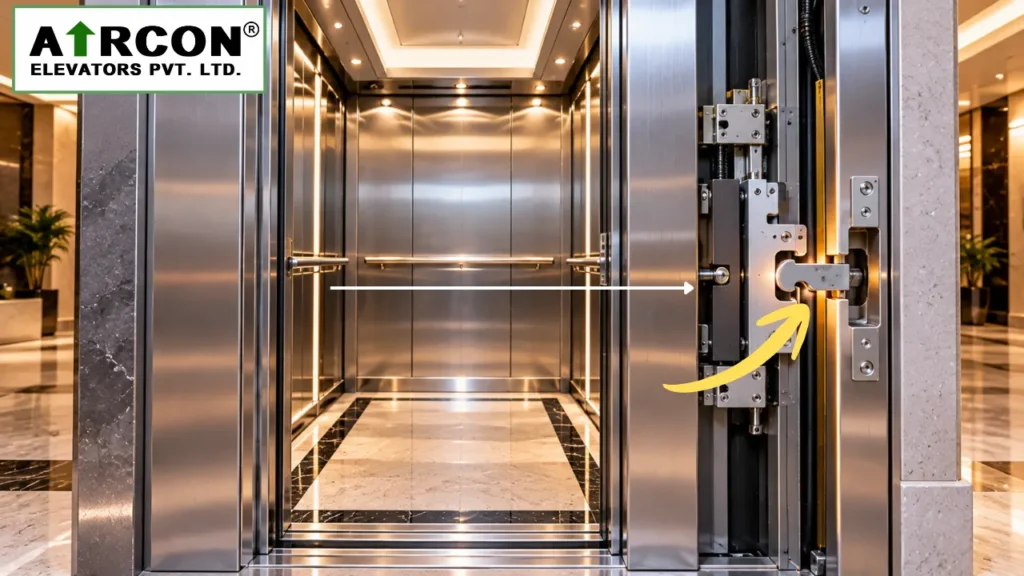
Every elevator depends on several safety systems, but one of the most critical is the elevator door interlock. Although passengers never see this device, it plays a vital role in preventing serious accidents. The interlock ensures that an elevator cannot move unless every landing door is securely locked. Similarly, it keeps the landing door securely locked whenever the elevator cabin is away from that particular floor.
Without a properly functioning door interlock, passengers could accidentally access an open elevator shaft, creating an extremely dangerous situation. For this reason, modern elevators use specially designed interlock mechanisms that work together with the elevator controller and other safety circuits.
In this guide, you’ll learn how an elevator door interlock works, the different types available, common problems, maintenance tips, and why it remains one of the most important elevator safety devices.
What Is an Elevator Door Interlock?
Manufacturers install an elevator door interlock on every landing door to keep the elevator system safe. Its main purpose is to keep the landing door securely locked whenever the elevator cabin is away from that floor.
The interlock also sends a confirmation signal to the elevator controller. Only after every landing door is locked properly does the controller allow the elevator to start moving.
In simple words, the interlock performs two important safety functions:
- Keeps landing doors locked whenever the elevator cabin is not at that floor.
- Allows elevator movement only after all doors are safely locked.
This dual protection significantly reduces the risk of falls and improves passenger safety.
Why Is an Elevator Door Interlock Important?
An elevator door interlock protects both passengers and maintenance personnel by ensuring that elevator doors operate safely.
Some major benefits include:
- Prevents accidental access to the elevator shaft.
- Stops the elevator if a landing door is not locked correctly.
- Meets mandatory elevator safety standards.
- Reduces the risk of door-related accidents.
- Improves overall system reliability.
Without this safety mechanism, automatic elevators would not comply with modern safety requirements.
How Does an Elevator Door Interlock Work?
Overall, the working principle is simple, yet highly reliable.
Step 1: Elevator Arrives at the Floor
When the elevator reaches the selected floor and stops accurately, the door system prepares to unlock the landing door.
Step 2: Interlock Unlocks the Landing Door
A mechanical unlocking mechanism connected to the elevator cabin releases the interlock only at the floor where the cabin is present.
As a result, passengers can safely open or use the landing door.
Step 3: Passengers Enter or Exit
While passengers enter or leave the elevator, the interlock remains disengaged only for that particular landing door.
Step 4: Doors Close
After the preset waiting time ends, the landing door and cabin door close completely.
Step 5: Safety Verification
Before the elevator starts moving again, the controller checks whether every landing door interlock has returned to the locked position.
If even one interlock fails to lock properly, the elevator remains stationary and displays a fault until the issue is resolved.
Main Components of an Elevator Door Interlock
Although designs differ among manufacturers, most door interlocks include the following components:
Locking Hook
Keeps the landing door mechanically locked when the elevator is away from the floor.
Release Lever
Releases the landing door lock only after the elevator cabin arrives at the corresponding floor.
Electrical Safety Contact
Checks that the landing door has locked correctly and reports its status to the elevator controller.
Return Spring
Returns the locking mechanism to its original position after the doors close.
As a result, these components work together to ensure reliable and safe elevator operation.
Types of Elevator Door Interlocks
Elevator manufacturers choose different interlock designs based on the elevator’s application. Different elevator configurations may use different interlock mechanisms depending on their design. You can also read our guide on Machine Room-Less (MRL) Elevators to understand how safety components are integrated in modern elevator systems.
1. Mechanical Door Interlock
This traditional design uses mechanical locking parts to secure the landing door.
It is simple, durable, and widely used in residential and commercial elevators.
2. Electromechanical Door Interlock
This type combines mechanical locking with electrical safety contacts.
It provides additional monitoring by continuously communicating the door status to the elevator controller.
3. High-Speed Elevator Interlock
High-rise elevators often use advanced interlock systems designed for faster operation and higher reliability.
These systems offer improved durability and precise safety monitoring.
Common Elevator Door Interlock Problems
Like any mechanical component, door interlocks can gradually develop faults over time. Therefore, regular inspections are essential.
Common issues include:
- Worn locking hook
- Loose electrical contacts
- Dust accumulation
- Misaligned landing door
- Broken return spring
- Damaged wiring
- Improper door adjustment
When these problems occur, the elevator may stop operating or display door-related fault codes.
Signs of a Faulty Door Interlock
A faulty door interlock may produce one or more of these warning signs:
- Elevator does not start after doors close.
- Landing door remains unlocked.
- Frequent door fault messages.
- Elevator becomes stuck at one floor.
- Intermittent operation.
- Door safety errors appear repeatedly.
Ignoring these warning signs can eventually lead to unexpected service interruptions.
Elevator Door Interlock Maintenance Tips
Regular inspection helps maintain safe operation and extends the service life of the interlock.
Maintenance should include:
- Inspect the locking mechanism for wear.
- Clean dust and debris from moving parts.
- Check electrical safety contacts.
- Verify proper door alignment.
- Test door locking before returning the elevator to service.
- Replace damaged components immediately.
Preventive maintenance greatly reduces unexpected breakdowns.
Frequently Asked Questions (FAQs)
An elevator door interlock is a protective mechanism that secures every landing door and allows the elevator to travel only after all doors are fully closed and properly locked.
Manufacturers install it on the landing door at every floor the elevator serves.
No. Modern elevators remain stationary if the controller detects that any landing door interlock is not locked correctly.
Most manufacturers recommend inspecting door interlocks during scheduled preventive maintenance visits and performing a detailed safety check at least once a year.
It prevents passengers from opening a landing door when the elevator cabin is not present and ensures safe elevator operation.
Conclusion
The elevator door interlock is one of the most essential safety devices in any elevator system. Although it operates quietly in the background, it performs a critical job by locking landing doors, communicating with the elevator controller, and preventing unsafe elevator movement.
Regular inspections, proper maintenance, and timely replacement of worn components keep the interlock operating reliably for years. Whether you own a residential lift or manage a commercial building, understanding this safety mechanism helps you appreciate how modern elevators protect passengers every day.
For a better understanding of complete elevator door operation, you may also read our guide on Elevator Door Operator.