
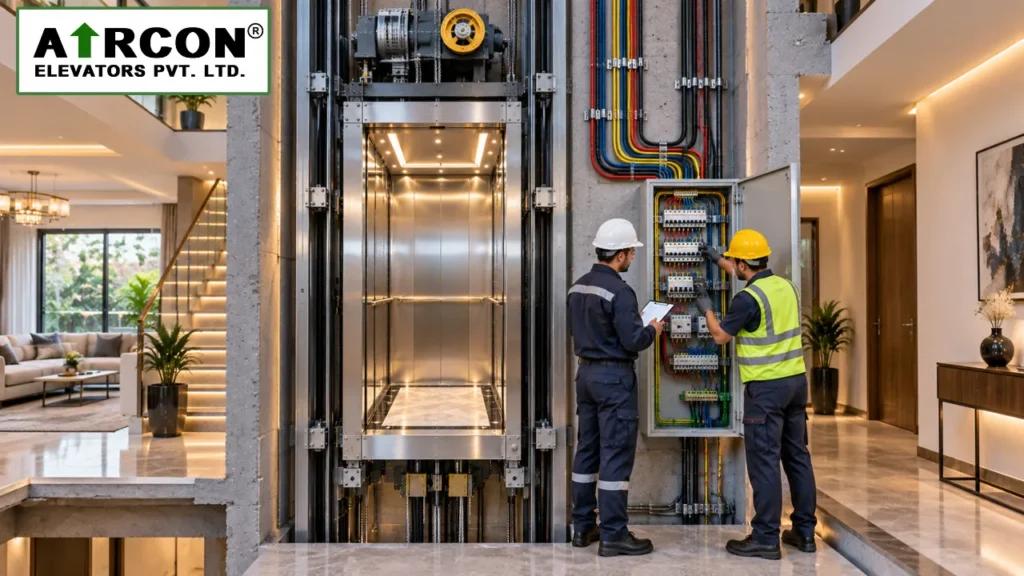
What Electrical Connection Is Required for a Home Elevator? This is one of the most common questions homeowners ask before installing a residential lift. Many people focus on the cabin design, lift type, and budget, but they often overlook the electrical requirements. However, choosing the correct electrical connection is just as important as selecting the right elevator.
A home elevator needs a safe, stable, and properly planned power supply to operate smoothly. The exact electrical requirement depends on factors such as the lift technology, rated capacity, number of floors, motor type, and manufacturer specifications. Installing the correct electrical system from the beginning helps avoid unnecessary modifications, improves safety, and ensures reliable long-term performance. India’s building and lift standards also include specific electrical requirements for planning, installation, inspection, and maintenance.
If you are planning a new installation, we also recommend reading our Home Elevator Installation Guide, where we explain the complete installation process before electrical work begins.
Why What Electrical Connection Is Required for a Home Elevator Matters
Many homeowners assume that a home elevator works like any other household appliance. In reality, a lift contains several electrical components that must work together continuously.
These include:
- Lift motor
- Controller
- Automatic Rescue Device (ARD)
- Door operator
- Safety sensors
- Cabin lighting
- Ventilation system
- Emergency alarm
Without proper electrical planning, you may experience:
- Frequent power interruptions
- Voltage fluctuations
- Unexpected lift shutdowns
- Reduced equipment life
- Higher maintenance costs
Therefore, planning the electrical connection before installation saves both time and money.
What Electrical Connection Is Required for a Home Elevator? It Depends on the Lift Type
The answer to What Electrical Connection Is Required for a Home Elevator is not the same for every house.
Engineers first evaluate several factors before recommending the power supply.
These include:
- Number of floors
- Lift speed
- Passenger capacity
- Motor technology
- Hydraulic or traction system
- Daily usage
- Available electrical load in the house
After reviewing these details, the lift manufacturer specifies the required electrical connection, cable size, protection devices, and supply arrangement. National guidance also requires dedicated lift electrical provisions and appropriate planning for installation.
What Electrical Connection Is Required for a Home Elevator: Single-Phase vs Three-Phase
One of the first questions buyers ask is whether a home lift requires a single-phase or three-phase connection.
The answer depends on the elevator model.
Single-Phase Connection
Many modern home elevators are available with a single-phase power supply.
These lifts are generally suitable for:
- Villas
- Duplex houses
- G+1 homes
- G+2 homes
- Low daily usage
Single-phase elevators have become increasingly popular because many residential homes already have this electrical connection.
Three-Phase Connection
Larger residential elevators and many commercial systems usually require a three-phase supply.
A three-phase connection is often preferred when:
- The lift carries higher loads.
- The building has more floors.
- Daily usage is higher.
- Faster lift speeds are required.
- A higher-capacity motor is installed.
The lift manufacturer always confirms the recommended power supply before installation.
Can an Existing House Support a Home Elevator?
Yes, in many cases, an existing house can support a home elevator.
However, an electrical inspection should be completed before installation.
An engineer typically checks:
- Available sanctioned load
- Distribution board capacity
- Main panel condition
- Earthing quality
- Voltage stability
- Cable routing
- Space for a dedicated circuit
If necessary, the electrical system can be upgraded before the lift installation starts.
If you are renovating an existing property, our guide on Home Elevator Without Major Renovation can help you understand the planning process.
Does What Electrical Connection Is Required for a Home Elevator Include a Dedicated Circuit?
Yes.
A dedicated electrical circuit is strongly recommended for every home elevator.
This means the lift should receive its own protected power supply instead of sharing electrical circuits with:
- Air conditioners
- Water pumps
- Kitchen appliances
- Heavy machinery
- Other high-load equipment
A dedicated circuit helps:
- Improve reliability
- Reduce voltage drops
- Simplify maintenance
- Enhance electrical safety
- Protect sensitive elevator electronics
Indian electrical guidance for lifts also specifies separate electrical arrangements and dedicated lift circuits rather than combining them with other building services.
Why Proper Earthing Is Essential for a Home Elevator
Many buyers only think about voltage and forget one critical requirement—earthing.
Proper earthing protects:
- Passengers
- Elevator controller
- Drive system
- Safety devices
- Electrical equipment
It also helps reduce the impact of electrical faults and improves the overall safety of the installation.
Engineers inspect the earthing system before commissioning the lift because it forms an essential part of the electrical installation. Relevant electrical safety guidance requires effective earthing for lift equipment.
Choose a Lift Company That Plans the Electrical Requirements
Instead of arranging electrical work separately, choose an elevator company that coordinates with your architect, civil contractor, and electrician.
A professional team helps you plan:
- Electrical load
- Power supply
- Cable routing
- Control panel location
- Earthing
- Safety devices
- Final testing
This coordinated approach reduces installation delays and helps avoid costly mistakes later.
What Electrical Connection Is Required for a Home Elevator in Terms of Voltage?
One of the most common questions after selecting a lift is about the operating voltage.
The exact voltage depends on the elevator manufacturer and the selected model. Therefore, homeowners should always follow the technical specifications provided by the lift company instead of making assumptions.
Generally, engineers evaluate:
- Type of elevator
- Motor capacity
- Number of stops
- Travel height
- Rated load
- Building power availability
After evaluating these factors, they recommend the most suitable electrical connection.
If you are still comparing different lift models, our guide on Questions to Ask Before Buying a Home Elevator will help you ask the right technical questions before making your final decision.
What Electrical Connection Is Required for a Home Elevator Besides the Power Supply?
A reliable electrical supply is not enough. Every home elevator also requires proper electrical protection devices.
These components help protect both the lift and your home’s electrical system.
A standard installation usually includes:
- Dedicated MCB or MCCB
- Main Isolator Switch
- Proper Earthing
- Surge Protection (recommended)
- Electrical Distribution Panel
- Suitable Power Cable
These safety components reduce the risk of electrical faults and simplify maintenance work.
Why Is a Dedicated MCB Important?
A dedicated MCB protects the elevator circuit from overloads and short circuits.
If another appliance develops a fault, the lift continues to remain electrically isolated from that issue.
Similarly, if the lift requires maintenance, technicians can safely disconnect only the elevator supply without affecting the rest of the house.
This arrangement improves both safety and convenience.
Does a Home Elevator Need Backup Power?
Many homeowners worry about power failures.
Fortunately, most modern home elevators offer backup solutions that improve passenger safety during a power outage.
These may include:
- Automatic Rescue Device (ARD)
- UPS support (selected models)
- Battery backup
- Generator compatibility
The available option depends on the lift model chosen by the customer.
What Happens During a Power Cut?
If the elevator includes an Automatic Rescue Device (ARD), the system automatically detects the power failure.
The lift then slowly moves to the nearest floor.
Next, the doors open automatically so passengers can exit safely.
This entire process usually happens without requiring outside assistance.
Because of this feature, many homeowners now consider ARD an essential safety component instead of an optional upgrade.
If you want to reduce electricity costs while maintaining reliable operation, you can also read our article on Can a Home Elevator Run on Solar Power in India?
Can a Generator Support the Electrical Connection Required for a Home Elevator?
Yes.
Many home elevators can operate with a properly sized generator.
However, the generator capacity must match the lift manufacturer’s requirements.
Before purchasing a generator, discuss these points with your elevator supplier:
- Required starting load
- Running load
- Generator compatibility
- Automatic changeover system
- Backup operating time
Planning these details early prevents expensive modifications later.
Can Solar Power Support the Electrical Connection Required for a Home Elevator?
This is becoming one of the fastest-growing questions among homeowners.
The answer depends on:
- Solar system capacity
- Battery storage
- Inverter rating
- Elevator motor specifications
- Daily lift usage
Modern energy-efficient elevators can often integrate with residential solar systems when the complete electrical design supports it.
However, engineers should evaluate the system before installation.
Common Electrical Mistakes Homeowners Should Avoid
Many installation delays happen because homeowners ignore electrical planning during construction.
Avoid these common mistakes:
Choosing the Wrong Power Supply
Never assume every lift uses the same electrical connection.
Always confirm the exact requirement with your elevator company.
Sharing the Lift Circuit
Avoid connecting the lift to circuits already used by:
- Air conditioners
- Water pumps
- Heavy kitchen appliances
- Industrial equipment
A dedicated circuit always delivers better reliability.
Ignoring Earthing
Poor earthing increases electrical risks and may affect sensitive elevator components.
Professional testing before installation helps prevent future problems.
Delaying Electrical Planning
Many homeowners complete civil work first and think about electrical work later.
Instead, plan both together.
This approach reduces installation delays and unnecessary expenses.
You can also refer to our Home Elevator Civil Work Checklist before construction begins to avoid common planning mistakes.
Expert Tips Before Installing a Home Elevator
Before approving the installation, ask your elevator company these questions:
- Which electrical connection does my selected lift require?
- Is my existing electrical load sufficient?
- Do I need a separate MCB?
- Will the lift include an Automatic Rescue Device?
- Is generator support available?
- Can the lift work with solar power in the future?
- What earthing requirements should my electrician follow?
These questions help homeowners make informed decisions before installation starts.
Follow National Electrical Standards
Electrical planning for elevators should always follow applicable safety requirements and building standards.
Homeowners, builders, and electricians should refer to:
- National Building Code (NBC) of India
- National Electrical Code (NEC) of India
- Central Electricity Authority (CEA) Safety Regulations
- Bureau of Indian Standards (BIS)
Following recognised standards improves safety, reliability, and long-term performance.
Frequently Asked Questions
The required electrical connection depends on the elevator model, motor type, travel height, and rated capacity. Your elevator manufacturer will recommend the correct power supply.
Yes. Many modern residential elevators operate on a single-phase electrical connection, depending on the selected model.
No. Larger or higher-capacity elevators may require a three-phase supply, but many home lifts do not.
Yes. A dedicated electrical circuit improves safety, reliability, and maintenance convenience.
Most homeowners choose an Automatic Rescue Device because it helps passengers exit safely during a power failure.
Conclusion
Understanding What Electrical Connection Is Required for a Home Elevator helps homeowners avoid costly installation mistakes and ensures a smoother, safer lift experience.
The right electrical connection is not only about supplying power. It also includes proper planning, dedicated protection, quality earthing, backup systems, and compliance with applicable safety standards.
Working with an experienced elevator company from the beginning ensures that every electrical requirement is planned correctly before installation starts.