
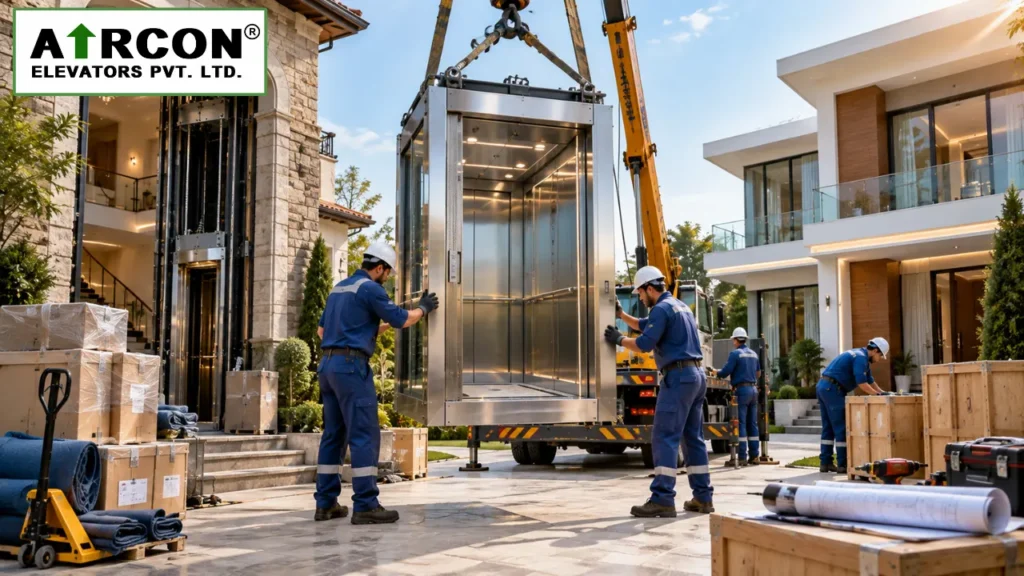
Can a Home Elevator Be Shifted to Another House? This is one of the most common questions homeowners ask when planning to move to a new property. If you already own a home elevator, you may wonder whether it can be relocated instead of purchasing a completely new system.
The good news is that, in some situations, a home elevator can be shifted to another house. However, the answer isn’t as simple as “yes” or “no.” It depends on the elevator type, its condition, the new property’s design, and whether engineers consider relocation technically feasible. Manufacturers and relocation specialists generally recommend a detailed engineering assessment before deciding whether to relocate an existing elevator.
Therefore, before making any decision, it’s important to understand how elevator relocation actually works.
Highlights
| Feature | Details |
| Can a home elevator be moved? | Yes, in some cases |
| Is every elevator reusable? | No |
| Biggest deciding factor | Engineering inspection |
| Can old parts always be reused? | Not always |
| Is relocation cheaper? | Sometimes, but not in every case |
| Should homeowners relocate without inspection? | Never |
Can a Home Elevator Be Shifted to Another House?
The simple answer is yes—but only if the elevator is suitable for relocation.
Unlike furniture, a home elevator becomes part of the building after installation. The cabin, guide rails, doors, electrical system, and supporting structure are designed around the dimensions of a specific house.
However, modern residential elevators can sometimes be dismantled, transported, and reinstalled in another property after a professional technical assessment. Whether relocation is practical depends on the lift design and the destination building.
Additionally, engineers inspect every major component before recommending relocation because passenger safety always comes first.
Why Do Homeowners Consider Can a Home Elevator Be Shifted to Another House?
There are several reasons why homeowners explore this option.
For example:
- Moving to a newly built villa
- Selling an existing house
- Renovating an old property
- Upgrading to a larger home
- Protecting their previous investment
Instead of purchasing another elevator immediately, many homeowners first ask whether the existing system can be reused.
When Can a Home Elevator Be Shifted to Another House Successfully?
Relocation is generally possible when several important conditions are satisfied.
Can a Home Elevator Be Shifted to Another House If It Is Still in Excellent Condition?
A well-maintained elevator with a complete service history has a much better chance of being relocated successfully.
Moreover, regular servicing helps engineers verify the condition of important mechanical and electrical components.
Can a Home Elevator Be Shifted to Another House With Suitable Space?
Even if the elevator itself is reusable, the new property must provide adequate installation space.
Engineers usually check:
- Shaft dimensions
- Pit requirements
- Overhead clearance
- Floor openings
- Structural support
If you’re planning a new installation, our Home Elevator Installation Guide explains the complete planning process before construction begins.
Can a Home Elevator Be Shifted to Another House If the Model Is Still Supported?
Some elevator models remain in production for many years.
However, discontinued models may have limited spare parts availability.
Because of this, manufacturers may recommend replacing certain components during relocation.
Can a Home Elevator Be Shifted to Another House Under Current Safety Standards?
Safety regulations may change over time.
Therefore, engineers verify whether the relocated elevator can comply with current installation and safety requirements before approving the project.
When Is a Home Elevator Not Suitable to Be Shifted to Another House?
Although relocation is technically possible in many situations, it isn’t always the best decision.
Below are some common situations where engineers may recommend installing a new elevator instead.
The Elevator Is Very Old
If an elevator has already completed many years of service, replacing it may provide better long-term value.
Older systems often require:
- New controllers
- Updated wiring
- Door replacements
- Safety upgrades
As a result, relocation costs can increase significantly.
The New House Has Different Dimensions
Every home is different.
If the new building has:
- Different floor heights
- Smaller shaft space
- Limited overhead
- Different entrance layout
then major modifications may become necessary.
Consequently, installing a new system may prove more practical.
Major Components Are Worn Out
Even after careful dismantling, engineers may discover worn components during inspection.
These can include:
- Guide shoes
- Door operators
- Controllers
- Electrical cables
- Landing equipment
Therefore, replacing several components may reduce the financial advantage of relocation.
What Do Engineers Inspect Before Approving Relocation?
Professional elevator companies never relocate a lift without performing a complete technical inspection.
Typically, they evaluate:
Structural Compatibility
The destination building must safely accommodate the elevator system.
Mechanical Components
Engineers inspect:
- Guide rails
- Cabin frame
- Suspension system
- Drive unit
- Safety gear
Electrical System
The inspection includes:
- Control panel
- Wiring
- Safety circuits
- Sensors
- Landing controls
Installation History
A complete maintenance record provides valuable information about previous repairs and overall reliability.
Likewise, our guide on Home Elevator Warranty Guide explains why proper documentation is valuable throughout an elevator’s life.
Benefits of Relocating a Home Elevator
If relocation is technically suitable, homeowners may enjoy several advantages.
Saves Part of Your Investment
Some reusable components may reduce the overall project cost.
Familiar System
Homeowners already understand the elevator’s operation and maintenance requirements.
Less Equipment Waste
Reusing suitable components may reduce unnecessary material waste.
Faster Decision-Making
Because the elevator model is already familiar, selecting specifications for the new house becomes easier.
Common Misconceptions About Elevator Relocation
Many homeowners believe several myths regarding relocation.
Myth 1: Every Elevator Can Be Shifted
Not true.
Each elevator requires an individual engineering evaluation.
Myth 2: Relocation Costs Almost Nothing
Incorrect.
Transportation, dismantling, inspection, installation, testing, and replacement parts all affect the final cost.
Myth 3: The Entire Elevator Will Be Reused
Not necessarily.
Some parts may be reused, while others may need replacement to meet current safety and performance requirements.
Step-by-Step: How Is a Home Elevator Relocated?
Relocating a home elevator involves much more than simply dismantling and reinstalling it. A professional elevator company follows a systematic process to ensure safety, compatibility, and long-term reliability.
1. Technical Site Inspection
The process begins with a detailed inspection of both the existing elevator and the new property.
Engineers evaluate:
- Elevator condition
- Building structure
- Shaft dimensions
- Floor levels
- Electrical requirements
- Installation feasibility
Similarly, understanding the Home Elevator Civil Work Checklist before relocation helps homeowners identify whether additional construction work will be required at the new property.
2. Component Inspection
After the survey, engineers inspect every major component individually.
They check:
- Cabin
- Guide rails
- Drive system
- Controller
- Landing doors
- Safety gear
- Wiring
- Suspension ropes
If any component no longer meets safety or performance standards, it is replaced instead of reused.
3. Safe Dismantling
Once relocation is approved, trained technicians carefully dismantle the elevator.
Unlike ordinary construction equipment, elevator components must be removed in a specific sequence to prevent damage.
Therefore, only experienced professionals should perform this work.
4. Transportation
Every reusable component is packed securely before transportation.
During this stage, technicians protect:
- Stainless steel panels
- Cabin walls
- Glass components
- Control panels
- Electrical equipment
Proper packing significantly reduces the risk of transportation damage.
5. Installation at the New House
After transportation, engineers install the elevator according to the new building’s design.
Sometimes minor modifications are required because every building has different dimensions.
Likewise, reviewing the Home Elevator Installation Timeline helps homeowners understand how long installation and commissioning may take after relocation.
6. Testing and Commissioning
Before the elevator is handed over, engineers perform several safety tests.
These typically include:
- Door operation test
- Emergency stop verification
- ARD functionality
- Landing accuracy
- Speed verification
- Safety gear inspection
- Final operational testing
Only after successful testing should the elevator be put into regular service.
How Much Does It Cost to Shift a Home Elevator to Another House?
There is no fixed relocation cost because every project is different.
Several factors influence the final price, including:
- Elevator type
- Number of floors
- Distance between locations
- Components requiring replacement
- Civil work at the new property
- Transportation expenses
- Installation complexity
Therefore, homeowners should request a detailed technical inspection instead of relying on estimated prices found online.
Is It Better to Shift a Home Elevator to Another House or Buy a New One?
Not necessarily.
Although relocation may save money in some situations, purchasing a new elevator can sometimes be the better long-term investment.
Relocation is usually worthwhile when:
- The elevator is relatively new.
- Major components are in excellent condition.
- The new building is compatible.
- Minimal modifications are required.
However, a new elevator may be the smarter option if:
- The existing elevator is outdated.
- Multiple parts need replacement.
- Spare parts are difficult to source.
- The new building requires extensive structural changes.
Furthermore, if you’re still evaluating different options, reading our guide on Questions to Ask Before Buying a Home Elevator can help you make a more informed decision before investing.
Safety Checks After Shifting a Home Elevator to Another House
Once the installation is complete, homeowners should never start using the elevator immediately without proper verification.
Instead, confirm that the following checks have been completed:
- Smooth floor leveling
- Proper door operation
- Emergency alarm functioning
- ARD operation
- Cabin lighting
- Emergency communication system
- Ride comfort
- Noise and vibration inspection
Additionally, these inspections help ensure that the relocated elevator performs just as safely as it did before relocation.
Common Mistakes When Shifting a Home Elevator to Another House
Many relocation projects become expensive because homeowners overlook important details.
Avoid these common mistakes:
Choosing the Lowest Quote
A very low quotation may exclude important inspections, testing, or replacement parts.
Skipping the Technical Survey
Without a proper survey, engineers cannot determine whether relocation is technically possible.
Ignoring Future Maintenance
Some discontinued elevator models may become difficult to maintain after relocation.
Therefore, always discuss long-term service support before making a final decision.
Assuming Every Part Can Be Reused
Even if the elevator appears to be in good condition, some components may require replacement to maintain safety and reliability.
Frequently Asked Questions
No. Each elevator requires a professional engineering assessment before relocation can be approved.
If the elevator is in excellent condition, compatible with the new property, and installed correctly, it can continue to operate reliably.
Not when performed by trained elevator professionals using the correct procedures.
The timeline depends on the elevator type, transportation distance, civil work, and installation requirements.
No.
Safety-related components should always be inspected carefully, and worn parts should be replaced whenever necessary.
Final Thoughts on Can a Home Elevator Be Shifted to Another House?
Can a Home Elevator Be Shifted to Another House? The answer is yes, but only after a complete engineering evaluation.
While relocating a home elevator can help preserve part of your original investment, every project is unique. Factors such as the elevator’s condition, the design of the new house, compatibility with current safety requirements, and the availability of replacement parts all influence the final decision.
Therefore, homeowners should never assume that every elevator can simply be removed and reinstalled elsewhere. A professional inspection is the safest way to determine whether relocation is practical or whether installing a new elevator would provide better long-term value.
Finally, following recognized engineering practices is essential for passenger safety. Homeowners can also refer to the National Building Code of India (NBC) for building planning considerations, the Bureau of Indian Standards (BIS) for applicable standards, and the Central Electricity Authority (CEA) safety regulations for electrical safety requirements where relevant.