
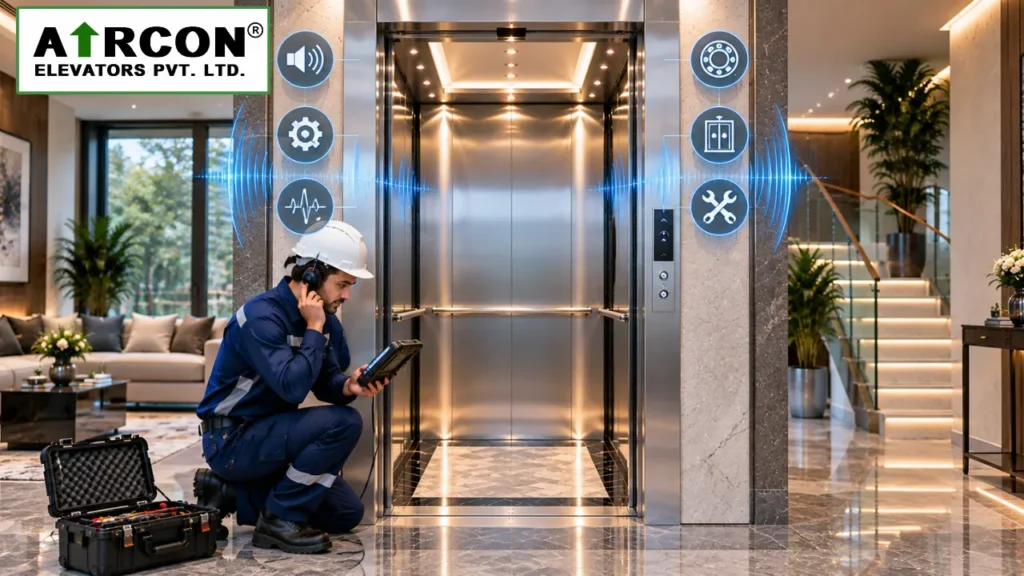
Have you noticed unusual home elevator noise while using your lift? A quiet home elevator is a sign of smooth operation. However, unusual sounds such as grinding, squeaking, rattling, buzzing, or knocking may indicate that something needs attention. Although some operating sounds are completely normal, continuous or increasing noise should never be ignored because it can lead to expensive repairs if left unresolved.
Fortunately, most home elevator noise issues have simple causes. Moreover, most of them can be resolved without major repairs if detected early. If your lift is still in the planning stage, our Home Elevator Installation Guide explains how proper installation helps prevent unnecessary noise from day one. Regular maintenance, timely inspections, and proper usage can often prevent small problems from becoming major failures.
In this guide, you’ll learn what types of elevator sounds are normal, the most common causes of home elevator noise, practical solutions, and when it’s time to call a professional elevator technician.
What Is Home Elevator Noise?
Home elevator noise refers to any sound produced while the elevator starts, travels between floors, opens or closes its doors, or stops at a landing.
Every elevator produces a small amount of operational sound. Therefore, homeowners should understand the difference between normal and unusual sounds. In fact, this is completely normal. However, excessive or unusual noise often indicates that one or more components require inspection or adjustment.
For example, common sounds include:
- Light motor humming
- Soft door movement
- Mild traction system sound
- Gentle airflow from the cabin ventilation
These sounds are generally considered normal when they remain consistent over time. However, any sudden increase in noise deserves attention.
Is All Home Elevator Noise Normal?
Not always.
Ideally, a well-installed residential elevator should operate smoothly with minimal sound. If your elevator suddenly becomes louder than usual or starts producing new noises, it deserves immediate attention.
You should monitor the elevator carefully if you notice:
- Grinding sounds
- Metal scraping noises
- Loud vibrations
- Repeated knocking
- Continuous buzzing
- Door slamming
- Clicking that becomes louder over time
Ignoring these warning signs can increase wear on mechanical and electrical components. Therefore, you should schedule an inspection as soon as possible.
If your lift has not been serviced recently, it is also a good idea to follow a regular Elevator Maintenance Checklist to identify potential issues before they become serious.
Common Types of Home Elevator Noise
First, understanding the type of sound often helps identify the actual problem much faster.
1. Grinding Noise
For example, a grinding sound usually indicates friction between moving metal parts. It may occur because of worn bearings, insufficient lubrication, or damaged mechanical components.
This type of noise should never be ignored because continued operation can increase damage.
2. Squeaking Noise
Squeaking generally develops when moving components lose proper lubrication.
In particular, common sources include:
- Door rollers
- Hinges
- Guide shoes
- Moving joints
Fortunately, routine maintenance usually resolves this issue quickly.
3. Rattling Noise
Similarly, a rattling sound often comes from loose parts.
For instance, possible causes include:
- Loose cabin panels
- Fasteners
- Guide rail brackets
- Decorative trim
- Machine mounting bolts
Although rattling may seem minor, loose hardware can eventually affect ride quality.
4. Buzzing Sound
A continuous buzzing noise may originate from electrical components such as:
- Controller
- Relay
- Transformer
- Power supply
Therefore, electrical noises should always be inspected by qualified elevator professionals.
5. Knocking or Thumping Noise
Repeated knocking while the elevator travels between floors can indicate:
- Misaligned guide rails
- Improper leveling
- Suspension system wear
- Mechanical adjustment issues
Early diagnosis usually prevents larger repair costs.
Why Does Home Elevator Noise Increase Over Time?
Many homeowners assume that elevators naturally become noisy as they age. In reality, home elevator noise usually increases because maintenance intervals are missed or small mechanical problems continue for months without inspection.
In most cases, several factors contribute to increasing noise, including:
- Lack of lubrication
- Component wear
- Loose fasteners
- Dust accumulation
- Door mechanism misalignment
- Aging rollers
- Improper installation
- Heavy daily usage
Fortunately, most of these issues can be corrected before they become expensive repairs.
Why Regular Maintenance Matters
Regular preventive maintenance keeps your elevator operating safely, efficiently, and quietly.
During every maintenance visit, professional technicians inspect critical components such as:
- Door systems
- Guide rails
- Motor
- Traction system
- Rollers
- Safety devices
- Electrical connections
- Controller settings
Routine inspections not only reduce home elevator noise but also improve reliability and extend the overall life of your elevator.
10 Common Causes of Home Elevator Noise
If your elevator has recently become louder than usual, don’t panic. Most home elevator noise problems develop gradually and can be fixed before they become major repairs. Many of these issues are also explained in our Common Elevator Problems & Preventive Maintenance guide.
Now, let’s look at the most common causes.
1. Lack of Lubrication
One of the biggest reasons for home elevator noise is insufficient lubrication.
Moving parts constantly create friction. Without proper lubrication, these components begin producing squeaking or grinding sounds.
For example, common parts that require lubrication include:
- Door rollers
- Hinges
- Guide shoes
- Bearings
- Moving joints
Following a regular Elevator Maintenance Checklist helps ensure these components receive timely lubrication before excessive wear develops.
2. Worn Door Rollers
Door rollers open and close thousands of times every year.
As they wear out, you may notice:
- Squeaking
- Clicking
- Rough door movement
- Door vibration
Replacing worn rollers early keeps the elevator quieter and also protects the door mechanism from additional damage.
3. Loose Mechanical Components
Over time, vibration can loosen various elevator components.
Similarly, common examples include:
- Cabin panels
- Mounting brackets
- Rail supports
- Machine bolts
- Decorative panels
Loose hardware often produces rattling sounds during travel.
Fortunately, a professional inspection can usually resolve this issue quickly.
4. Guide Rail Misalignment
Guide rails keep the elevator cabin moving smoothly between floors.
If they become slightly misaligned, you may hear:
- Scraping
- Knocking
- Vibration
- Uneven movement
As a result, proper alignment improves ride comfort while reducing unnecessary stress on the elevator system.
5. Motor or Gear Wear
In addition, the drive system plays a major role in overall elevator performance.
Older geared elevators may become noisier as gears begin wearing over time.
Modern Gearless Elevator Motors usually operate much more quietly because they contain fewer moving parts and generate less mechanical friction. If you’re comparing both technologies, read our detailed Geared vs Gearless Elevator Motors guide before making a decision.
6. Door Operator Problems
Likewise, the automatic door operator works every time the elevator opens or closes.
When adjustments become inaccurate, homeowners may hear:
- Slamming
- Clicking
- Jerking
- Delayed closing sounds
Ignoring these symptoms can eventually increase repair costs.
7. Damaged Bearings
Bearings help rotating components move smoothly.
As bearings wear out, they often create:
- Grinding sounds
- Humming
- High-pitched whining
- Metal friction
Moreover, replacing worn bearings at the right time prevents damage to nearby components.
8. Electrical Component Issues
Not every home elevator noise problem comes from mechanical parts.
Sometimes the sound originates from:
- Contactors
- Relays
- Transformers
- Controllers
- Cooling fans
Electrical issues should always be diagnosed by trained elevator technicians instead of attempting DIY repairs.
9. Excessive Cabin Vibration
If the elevator cabin vibrates during travel, passengers often hear additional noise.
More specifically, possible causes include:
- Loose guide shoes
- Suspension imbalance
- Rail alignment issues
- Machine vibration
If vibration continues to increase, schedule an inspection as soon as possible. You can also read our guide on Reduce Elevator Noise & Vibration for additional practical solutions. Regular Elevator Maintenance and Repair Services help identify these problems before they affect passenger comfort.
10. Poor Preventive Maintenance
Unfortunately, many homeowners only call a technician after a major breakdown.
However, preventive maintenance helps detect small problems long before they become expensive repairs.
Choosing a proper Home Elevator AMC vs Pay Per Repair plan often reduces unexpected failures while keeping long-term maintenance costs under control.
How to Reduce Home Elevator Noise
Fortunately, most noise issues are preventable. In addition, following a regular maintenance schedule significantly reduces future problems.
Here are a few practical tips:
- Schedule preventive maintenance regularly.
- Never ignore unusual sounds.
- Avoid overloading the elevator.
- Keep the door tracks clean.
- Replace worn components on time.
- Use only genuine spare parts.
- Hire certified elevator professionals for servicing.
- Record any new sounds and report them early.
Ultimately, small preventive actions today can save significant repair costs in the future.
When Should You Call an Elevator Expert?
Most importantly, contact an elevator technician immediately if you notice:
- Loud grinding sounds
- Continuous metal scraping
- Heavy cabin vibration
- Doors failing to close properly
- Burning smell with unusual noise
- Sudden increase in operating sound
- Jerky movement between floors
These warning signs should never be ignored because they may indicate a developing safety or mechanical issue.
If your elevator is several years old, you should also review your Home Elevator Warranty Guide to understand which repairs may still be covered under warranty.
Can You Fix Home Elevator Noise Yourself?
Before calling a technician, Before attempting anything else, simple visual checks are acceptable..
For example, For example, you can:
- Observe where the sound starts.
- Check if the noise occurs during travel or door movement.
- Remove dust from accessible areas around the entrance.
- Record the sound for the technician.
However, never open electrical panels or attempt to repair mechanical components yourself. Modern elevators contain critical safety systems that require professional servicing.
Frequently Asked Questions (FAQs)
Yes. A small amount of operational sound is normal. For example, you may hear a light motor hum, gentle door movement, or soft airflow from the cabin ventilation. However, loud grinding, knocking, or rattling sounds are not normal and should be inspected.
Yes. Continuous home elevator noise may indicate worn components, poor lubrication, loose hardware, or electrical issues. Early diagnosis usually prevents costly repairs.
Most manufacturers recommend professional servicing every few months, depending on usage and the maintenance plan. Regular inspections help reduce home elevator noise and improve reliability.
Yes. In many cases, proper lubrication, replacing worn rollers, tightening loose parts, and preventive maintenance significantly reduce home elevator noise without replacing the entire system.
Generally, yes. Modern gearless elevators operate more quietly because they have fewer moving mechanical parts than traditional geared systems. If you’re considering a quieter residential solution, our Machine Room Less Elevators guide explains why MRL systems are becoming increasingly popular.
Final Thoughts on Home Elevator Noise
Finally, Overall, a quiet elevator is not only more comfortable but also a sign of a healthy and properly maintained system. While some operating sounds are perfectly normal, unusual home elevator noise should never be ignored. Identifying problems early helps reduce repair costs, improves passenger safety, and extends the life of your elevator.
The best way to avoid unexpected issues is to schedule regular maintenance, use genuine spare parts, and contact experienced professionals whenever new noises appear. Investing in preventive care today can save both time and money in the future. For additional information about Indian standards and certification, you can also visit the Bureau of Indian Standards (BIS).