
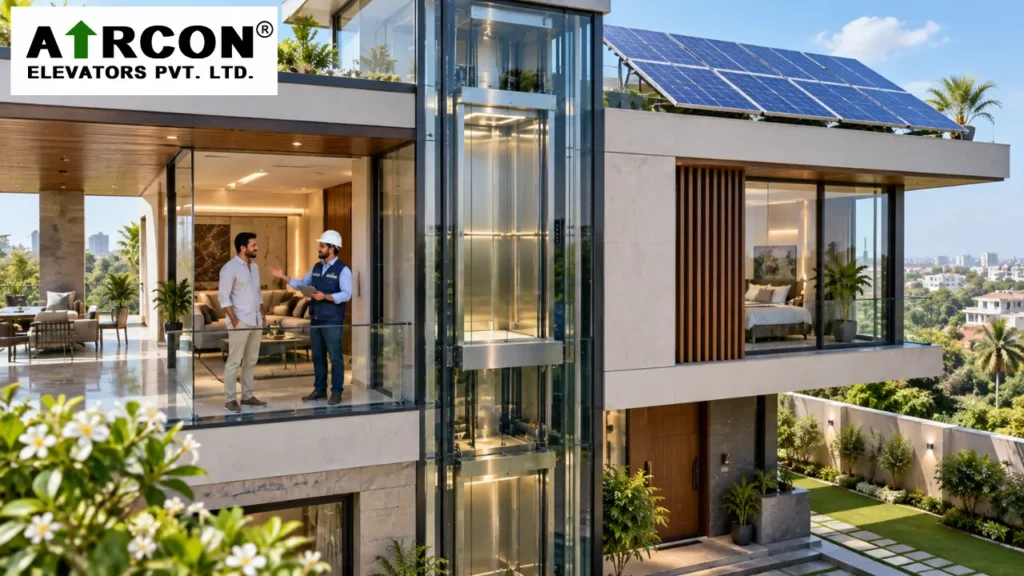
Installing a home elevator is no longer considered a luxury in India. Today, many homeowners choose residential elevators for convenience, accessibility, and future-ready living. However, one question often comes up before making a purchase: Can a Home Elevator Run on Solar Power in India?
The answer is yes, but it depends on several factors, including the elevator technology, your home’s solar capacity, battery backup, and overall power requirements. While solar energy can significantly reduce electricity bills, it does not automatically mean every home elevator can operate entirely on solar power.
Moreover, understanding how solar systems work with elevators helps homeowners make better investment decisions. Whether you’re planning a new home or upgrading an existing one, learning about solar-powered elevator operation can help you choose the right system while reducing long-term operating costs.
If you’re still comparing different lift options, our Home Elevator Installation Guide explains everything you should know before selecting a home elevator.
Highlights
| Topic | Why It Matters |
| Solar Compatibility | Understand whether your home elevator can use solar energy |
| Power Consumption | Estimate daily electricity requirements |
| Battery Backup | Learn how elevators operate during power interruptions |
| Suitable Elevator Types | Find out which systems work best with solar |
| Cost Savings | Discover potential long-term electricity savings |
| Installation Planning | Know what should be considered before installation |
Why Homeowners Are Considering Solar-Powered Home Elevators
Electricity costs continue to increase across many parts of India. As a result, homeowners are looking for ways to reduce their monthly power bills without sacrificing comfort.
At the same time, rooftop solar systems have become more affordable and widely available. Consequently, many people wonder whether their future home elevator can also use this renewable energy source.
Besides lowering electricity expenses, solar-powered homes offer several additional advantages:
- Lower dependence on the electrical grid
- Better energy efficiency
- Reduced environmental impact
- Long-term operating cost savings
- Improved property value
Therefore, combining a home elevator with solar power has become an attractive option for many modern homeowners.
Can a Home Elevator Run on Solar Power?
Yes, a home elevator can run on solar power in India, provided the solar system is properly designed to meet the elevator’s electrical requirements.
However, this does not mean the elevator connects directly to solar panels.
Instead, solar panels generate electricity that powers your home’s electrical system. The elevator then operates using this available power, just like other household appliances.
In most residential projects, the process works like this:
Solar Panels → Inverter → Home Electrical System → Home Elevator
As long as your solar system generates enough usable electricity, your elevator can operate using solar-generated power during the day.
Furthermore, if your home includes battery storage, the elevator may continue operating even after sunset, depending on the available backup capacity.
How Does a Solar Power System Work with a Home Elevator?
To understand whether solar power is suitable for your elevator, it helps to know how the complete system works.
A typical residential solar setup includes several important components:
- Solar panels
- Solar inverter
- Distribution board
- Electrical protection devices
- Optional battery backup
First, the solar panels convert sunlight into electricity.
Next, the inverter converts that electricity into usable AC power for household appliances.
After that, your home’s electrical distribution system supplies electricity to different circuits, including the elevator.
Consequently, the elevator operates using the same electrical supply as the rest of your house, whether the energy comes from solar panels, the utility grid, or battery storage.
Does the Elevator Run Directly from Solar Panels?
This is one of the biggest misconceptions among homeowners.
No, modern home elevators generally do not run directly from solar panels.
Instead, they require a stable electrical supply with consistent voltage and frequency.
Because solar power production changes throughout the day, an inverter manages the electricity before it reaches the elevator.
As a result, the elevator receives stable power regardless of small fluctuations in solar generation.
This arrangement improves both safety and equipment reliability.
How Much Electricity Does a Home Elevator Actually Use?
Many people assume that elevators consume a large amount of electricity.
In reality, most modern residential elevators are surprisingly energy efficient.
The actual electricity consumption depends on several factors, including:
- Elevator technology
- Motor type
- Number of daily trips
- Cabin size
- Rated load capacity
- Travel height
For a detailed explanation of daily electricity usage, you can read our guide on Home Lift Electricity Consumption in India, which explains how different elevator systems affect monthly energy costs.
Moreover, energy-efficient elevator technologies often consume less electricity than many homeowners expect, making them suitable candidates for solar-powered homes.
Which Home Elevator Technologies Work Best with Solar Power?
Not every elevator technology has identical power requirements.
Therefore, selecting the right system becomes important when planning a solar-powered home.
1. Machine Room Less (MRL) Elevators
Machine Room Less elevators are among the most energy-efficient residential elevator systems available today.
They offer several advantages:
- Lower electricity consumption
- Compact design
- No separate machine room
- Reduced maintenance requirements
Because of their efficient drive systems, MRL elevators are often considered an excellent choice for homes with rooftop solar installations.
If you’d like to understand how these elevators work, our detailed guide on Machine Room Less (MRL) Elevators explains their features and benefits.
2. Hydraulic Home Elevators
Hydraulic elevators remain popular for many residential applications.
They provide:
- Smooth ride quality
- Strong lifting capability
- Reliable operation
However, hydraulic systems may require higher power during upward travel compared with certain traction-based systems.
Therefore, homeowners planning a solar-powered installation should discuss expected energy requirements with their elevator company before finalizing the design.
Our Hydraulic Elevators Guide explains where hydraulic systems perform best and when they may be the right choice.
3. Gearless Traction Elevators
Modern gearless traction elevators are designed for excellent energy efficiency.
In many residential applications, they offer:
- Lower operating costs
- Quiet performance
- Smooth travel
- Reduced maintenance
Consequently, many premium home elevator manufacturers recommend gearless traction systems for homeowners who prioritize long-term energy savings.
Can Solar Power Reduce Elevator Electricity Bills?
In many situations, yes.
If your rooftop solar system generates enough electricity during the day, the energy used by the elevator can be supplied from solar generation instead of the utility grid.
As a result, your overall household electricity bill may decrease.
However, the actual savings depend on several factors, including:
- Solar system capacity
- Daily sunlight availability
- Household electricity consumption
- Elevator usage frequency
- Net metering policy in your state
Therefore, homeowners should view solar power as a way to reduce operating costs rather than expecting completely free elevator operation.
Can a Home Elevator Work During Power Cuts with Solar?
One of the most common questions homeowners ask is whether a solar-powered elevator will continue working during a power outage.
The answer depends on how your solar system is configured.
If your rooftop solar installation is connected to the electrical grid without battery storage, the elevator usually will not operate during a power cut. This is because most grid-connected solar inverters automatically stop supplying power when the utility grid fails, which is a standard safety feature.
However, if your home has a properly designed battery backup system or hybrid solar inverter, the elevator may continue operating for a limited period, depending on the available battery capacity.
Therefore, homeowners who experience frequent power outages should discuss backup requirements with both their elevator manufacturer and solar installer before installation.
Is Battery Backup Necessary for a Solar Home Elevator?
Although battery backup is not mandatory, it offers several practical advantages.
For example, it can help:
- Keep the elevator operational during short power failures
- Improve passenger convenience
- Support safe evacuation if electricity is interrupted
- Increase the overall reliability of the system
Moreover, many modern residential elevators already include an Automatic Rescue Device (ARD). An ARD safely moves the elevator to the nearest floor and opens the doors if the main power supply fails.
If you’re unfamiliar with this safety feature, our guide on What Is ARD (Automatic Rescue Device) in Elevators? explains how it protects passengers during unexpected power interruptions.
How Large Should Your Solar System Be?
There is no single solar system size that works for every home.
Instead, the ideal capacity depends on several factors, including:
- Your home’s total electricity consumption
- Elevator motor power
- Daily elevator usage
- Number of family members
- Other household appliances
- Available rooftop space
For instance, a home that already operates multiple air conditioners, water pumps, and electric appliances will require a larger solar installation than a house with relatively low electricity usage.
Therefore, your solar installer should calculate your home’s complete energy requirement instead of sizing the system only for the elevator.
Can Solar Power Reduce Long-Term Elevator Costs?
In many cases, yes.
Although installing rooftop solar requires an initial investment, homeowners often benefit from lower electricity expenses over the long term.
Some potential financial benefits include:
- Reduced monthly electricity bills
- Better utilization of rooftop space
- Lower dependence on grid electricity
- Improved return on investment over time
- Increased property value
Furthermore, if your state offers net metering, surplus electricity generated during the day may be exported to the grid, depending on local electricity regulations.
However, actual savings vary based on sunlight availability, electricity tariffs, and household energy consumption.
Common Myths About Solar-Powered Home Elevators
Many homeowners receive inaccurate information before purchasing a home elevator. Let’s clarify some common misconceptions.
Myth 1: The Elevator Runs Directly from Solar Panels
This is incorrect.
Instead, electricity generated by the solar panels passes through an inverter before supplying power to the home’s electrical system.
Myth 2: Solar Power Eliminates Electricity Bills Completely
Not necessarily.
Solar energy can significantly reduce electricity costs, but complete elimination depends on your solar capacity, household consumption, and local net-metering policies.
Myth 3: Solar Home Elevators Need Special Elevator Motors
No.
Most modern residential elevators do not require a special motor solely because the home uses solar power.
Instead, the electrical design should ensure a stable and reliable power supply.
Myth 4: Solar-Powered Elevators Are Less Safe
This is also incorrect.
When installed correctly using approved electrical equipment and proper engineering practices, solar-powered home elevators maintain the same safety standards as conventionally powered elevators.
Who Should Consider a Solar-Powered Home Elevator?
A solar-compatible home elevator may be an excellent choice if you:
- Are constructing a new house
- Already have rooftop solar panels
- Plan to install solar in the future
- Want to reduce long-term electricity costs
- Prefer environmentally responsible solutions
- Expect regular elevator usage throughout the day
Likewise, homeowners designing an energy-efficient residence often plan both the elevator and solar system together. Doing so simplifies electrical planning and may reduce future modification costs.
Things to Discuss with Your Elevator Company
Before placing your order, ask your elevator supplier the following questions:
- Is this elevator compatible with my home’s solar electrical system?
- Which elevator technology consumes less electricity?
- Is an ARD included?
- What is the recommended power requirement?
- Can the elevator integrate with my existing electrical infrastructure?
- Should I choose a battery backup system?
- Will future solar expansion affect elevator performance?
These discussions help prevent unexpected costs after installation.
Why Professional Planning Matters
A solar-powered elevator is not simply an elevator connected to solar panels.
Instead, it requires careful coordination between:
- Elevator engineers
- Electrical consultants
- Solar installation professionals
- Civil engineers
- Homeowners
Proper planning ensures reliable performance, passenger safety, and long-term energy efficiency.
For elevator installations in India, following recognized installation practices and applicable standards is equally important. The Bureau of Indian Standards (BIS) publishes Indian standards related to lifts, while rooftop solar systems and related equipment are also covered under applicable BIS standards and guidance.
Frequently Asked Questions
Yes, it can if the solar system is properly designed and generates sufficient electricity. However, most elevators operate through the home’s electrical system rather than directly from solar panels.
Only if your home has a suitable battery backup or hybrid solar system. Otherwise, most grid-connected solar systems stop supplying power during outages for safety reasons.
Energy-efficient systems such as Machine Room Less (MRL) elevators and modern gearless traction elevators are generally well suited for homes using solar energy.
No. Solar power mainly reduces electricity consumption. Regular preventive maintenance remains essential regardless of the power source.
For many homeowners, yes. If your house already has—or will have—a rooftop solar system, integrating it with your home’s electrical infrastructure can help lower long-term operating costs while supporting a more energy-efficient lifestyle.
Final Thoughts
Can a Home Elevator Run on Solar Power in India? The answer is yes, but successful operation depends on thoughtful planning rather than simply installing solar panels.
Before making your purchase, evaluate your home’s electricity usage, rooftop solar capacity, backup power requirements, and preferred elevator technology. Additionally, consult both your elevator manufacturer and solar installer to ensure the entire system is designed to work together efficiently.
With the right planning, a solar-compatible home elevator can deliver reliable performance, lower electricity expenses, and support a more sustainable home for years to come.