
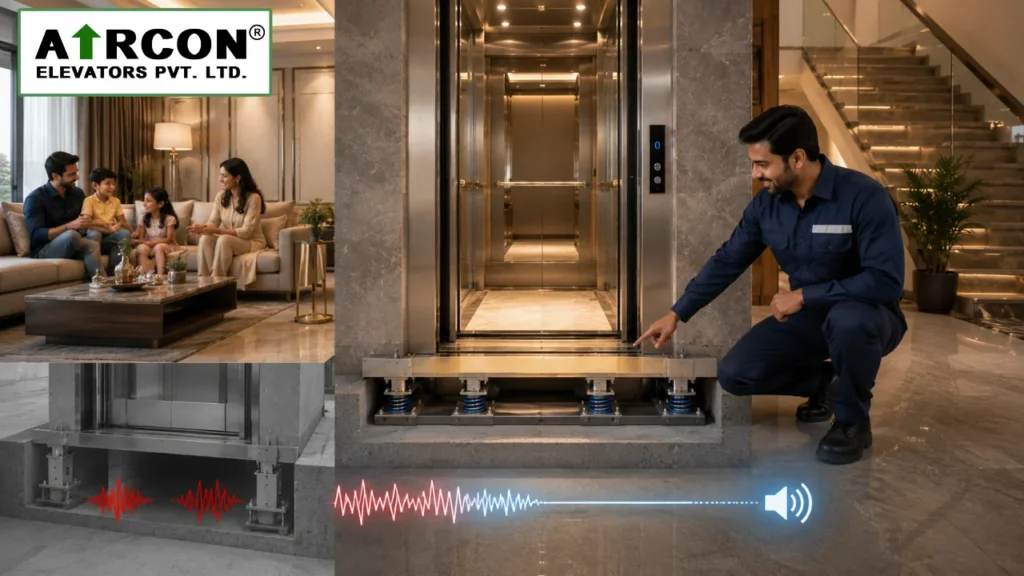
Modern residential buildings are expected to provide more than just vertical transportation. Homeowners today look for elevators that are quiet, smooth, energy-efficient, and comfortable. While safety and reliability remain top priorities, elevator noise and vibration can significantly affect the overall living experience.
A noisy elevator can disturb family members, especially when the elevator shaft is located near bedrooms, living rooms, or study areas. Fortunately, modern elevator technology and proper installation practices can greatly reduce unwanted sound and vibration.
If you’re planning to install a home elevator or upgrade an existing one, understanding the causes of elevator noise and the available solutions will help you make a smarter investment.
Elevator Noise Reduction at a Glance
| Feature | Benefit |
| Gearless Drive Systems | Quieter Operation |
| Machine Room-Less (MRL) Elevators | Reduced Mechanical Noise |
| Proper Rail Alignment | Less Cabin Vibration |
| High-Quality Door Operators | Smooth Door Movement |
| Regular Elevator Maintenance | Long-Term Quiet Performance |
Why Elevator Noise Matters in Residential Buildings
Unlike commercial buildings where elevators operate continuously, residential elevators are installed close to living spaces. Excessive noise can disturb daily activities, interrupt sleep, and reduce the comfort of the home.
A properly designed elevator should operate smoothly with minimal sound while providing a comfortable ride for every family member.
Reducing elevator noise not only improves passenger comfort but also enhances the overall quality and value of the property.
What Causes Elevator Noise and Vibration?
Several components work together inside an elevator system. If any of them are improperly installed, worn out, or poorly maintained, unwanted noise and vibration may occur.
The most common causes include:
- Motor operation
- Guide rail misalignment
- Door opening and closing mechanisms
- Worn rollers and guide shoes
- Loose mechanical components
- Cabin imbalance
- Improper shaft construction
- Poor vibration isolation
Identifying the actual source of the noise is the first step toward solving the problem.
Different Types of Elevator Noise
Understanding the type of noise helps determine the most effective solution.
Mechanical Noise
Mechanical noise usually comes from moving components such as motors, gears, pulleys, rollers, or door mechanisms.
Modern engineering significantly reduces this type of sound through precision manufacturing and improved component quality.
Structure-Borne Vibration
Sometimes the elevator itself isn’t loud—the building structure carries vibrations from the machine or guide rails into nearby walls and rooms.
Proper vibration isolation during installation helps minimize this issue.
Door Operation Noise
Frequent opening and closing of elevator doors can create noticeable sound if door operators are worn, poorly adjusted, or lack regular servicing.
Modern automatic door systems are designed to operate quietly and smoothly.
Cabin Vibration
Passengers may feel slight shaking or vibration if the cabin is not properly balanced or if guide components require adjustment.
A smooth ride is one of the strongest indicators of a professionally installed elevator.
How Modern Elevator Technology Reduces Noise
Today’s elevators are far quieter than older systems thanks to advances in engineering and design.
Gearless Drive Systems
Modern gearless motors operate with fewer moving parts, producing significantly less noise while improving energy efficiency.
They also provide smoother acceleration and deceleration.
Machine Room-Less Elevators
Machine Room-Less (MRL) elevators eliminate the need for a separate machine room by integrating compact drive equipment within the shaft.
This design helps reduce mechanical noise while saving valuable building space.
High-Precision Guide Rails
Accurately aligned guide rails allow the elevator cabin to travel smoothly with minimal vibration.
Professional installation plays a major role in achieving this level of precision.
Silent Door Operators
Advanced automatic door systems open and close quietly while reducing impact noise during daily operation.
Vibration Isolation Components
Modern elevators use specialized rubber pads, isolation mounts, and vibration dampers that prevent mechanical vibrations from transferring into the building structure.
Why Proper Installation Is Just as Important as Elevator Quality
Even the best elevator can become noisy if it is not installed correctly.
Professional installation ensures:
- Accurate guide rail alignment
- Proper machine mounting
- Correct cabin balancing
- Secure fastening of components
- Effective vibration isolation
Careful installation helps the elevator operate smoothly from day one while reducing future maintenance issues.
The Importance of Regular Elevator Maintenance
Even a quiet elevator requires routine servicing to maintain its performance over time.
Professional elevator maintenance should include:
- Lubricating moving components
- Inspecting guide rails
- Checking door operation
- Tightening loose mechanical parts
- Inspecting guide shoes and rollers
- Verifying motor performance
- Testing vibration levels
Preventive maintenance not only reduces noise but also improves safety, reliability, and equipment lifespan.
Benefits of a Quiet Elevator
Choosing an elevator designed for low-noise operation offers several long-term advantages.
Improved Passenger Comfort
A quieter cabin creates a more relaxing travel experience for residents and visitors.
Better Living Environment
Minimal operating noise helps maintain a peaceful atmosphere, particularly in homes where elevator shafts are located near bedrooms or living areas.
Higher Property Value
Modern buyers appreciate premium features such as smooth and quiet elevator operation, making the property more attractive.
Reduced Wear on Components
Properly adjusted systems experience less unnecessary vibration, which may contribute to longer component life.
Premium User Experience
Quiet operation reflects better engineering quality and enhances the overall perception of the building.
Common Mistakes That Increase Elevator Noise
Many noise-related issues can be avoided with better planning and professional installation.
Common mistakes include:
- Choosing low-quality components
- Poor guide rail installation
- Skipping preventive maintenance
- Ignoring unusual sounds
- Delaying repairs
- Selecting the wrong elevator system for the building
Addressing these issues early helps prevent expensive repairs later.
Signs Your Elevator Needs Professional Inspection
Certain warning signs indicate that your elevator should be evaluated by a qualified technician before minor issues develop into major repairs.
- Unusual humming or grinding sounds
- Vibrations during travel
- Shaking when the elevator starts or stops
- Loud door opening or closing
- Uneven cabin movement
- New noises that were not present previously
Early diagnosis often prevents small issues from becoming costly repairs.
Why Choose Aircon Elevators Pvt. Ltd.?
Aircon Elevators Pvt. Ltd. designs advanced elevator solutions that prioritize passenger comfort, quiet operation, safety, and long-term reliability. Our engineering team carefully evaluates building structure, shaft dimensions, drive technology, vibration isolation, and installation quality to deliver elevators that operate smoothly in residential, commercial, hospital, and industrial environments.
Whether you’re installing a new elevator or upgrading an existing system, our customized solutions are designed to provide dependable performance and an exceptional riding experience.
Frequently Asked Questions
Noise may result from worn components, guide rail alignment issues, door mechanisms, insufficient lubrication, or delayed maintenance.
Yes. Modern gearless motors generally operate more quietly and smoothly than traditional geared systems.
Yes. Proper installation, vibration isolation components, accurate rail alignment, and routine servicing can significantly reduce vibration.
Yes. Professional elevator maintenance helps identify worn parts early and keeps the system operating quietly and efficiently.
In many applications, Machine Room-Less (MRL) elevators provide quieter operation because of their compact and efficient drive systems.
No. Any new or excessive noise should be inspected promptly to prevent larger mechanical problems and ensure safe operation.
Quiet Elevator vs Noisy Elevator
| Quiet Elevator | Noisy Elevator |
| Smooth Ride | Noticeable Vibrations |
| Low Operating Noise | Loud Mechanical Sounds |
| Comfortable Passenger Experience | Passenger Discomfort |
| Proper Installation | Poor Alignment |
| Regular Maintenance | Delayed Servicing |
Final Thoughts
A quiet elevator is not just a luxury, it is a sign of quality engineering, professional installation, and proper maintenance. By choosing advanced technologies such as gearless motors, Machine Room-Less (MRL) elevators, and scheduling regular elevator maintenance, homeowners can enjoy smoother rides, reduced vibration, and a more comfortable living environment.
When planning a residential elevator, always work with experienced professionals who understand the importance of noise reduction, precision installation, and long-term performance. A well-designed elevator delivers lasting comfort, improves property value, and enhances everyday living.