
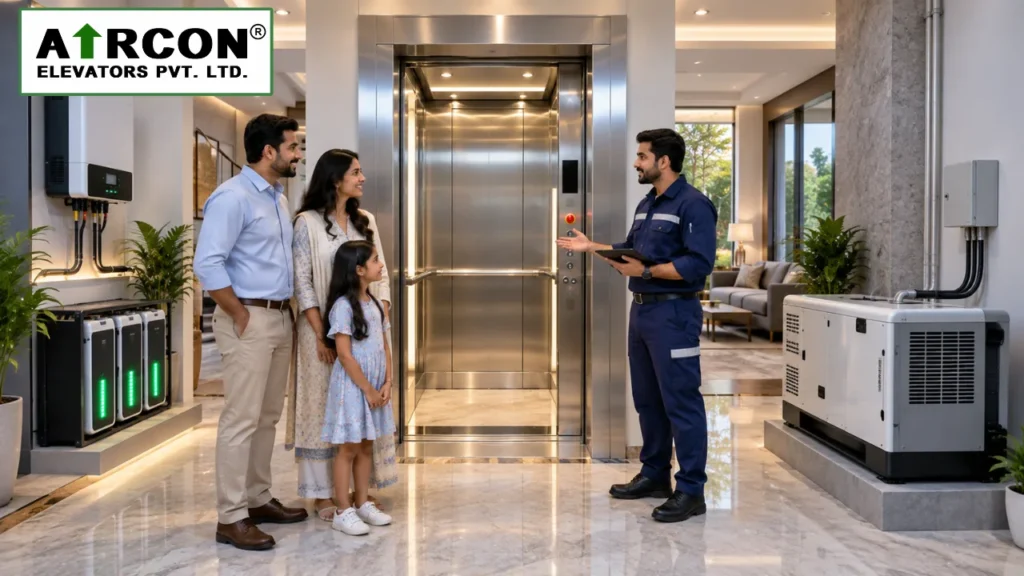
Installing a home elevator improves comfort, accessibility, and convenience. However, many homeowners ask an important question before making a purchase: What happens if the electricity goes out? More importantly, they want to know whether a Home Elevator Power Backup is necessary and whether an inverter or generator is the better choice.
The answer depends on several factors, including the elevator technology, the number of floors, the frequency of power cuts, and your daily usage. Therefore, understanding your backup options before installation helps you make a smarter investment while improving safety and reliability.
Moreover, a properly planned power backup system can reduce inconvenience during outages and keep your elevator available whenever you need it most.
If you’re planning to install a residential lift, understanding Home Elevator Power Backup options should be an important part of your buying decision.
Highlights
| Power Backup Option | Best For |
| ARD (Automatic Rescue Device) | Safe rescue during power failure |
| Inverter | Short power outages |
| Generator | Long-duration backup |
| Battery Backup | Emergency operation |
| Professional Planning | Reliable long-term performance |
Why Home Elevator Power Backup Matters
Electricity interruptions can happen unexpectedly. As a result, homeowners often worry about getting stuck inside the elevator during a power cut.
Fortunately, modern residential elevators are designed with several safety features that minimize this risk. In addition, choosing the right backup solution helps maintain convenience and reduces unnecessary interruptions.
A proper Home Elevator Power Backup can help:
- Improve passenger safety
- Reduce downtime during outages
- Support smooth elevator operation
- Protect sensitive electrical components
- Increase user confidence
- Enhance overall reliability
Most importantly, selecting the correct backup system before installation is usually more economical than upgrading later.
If you’re still planning your project, our Home Elevator Installation Guide explains the complete installation process from planning to final commissioning.
What Happens to Home Elevator Power Backup During a Power Cut?
One of the biggest concerns among homeowners is what happens when electricity suddenly fails while someone is using the elevator.
Fortunately, modern home elevators include multiple safety systems designed for such situations.
Depending on the elevator model, several things may happen:
- The elevator safely stops.
- Emergency lighting switches on.
- Communication systems remain available (where provided).
- The Automatic Rescue Device (ARD) may move the elevator to the nearest floor.
- Passengers can exit safely after the doors open.
Therefore, a power outage does not automatically mean passengers will remain trapped for a long period.
However, the exact response depends on the elevator configuration and installed safety features.
Does Every Home Elevator Need a Home Elevator Power Backup?
The answer depends on your home’s requirements.
For example, homes located in areas with frequent power cuts usually benefit from a dedicated backup solution. On the other hand, homes with highly reliable electricity may require only the standard emergency rescue system provided by the elevator manufacturer.
Several factors influence this decision:
- Local electricity reliability
- Number of daily elevator trips
- Number of floors
- Elderly family members
- Wheelchair users
- Medical accessibility needs
Furthermore, discussing these factors with your elevator company before installation helps determine the most suitable backup solution.
What Is an Automatic Rescue Device (ARD)?
Many homeowners confuse an inverter with an Automatic Rescue Device (ARD). However, both systems perform different functions.
An ARD is an emergency safety feature that activates during a power failure.
Instead of continuing normal elevator operation, the ARD typically performs a limited emergency sequence by:
- Detecting the power outage
- Using stored backup power
- Moving the elevator slowly to the nearest landing
- Opening the doors safely
- Allowing passengers to exit
As a result, passengers are not left waiting inside the elevator until electricity returns.
If you’d like to learn more, read our guide on What Is ARD (Automatic Rescue Device) in Elevators? Additionally, homeowners should always ensure that the electrical installation follows the Bureau of Indian Standards (BIS) guidelines wherever applicable.
Can a Home Elevator Run on an Inverter?
This is one of the most searched questions by homeowners.
The answer is yes—but not every elevator can operate efficiently on a standard home inverter.
Firstly, every elevator has different motor specifications and power requirements.
Secondly, starting current is often much higher than normal operating current.
Therefore, the inverter must be properly selected according to the elevator manufacturer’s technical recommendations.
Some home elevators can operate for multiple trips using an appropriately sized inverter system. However, others may only use backup power for emergency rescue instead of continuous operation.
Because every installation is different, professional evaluation is always recommended before selecting an inverter.
Which Home Elevators Can Support Inverter Backup?
Not every residential elevator has identical electrical requirements.
Generally, inverter compatibility depends on:
- Elevator drive technology
- Motor capacity
- Starting current
- Rated load
- Travel height
- Control system
- Manufacturer recommendations
Similarly, premium residential elevators often include intelligent controllers that work more efficiently with modern backup systems.
If you’re comparing elevator technologies, understanding the differences before purchase can help you choose a system that better matches your home’s electrical setup.
Why Professional Planning Is Important
Choosing a power backup system is not simply about purchasing a larger inverter.
Instead, engineers evaluate multiple technical factors before recommending the most suitable solution.
These typically include:
- Power requirements
- Elevator model
- Building electrical infrastructure
- Expected daily usage
- Safety features
- Future maintenance needs
Consequently, professional planning helps avoid undersized equipment, unnecessary expenses, and long-term reliability issues.
It also ensures that the Home Elevator Power Backup system works safely with the elevator rather than causing electrical compatibility problems.
Generator vs Inverter: Which Is Better for Home Elevator Power Backup?
Many homeowners compare generators and inverters before installing a lift. However, both serve different purposes and offer different advantages.
The comparison below makes the decision easier.
| Feature | Inverter | Generator |
| Best for | Short power cuts | Long power outages |
| Noise | Very Low | Moderate |
| Automatic Operation | Possible | Possible |
| Fuel Required | No | Yes |
| Maintenance | Low | Higher |
| Running Duration | Limited | Longer |
Therefore, if your area experiences occasional power cuts, an inverter may be sufficient. On the other hand, if electricity outages are frequent or last several hours, a generator may be a better long-term solution.
How Much Inverter Capacity Is Needed for a Home Elevator?
One of the most common questions homeowners ask is how large the inverter should be.
Unfortunately, there is no universal answer because every elevator has different electrical requirements.
Engineers usually calculate the inverter capacity based on:
- Elevator motor rating
- Starting current
- Rated load capacity
- Number of floors
- Travel distance
- Controller specifications
- Expected backup duration
Therefore, homeowners should never purchase an inverter based only on online recommendations or assumptions.
Instead, it’s also helpful to understand how much electricity a home lift typically consumes before selecting the right power backup system. Always request the required electrical specifications from your elevator manufacturer before making a final decision.
Can Battery Backup Replace an Inverter?
Some modern residential elevators include built-in battery backup systems.
However, these batteries are primarily designed for emergency rescue rather than continuous elevator operation.
Typically, battery backup allows the elevator to:
- Reach the nearest landing
- Open the doors safely
- Let passengers exit
- Shut down safely
Consequently, battery backup should not be considered a replacement for a properly sized inverter or generator.
Things to Ask Before Choosing a Home Elevator Power Backup
Before finalizing your elevator purchase, ask your elevator company the following questions.
- Does this elevator support inverter operation?
- Is an Automatic Rescue Device (ARD) included?
- What inverter capacity is recommended?
- Is a generator necessary for my location?
- How many trips can the elevator make during a power outage?
- Does the backup system operate automatically?
- What maintenance does the backup system require?
Furthermore, getting clear answers before installation helps avoid unnecessary expenses later. Our guide on questions to ask before buying a home elevator can help you make a more informed decision.
Common Mistakes to Avoid
Many homeowners make decisions based only on price.
However, the cheapest solution may not provide reliable performance.
Avoid these common mistakes:
- Buying an undersized inverter
- Ignoring the elevator manufacturer’s recommendations
- Assuming every elevator works with any inverter
- Skipping electrical load calculations
- Forgetting future maintenance requirements
- Choosing backup equipment without professional advice
Ultimately, proper planning improves both safety and long-term reliability.
Why Professional Guidance Makes a Difference
Selecting the right Home Elevator Power Backup involves more than comparing products.
Instead, experienced elevator engineers evaluate the building, electrical system, elevator specifications, and expected usage before recommending the most suitable solution.
Professional planning offers several advantages. Likewise, understanding the home elevator installation timeline helps homeowners schedule electrical work, backup installation, and final testing more efficiently.
- Accurate electrical calculations
- Proper equipment selection
- Safe installation
- Better system compatibility
- Improved long-term performance
- Reduced maintenance issues
Finally, investing in expert guidance before installation helps homeowners avoid costly mistakes while ensuring dependable elevator operation.
Frequently Asked Questions
Yes. Many modern home elevators include an Automatic Rescue Device (ARD), while some systems can also operate with an appropriately designed inverter or generator.
It depends on the elevator model and its electrical requirements. Therefore, always follow the manufacturer’s recommendations before selecting an inverter.
Generators generally provide longer backup during extended outages. However, inverters are quieter, require less maintenance, and are suitable for shorter interruptions.
Not every model includes it as a standard feature. Therefore, confirm this with your elevator supplier before purchasing.
In many cases, yes. However, planning the backup system during the initial installation is usually easier and more cost-effective.
Final Thoughts
Choosing the right Home Elevator Power Backup is an important part of planning a safe and reliable residential elevator. While an Automatic Rescue Device helps passengers exit safely during a power failure, an inverter or generator can provide additional convenience depending on your home’s power conditions.
Moreover, every elevator has different electrical requirements. Therefore, homeowners should always consult an experienced elevator company before selecting any backup solution.
In conclusion, investing in the right power backup not only improves convenience during outages but also supports safer, smoother, and more dependable elevator operation for years to come.