
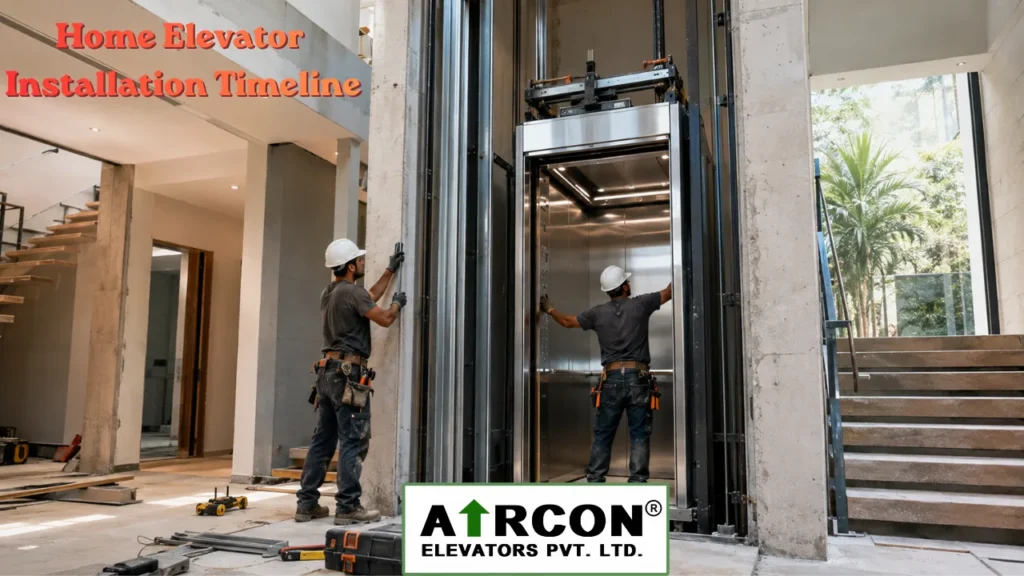
Understanding the Home Elevator Installation Timeline is essential before investing in a residential lift. One of the first questions most homeowners ask is, “How long does it take to install a home elevator?”
The answer depends on several factors, including the type of elevator, building readiness, civil work, customization, and site conditions. While many people expect the installation to be completed within a few days, a successful project involves careful planning, manufacturing, professional installation, testing, and safety inspections.
Knowing the Home Elevator Installation Timeline helps homeowners plan their construction schedule, coordinate with contractors, and avoid unnecessary delays. If you’re still planning your project, reviewing our detailed Home Elevator Installation Guide can help you better understand each stage before work begins.
Highlights
| Factor | Impact on Installation Time |
| Building Readiness | Faster installation if civil work is completed |
| Elevator Type | Different systems require different installation times |
| Customization | Custom cabins may increase manufacturing time |
| Site Conditions | Structural changes can extend the schedule |
| Building Age | Existing homes may require structural modifications |
| Testing & Commissioning | Essential before handing over the elevator |
Home Elevator Installation Timeline: Why It Differs for Every Home
No two buildings are exactly the same, which means installation timelines also vary.
A newly constructed house usually allows for a faster installation because the elevator shaft, electrical provisions, and machine space are already planned during construction. In contrast, installing an elevator in an existing home may require additional structural modifications before the actual installation can begin.
This is why experienced manufacturers always perform a detailed site inspection before providing an estimated project timeline.
Typical Home Elevator Installation Timeline
Although every project is unique, a standard residential elevator project generally follows these stages.
Step 1: Site Inspection and Requirement Analysis
The process begins with a technical visit by the engineering team.
During this stage, engineers inspect:
- Available installation space
- Building structure
- Floor-to-floor height
- Electrical availability
- Entrance location
- User requirements
Proper planning at this stage helps prevent delays later in the project.
If you’re still deciding where your elevator should be installed, our guide on Best Elevator Location for Home can help you choose the most practical position.
Step 2: Finalizing the Elevator Design
After the inspection, the elevator design is prepared according to the building layout.
This includes:
- Cabin dimensions
- Door configuration
- Travel height
- Load capacity
- Interior finishes
- Safety features
- Control system
Homeowners should also verify the required Home Elevator Dimensions before approving the final drawings, as even small design changes after production begins can increase the overall project timeline.
Step 3: Civil Work Preparation
One of the biggest reasons for installation delays is incomplete civil work.
Before installation starts, the following work should normally be completed:
- Elevator shaft construction
- Electrical wiring
- Proper flooring levels
- Landing openings
- Machine room preparation (if required)
- Ventilation arrangements
Accurate Elevator Shaft Dimensions are especially important because even minor measurement errors can require additional structural corrections.
For homeowners looking for simpler installation options, a Pitless Elevator for Home may reduce certain civil work requirements depending on the building design.
Step 4: Manufacturing the Elevator
Once all technical drawings are approved, manufacturing begins.
During this phase, different components are fabricated and assembled, including:
- Cabin structure
- Doors
- Guide rails
- Drive system
- Control panel
- Safety devices
- Electrical components
If you’ve selected premium cabin finishes or custom design options, manufacturing may take slightly longer than standard models. Manufacturing timelines can also vary depending on whether you choose a standard residential elevator or a fully customized model with premium interiors and smart features. However, the additional time often results in an elevator that perfectly complements your home’s interior design.
Step 5: Delivery and Material Inspection
After manufacturing is complete, the elevator components are delivered to the installation site.
Before installation begins, technicians carefully inspect all materials to ensure that every component matches the approved specifications and has arrived in perfect condition.
This inspection helps avoid unexpected issues during installation and ensures that the project moves forward smoothly.
Step 6: Professional Elevator Installation
Once the site is ready and all components have been inspected, the installation process begins.
A professional installation team carefully assembles the elevator system according to the approved engineering drawings. This stage typically includes:
- Installing guide rails
- Mounting the drive system
- Fixing the elevator cabin
- Installing landing doors
- Electrical wiring and control panel connections
- Safety device installation
The actual installation time depends on the building size, elevator type, and site conditions. In many residential projects where civil work is already complete, installation can be completed much faster than homeowners expect. Experienced installation teams also ensure that every component is precisely aligned to improve ride quality, reduce future maintenance requirements, and deliver reliable long-term performance.
Choosing the right elevator system is equally important. If you’re comparing different technologies, our guide on Hydraulic vs Traction Elevators can help you understand which option is best suited for your home.
Step 7: Testing and Commissioning
Installation is only part of the project. Before an elevator is handed over, it must go through a detailed testing and commissioning process.
During this stage, technicians check:
- Cabin leveling accuracy
- Door opening and closing operation
- Emergency functions
- Automatic Rescue Device (ARD)
- Safety brakes
- Alarm system
- Control panel functions
- Ride comfort
- Noise and vibration levels
These checks help ensure the elevator operates safely and smoothly before it is put into regular use. Following recognized elevator safety standards during testing and commissioning helps ensure reliable performance and long-term passenger safety.
What Can Delay Your Home Elevator Installation Timeline?
Even a well-planned project can face delays if certain preparations are incomplete.
Some of the most common reasons include:
- Civil work not completed on time
- Incorrect shaft dimensions
- Late design changes requested by the homeowner
- Delays in selecting cabin finishes
- Electrical work not being ready
- Material delivery delays
- Limited site access during construction
Many of these issues can be avoided by finalizing the design and preparing the installation area before manufacturing begins.
How to Reduce Your Home Elevator Installation Timeline
Homeowners can significantly reduce installation time by following a few simple planning steps.
- Finalize your elevator model before construction reaches the finishing stage.
- Ensure the Elevator Shaft Dimensions are verified by the elevator company before civil work begins.
- Choose the correct Home Elevator Dimensions based on your family’s needs.
- Complete electrical and civil work before the installation team arrives.
- Avoid making design changes after manufacturing has started.
- Select cabin finishes and accessories during the design approval stage.
Good planning not only saves time but also helps prevent unnecessary project costs.
Does Elevator Type Affect Home Elevator Installation Timeline?
Yes. Different elevator systems have different installation requirements.
For example, a customized luxury elevator with premium interiors may require additional manufacturing time compared to a standard residential model. Similarly, installing an elevator in an existing house can take longer than installing one in a newly constructed building because structural modifications may be required.
Before making a final decision, it’s also worth reviewing How to Compare Home Elevator Quotations to understand what is included in different proposals and avoid unexpected surprises later.
Planning Beyond Installation
Installing a home elevator is a long-term investment, so planning should not stop after commissioning.
Homeowners should also consider:
- Warranty coverage
- Annual maintenance requirements
- Spare parts availability
- Service response time
- Future modernization options
Reading the Home Elevator Warranty Guide and understanding the benefits of an Elevator AMC in India can help you protect your investment and keep the elevator operating reliably for years.
Frequently Asked Questions
The installation itself may take only a few days once the site is ready, but the complete project—including planning, manufacturing, installation, and testing—can take several weeks depending on customization and site conditions.
Incomplete civil work, incorrect shaft measurements, late design changes, and unfinished electrical preparations are among the most common causes of project delays.
Yes. Many existing homes can accommodate a residential elevator, although some projects may require structural modifications depending on the available space and building layout.
Yes. Customized cabin designs, premium finishes, and special features generally increase the manufacturing timeline compared to standard elevator models.
Early planning, completing civil work on schedule, approving drawings quickly, and avoiding last-minute changes can help ensure a smoother and faster installation.
Final Thoughts
Understanding the Home Elevator Installation Timeline helps homeowners plan their construction project more efficiently. Installing a home elevator is not just about placing a lift inside your house—it involves planning, engineering, manufacturing, installation, testing, and long-term maintenance.
Before starting your project, work with an experienced elevator company, finalize your design early, and prepare the site according to technical requirements. By planning your Home Elevator Installation Timeline in advance, you can reduce delays, avoid unnecessary costs, and ensure a smooth installation experience.