
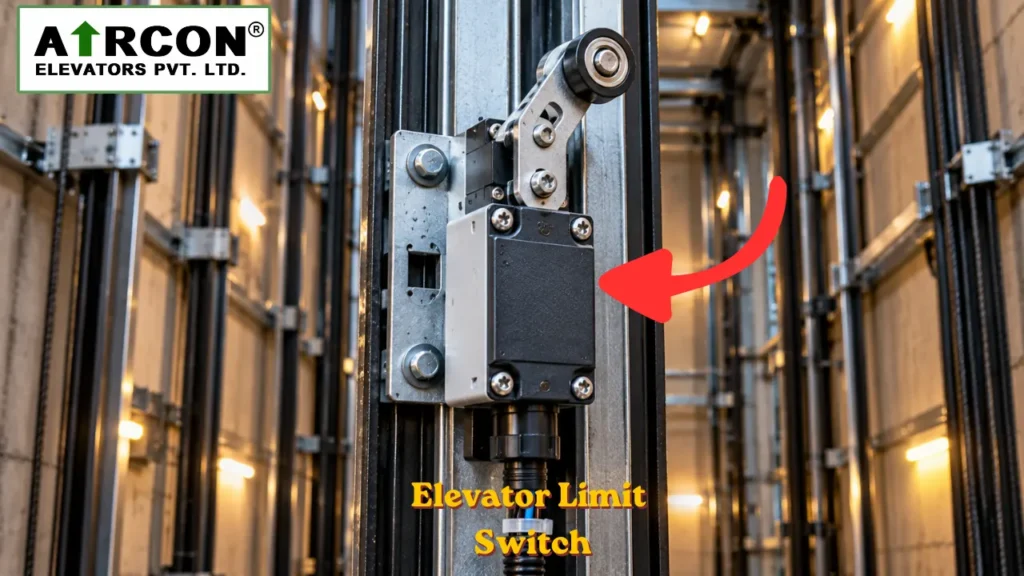
Elevators rely on dozens of safety devices to move passengers smoothly and securely between floors. Among these components, the elevator limit switch plays a crucial role in protecting the lift from traveling beyond its safe operating range. Although passengers rarely notice this small device, it continuously monitors elevator movement and helps prevent mechanical damage and dangerous overspeed situations.
Whenever the lift approaches its predefined travel limits, the limit switch communicates with the control system and takes appropriate action to stop or slow the lift. This extra layer of protection helps ensure reliable elevator performance in residential, commercial, and industrial buildings.
In this guide, you’ll learn what a limit switch is, how it works, the different types available, where it is installed, and why it is one of the most important safety components in any lift system.
What Is an Elevator Limit Switch?
An elevator limit switch is an electrical safety device that detects when the elevator cabin reaches a predetermined position within the elevator shaft. Its primary function is to prevent the lift from traveling beyond its designed upper or lower limits.
Instead of allowing the cabin to continue moving into an unsafe area, the limit switch immediately sends a signal to the elevator controller. The controller then slows down or stops the elevator before any damage can occur.
In simple terms, the limit switch acts like a protective checkpoint that keeps the elevator operating within its safe travel range.
Why Is an Elevator Limit Switch Important?
Every elevator is designed to travel within a specific range inside the shaft. If the cabin goes beyond these predefined limits because of a system malfunction or mechanical issue, it can damage important elevator components.
An elevator limit switch helps prevent these situations by:
- Preventing overtravel at the top and bottom floors
- Protecting passengers and elevator equipment
- Reducing the risk of mechanical damage
- Supporting safe elevator operation
- Improving overall system reliability
Without properly functioning limit switches, even a small control fault could create major safety risks.
How Does an Elevator Limit Switch Work?
Even though the limit switch is compact, it performs a critical safety function through a simple and dependable operating mechanism.
Step 1: Elevator Starts Moving
When passengers select a floor, the elevator controller moves the cabin in the required direction.
Step 2: Cabin Approaches the Travel Limit
When the elevator approaches its upper or lower travel limit, a specially positioned actuator or cam comes into contact with the limit switch and activates it.
Step 3: Limit Switch Activates
The actuator presses the limit switch, causing its electrical contacts to change position.
Step 4: Signal Reaches the Controller
Immediately after activation, the limit switch sends a signal to the elevator controller.
Step 5: Elevator Stops Safely
The controller responds by slowing or stopping the elevator before it travels beyond its safe operating limit.
As a result, both passengers and elevator components remain protected.
Main Components of an Elevator Limit Switch
Although manufacturers use different designs, most elevator limit switches contain similar parts.
Switch Housing
Protects all internal electrical components from dust, moisture, and mechanical damage.
Actuator Lever
Detects the elevator’s movement and physically activates the switch.
Electrical Contacts
Open or close the electrical circuit after the actuator is pressed.
Mounting Bracket
Keeps the switch securely fixed inside the elevator shaft.
Wiring Terminal
Provides the electrical connection that allows the limit switch to communicate with the elevator’s safety control system.
Types of Elevator Limit Switches
Elevator manufacturers use different types of limit switches depending on the lift design, travel height, and safety requirements.
1. Normal Limit Switch
A normal limit switch controls the elevator during routine operation. As the cabin approaches the upper or lower end of its travel, this switch sends a signal to the controller, allowing the lift to stop smoothly at the correct position.
Most passenger elevators use this switch as part of their standard control system.
2. Final Limit Switch
The final limit switch serves as an additional safety backup. If the normal limit switch fails or the controller cannot stop the elevator in time, this switch immediately cuts the control circuit and prevents further movement.
Since it operates only when an unusual situation occurs, this switch provides an additional layer of protection for both passengers and elevator equipment.
3. Rotary Limit Switch
Some elevators, particularly industrial goods lifts and specialized lifting equipment, use rotary limit switches.
Instead of detecting direct contact, this switch monitors rotational movement through gears or shafts. It provides highly accurate position control for elevators with long travel distances.
4. Adjustable Limit Switch
Certain elevator systems use adjustable limit switches that allow technicians to fine-tune the activation point during installation or modernization projects.
As a result, technicians can fine-tune the activation point to improve overall stopping accuracy.
Where Is the Elevator Limit Switch Installed?
The installation location depends on the elevator manufacturer and system design.
However, limit switches are commonly installed:
- Near the top of the elevator shaft
- Near the bottom of the shaft
- Along the guide rail structure
- Along the counterweight movement area in certain elevator configurations
- Close to the elevator machine or actuator mechanism
This installation position enables the switches to detect when the cabin approaches its permitted travel limits.
Common Problems with Elevator Limit Switches
Although limit switches are highly reliable, they can develop faults after years of continuous operation.
Some common problems include:
- Dust or dirt buildup
- Loose electrical wiring
- Worn actuator lever
- Misaligned switch position
- Damaged electrical contacts
- Corrosion caused by moisture
- Improper installation or adjustment
If left unattended, these faults can affect the switch’s performance, so technicians should resolve them without unnecessary delay.
Signs of a Faulty Elevator Limit Switch
A damaged limit switch may produce several warning signs during elevator operation.
Common symptoms include:
- Elevator stops unexpectedly.
- Lift refuses to move.
- Elevator displays safety fault codes.
- Cabin cannot reach the top or bottom floor.
- Intermittent stopping during travel.
- Maintenance system reports a limit switch error.
If any of these symptoms appear repeatedly, a qualified elevator technician should inspect the system immediately.
Elevator Limit Switch Maintenance Tips
Routine maintenance helps ensure reliable operation and extends the service life of the limit switch.
Technicians should:
- Inspect the actuator for wear or damage.
- Clean dust from the switch housing.
- Tighten all electrical connections.
- Verify correct switch alignment.
- Test switch operation during preventive maintenance.
- Replace damaged switches without delay.
Proper maintenance reduces unexpected breakdowns and improves elevator safety.
Importance of Elevator Limit Switches
An elevator limit switch does much more than stop the cabin at the end of its travel. It protects passengers, mechanical components, and the overall elevator system by preventing unsafe movement.
Here are some of its biggest advantages:
- Prevents the elevator from traveling beyond its safe operating range.
- Helps protect passengers during abnormal operating conditions.
- Reduces wear on major elevator components.
- Supports smooth and reliable elevator operation.
- Works together with other elevator safety systems.
- Minimizes the risk of costly repairs caused by overtravel.
- Improves the overall lifespan of the elevator.
Without properly adjusted limit switches, an elevator cannot deliver the level of safety expected in modern buildings.
Frequently Asked Questions (FAQs)
An elevator limit switch is a safety device that detects when the elevator reaches its maximum or minimum permitted travel position and signals the controller to stop further movement.
Technicians typically install limit switches near the top and bottom of the elevator shaft so they can monitor the cabin’s travel limits accurately.
A faulty limit switch may cause unexpected stopping, travel restrictions, safety fault messages, or prevent the elevator from operating normally. The system should be inspected immediately by a qualified technician.
Most manufacturers recommend checking limit switches during every scheduled preventive maintenance visit to ensure proper operation and alignment.
Yes. A door interlock verifies that the landing doors are safely locked before the elevator moves, whereas a limit switch monitors the cabin’s travel limits inside the shaft.
Conclusion
Among all elevator safety devices, the limit switch plays a key role in keeping the lift operating within its designed travel limits. Although passengers rarely notice its presence, it continuously monitors the elevator’s travel and helps prevent unsafe movement beyond the designed operating limits.
Regular inspections, accurate adjustment, and timely replacement of worn switches help maintain reliable elevator performance while reducing the risk of unexpected breakdowns. Whether you’re maintaining a residential lift, a commercial elevator, or an industrial goods lift, understanding how limit switches work highlights their essential role in safe and dependable elevator operation.