
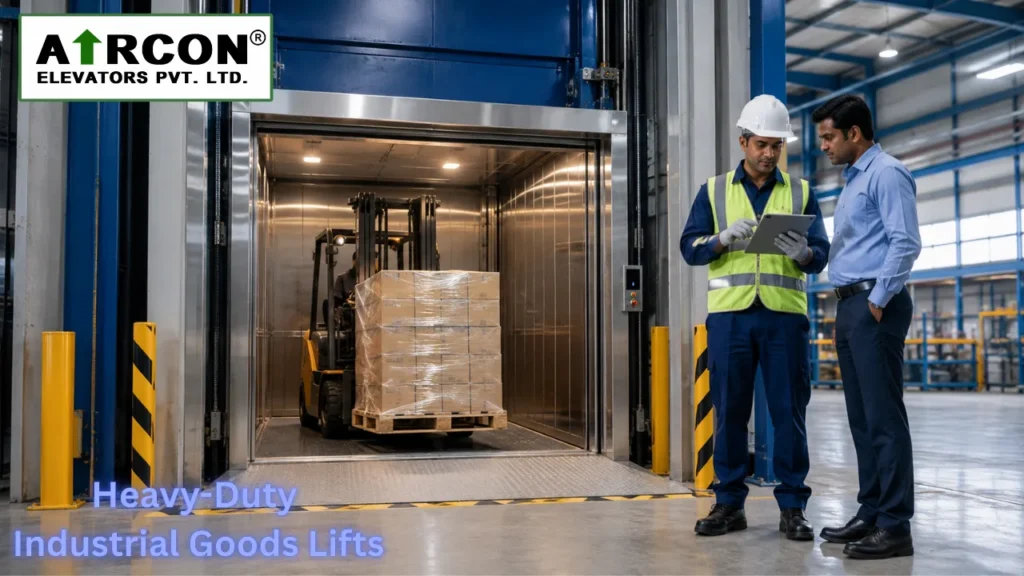
Industrial facilities depend on efficient material handling to maintain productivity. While forklifts and conveyors play an important role, heavy-duty industrial goods lifts provide a safe and reliable solution for moving raw materials, machinery, finished products, and palletized goods between floors. Selecting the right goods lift requires more than choosing a high load capacity. Factors such as shaft dimensions, lift size, travel height, and structural requirements directly affect safety and long-term performance.
This guide explains the essential load capacities and shaft specifications you should understand before installing an industrial goods lift.
What Is a Heavy-Duty Industrial Goods Lift?
A heavy-duty industrial goods lift is a vertical transportation system designed specifically for moving materials rather than passengers. Manufacturers commonly install these lifts in factories, warehouses, logistics centers, pharmaceutical plants, automotive facilities, and manufacturing units where heavy loads require safe and efficient movement.
Unlike passenger elevators, goods lifts prioritize strength, durability, and high carrying capacity.
Understanding Load Capacities
Choosing the correct load capacity is the first step in selecting an industrial goods lift. An undersized lift can reduce productivity, while an oversized system may increase installation costs unnecessarily.
Typical industrial goods lift capacities include:
| Application | Typical Capacity |
| Small warehouses | 500 to 1,000 kg |
| Manufacturing units | 1,000 to 2,000 kg |
| Heavy industrial facilities | 2,000 to 5,000 kg |
| Specialized industrial applications | 5,000 kg and above |
The ideal capacity depends on the heaviest load you expect to transport, including pallets, machinery, containers, or production equipment.
Key Shaft Specifications
The elevator shaft forms the structural space that houses the lift system. Proper shaft planning ensures smooth installation and reliable operation.
Shaft Width and Depth
- The shaft should provide enough space for the lift cabin, guide rails, landing doors, and safety clearances. Larger load capacities generally require wider and deeper shafts.
Pit Depth
- The lift pit supports the elevator structure and safety components located beneath the cabin. A correctly designed pit allows the lift to stop safely while protecting maintenance personnel during inspections.
Overhead Clearance
- Adequate overhead space above the highest landing accommodates the lift machinery, guide rail extensions, and safety equipment. Insufficient headroom can delay installation and increase project costs.
Door Opening Size
- Industrial goods often move on pallets or trolleys. Wide door openings simplify loading and unloading while reducing the risk of product damage.
Factors That Influence Lift Selection
Every industrial facility has different operational requirements. Before choosing a goods lift, evaluate:
- Maximum load weight
- Size of transported materials
- Number of daily operating cycles
- Travel height between floors
- Available shaft dimensions
- Power supply requirements
- Future production expansion plans
Considering these factors early helps avoid expensive modifications later.
Essential Safety Features
Modern industrial goods lifts include advanced safety systems that improve reliability and reduce operational risks.
Recommended features include:
- Overload protection
- Emergency stop button
- Door interlock system
- Automatic leveling
- Emergency lowering function
- Limit switches
- Battery backup for emergency operation
Regular inspection and preventive maintenance help keep these systems functioning correctly throughout the lift’s service life.
Industries That Use Heavy-Duty Goods Lifts
Heavy-duty goods lifts serve a wide range of industries, including:
- Manufacturing plants
- Warehouses
- Automobile industries
- Pharmaceutical facilities
- Food processing units
- Textile factories
- Printing industries
- Logistics and distribution centers
Each industry may require customized cabin dimensions and load capacities based on its operational needs.
Why Professional Planning Matters
Installing an industrial goods lift involves structural, electrical, and mechanical planning. Working with an experienced elevator manufacturer helps ensure that the lift matches the building layout, production workflow, and future operational requirements.
A properly designed goods lift improves productivity, minimizes manual handling, and supports a safer workplace.
Why Choose Aircon Elevators Pvt. Ltd.?
Aircon Elevators Pvt. Ltd. designs and manufactures customized industrial goods lifts for factories, warehouses, commercial buildings, and logistics facilities. Our solutions combine robust engineering, reliable safety features, and high-performance operation to meet demanding industrial environments.
Frequently Asked Questions
Standard industrial goods lifts commonly range from 500 kg to 5,000 kg, while customized systems can handle significantly heavier loads based on project requirements.
No. Industrial goods lifts are designed for transporting materials and equipment. Passenger transport should only use elevators specifically designed and certified for people.
Professional inspections and preventive maintenance should follow the manufacturer’s recommendations and local safety regulations to ensure reliable performance and safe operation.
Heavy-duty industrial goods lifts play a vital role in modern manufacturing and warehouse operations. Selecting the correct load capacity, planning proper shaft specifications, and investing in professional installation help maximize efficiency, improve workplace safety, and reduce long-term maintenance costs. By evaluating operational needs before installation, businesses can choose a lifting solution that delivers dependable performance for many years.