
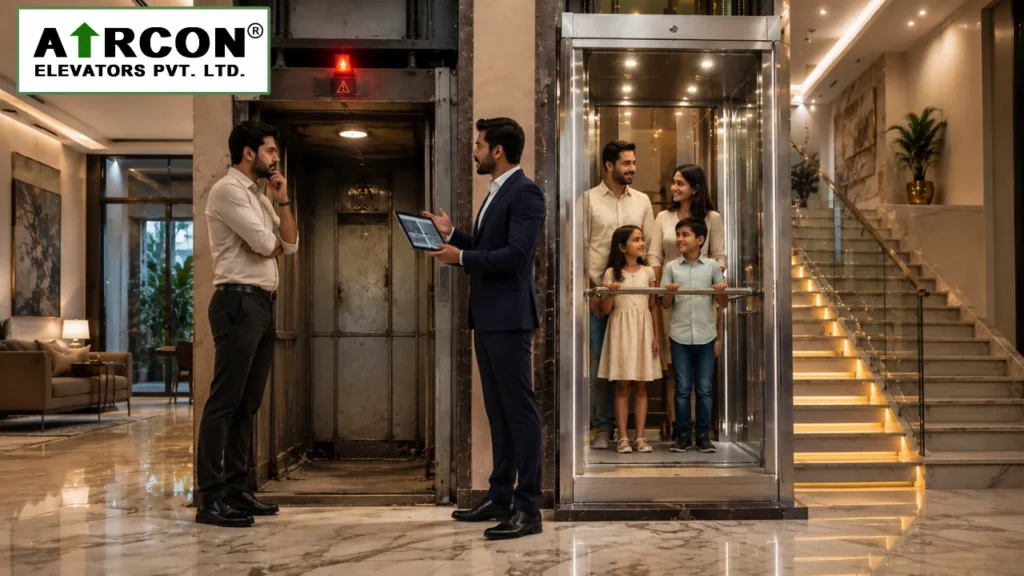
Buying the wrong home elevator is one of the most expensive mistakes a homeowner can make. Many people compare only prices or cabin designs and ignore important factors like safety, maintenance, ride quality, and after-sales support. Months later, they start facing frequent breakdowns, noisy operation, unexpected repair bills, or an elevator that doesn’t meet their family’s needs. Fortunately, most of these costly mistakes can be prevented by asking the right questions and understanding what to look for before making your final decision. If you know the warning signs before making your decision, you can choose a home elevator that offers comfort, safety, reliability, and long-term value instead of future regrets.
| Warning Sign | Why It Matters |
| Choosing the cheapest option | May compromise quality and safety |
| Ignoring future family needs | Can lead to expensive upgrades |
| Missing safety features | Higher risk during emergencies |
| Poor installation planning | Delays and additional civil work |
| Weak after-sales service | Longer downtime and costly repairs |
| Low build quality | Reduced lifespan and poor experience |
| No maintenance planning | Higher ownership costs |
Wrong Home Elevator Sign #1: Comparing Only the Price
One of the biggest mistakes homeowners make is selecting an elevator simply because it has the lowest quotation.
A cheaper elevator may initially save money, but it can become far more expensive over time if it requires frequent repairs, lower-quality spare parts, or early modernization.
Instead of asking,
“Which company is the cheapest?”
Ask,
“Which elevator gives me the best value over the next 15–20 years?”
The total ownership cost is always more important than the purchase price alone.
2. You’re Not Thinking About Your Family’s Future
Your family’s needs today may be very different five or ten years from now.
Parents grow older.
Children grow up.
Temporary mobility issues can happen unexpectedly.
If you’re already investing in a home elevator, choose a solution that continues to serve every family member comfortably for years.
Thinking ahead today can save thousands in future modifications. Planning for future accessibility also aligns with accessible home design guidelines, helping homeowners create a safer and more practical living environment.
3. Important Safety Features Are Missing
Many buyers don’t ask what safety features are included until after installation.
Every modern home elevator should include reliable safety systems such as:
- Automatic Rescue Device (ARD)
- Door Safety Sensors
- Emergency Alarm
- Battery Backup
- Overload Protection
- Emergency Stop Button
These features aren’t luxury additions—they’re essential for everyday safety.
Never assume every elevator includes them as standard.
Always verify before placing your order.
4. No One Explains the Long-Term Maintenance Cost
Installation is only the beginning of your ownership journey.
Every elevator requires regular servicing to maintain smooth performance and passenger safety.
Ask questions like:
- How often is servicing required?
- Are spare parts easily available?
- What does the maintenance plan include?
- What happens during an emergency breakdown?
Understanding maintenance before buying helps you avoid unpleasant financial surprises later.
5. The Build Quality Doesn’t Match the Price
A beautiful brochure doesn’t always mean premium quality.
Before making your final decision, carefully inspect:
- Cabin finish
- Door movement
- Control panel
- Flooring
- Lighting
- Handrails
- Cabin vibration
- Noise level
A premium elevator should feel solid, quiet, smooth, and comfortable—not loose or noisy.
Small details often reveal the overall quality of the installation.
6. The Company Doesn’t Perform a Proper Site Inspection
Every house is unique.
Without a detailed site inspection, problems may appear during installation, including:
- Incorrect shaft dimensions
- Electrical modifications
- Additional civil work
- Delays in installation
- Space limitations
A professional site survey ensures that the elevator fits your home correctly before work begins.
If someone provides a quotation without even inspecting your property, consider it a warning sign.
7. You’re Ignoring After-Sales Support
Many homeowners focus only on installation and forget what happens afterward.
Imagine your elevator develops a problem two years later.
Will the company respond quickly?
Are trained engineers available?
Can spare parts be arranged without long delays?
Reliable after-sales support is just as important as the installation itself.
A trusted service network protects your investment for years.
How to Avoid Choosing the Wrong Home Elevator
Choosing the right elevator becomes much easier when you follow a simple checklist.
Before making your decision:
- Compare quality instead of only price.
- Verify all important safety features.
- Ask about maintenance costs.
- Request a professional site inspection.
- Review warranty terms carefully.
- Understand future servicing requirements.
- Choose an elevator that matches your family’s long-term needs.
Taking a little extra time before buying can save you from expensive repairs, unnecessary stress, and disappointing performance later.
Wrong Home Elevator: Final Thoughts Before You Buy
Buying a home elevator is a long-term investment that affects your family’s comfort, safety, and daily convenience. The wrong home elevator can lead to higher maintenance costs, frequent breakdowns, and years of frustration. On the other hand, choosing an elevator based on quality, safety, professional installation, and dependable service gives you peace of mind for many years. Before making your final decision, look beyond the quotation and focus on long-term value. A well-informed choice today will always be more rewarding than fixing expensive mistakes tomorrow.
FAQs
Start by comparing more than just the price. Check the elevator’s safety features, build quality, maintenance requirements, warranty, and after-sales service. A professional site inspection before installation also helps you make the right decision.
No. A lower purchase price may result in higher maintenance costs, more frequent repairs, and a shorter lifespan. It’s better to compare the total long-term value rather than only the initial price.
A reliable home elevator should include an Automatic Rescue Device (ARD), door safety sensors, emergency alarm, battery backup, overload protection, and an emergency stop button.
A site inspection helps evaluate your home’s available space, shaft dimensions, power requirements, and structural conditions. It reduces the risk of installation delays, unexpected civil work, and additional costs.
Check the cabin finish, door operation, ride smoothness, noise level, control panel quality, lighting, and overall construction. A well-built elevator should operate quietly, smoothly, and feel sturdy during every ride.
Ask about:
Safety features included
Warranty coverage
Maintenance schedule
Spare parts availability
Emergency support
Installation timeline
Annual maintenance costs
These questions help you compare suppliers and choose a solution that offers better long-term value.