
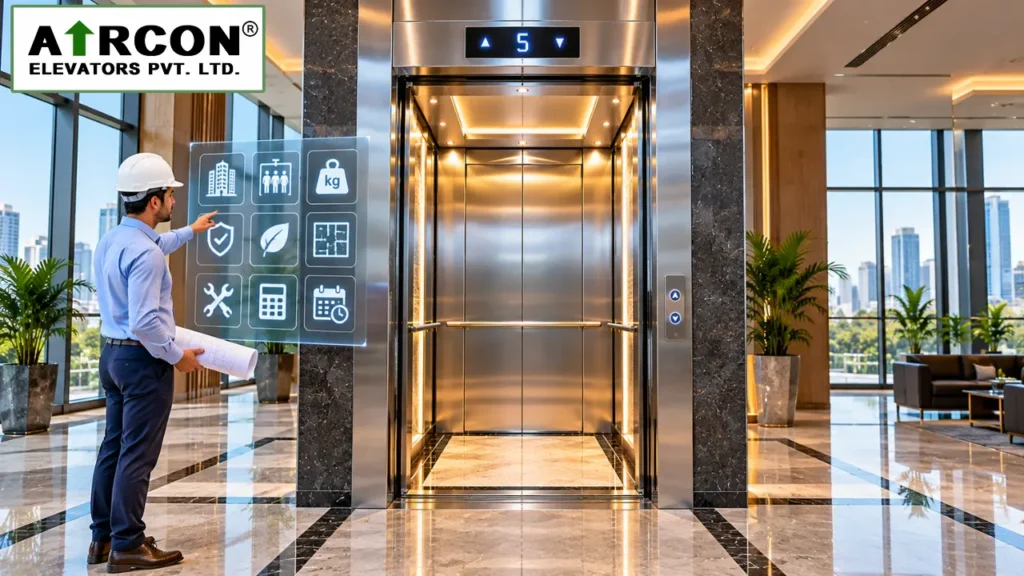
Understanding the important factors to consider before installing an elevator helps you choose the right lift for your building while improving safety, efficiency, and long-term value. Installing an elevator is a major decision that enhances accessibility, convenience, safety, and the overall value of your property. However, selecting the right elevator involves much more than choosing an attractive design. You should carefully evaluate your building’s structure, expected passenger traffic, available installation space, energy efficiency, maintenance requirements, and future accessibility needs before making a final decision. Taking these factors into account helps you choose an elevator that delivers reliable performance for many years.
This guide highlights the 10 important factors to consider before installing an elevator to help homeowners, builders, architects, and businesses make an informed choice.
1. Building Type
- The first of the 10 important factors to consider before installing an elevator is identifying where the elevator will operate. Residential homes, hospitals, offices, hotels, factories, warehouses, and shopping malls all have different traffic patterns, capacity requirements, and operating conditions. Choosing an elevator specifically designed for your building type improves efficiency, passenger comfort, and long-term reliability.
2. Number of Floors
- The height of your building plays a major role in selecting the right elevator. Low-rise buildings often benefit from hydraulic elevators because of their simple design, while traction elevators provide smoother operation, higher speeds, and better energy efficiency for medium-rise and high-rise buildings.
3. Passenger or Load Capacity
- Estimate the expected number of passengers, daily usage frequency, and required load capacity before selecting an elevator. Choosing the correct capacity helps prevent overcrowding, improves passenger comfort, and extends the elevator’s service life. Residential elevators usually require lower capacities, whereas commercial and industrial buildings often need larger cabins and higher load limits.
4. Available Installation Space (One of the Key Factors to Consider Before Installing an Elevator)
- Check whether your building has enough space for the lift shaft, pit, overhead clearance, and machine room if required. Compact elevator models are available for projects with limited space.
5. Safety Features: A Key Factor to Consider Before Installing an Elevator
Safety should never be compromised and every elevator should comply with applicable Indian elevator safety standards wherever required. Look for essential features such as:
- Automatic Rescue Device (ARD)
- Door Safety Sensors
- Overload Protection
- Emergency Alarm
- Emergency Lighting
- Battery Backup
- Overspeed Governor
- Safety Gear
- Interlocking Door System
- Emergency Communication System
- Fire Emergency Recall System
- Automatic Door Interlock
These systems help ensure safe operation during everyday use and power failures.
6. Energy Efficiency
- Modern elevators use energy-efficient motors, intelligent control systems, LED lighting, and standby power-saving modes to reduce electricity consumption without affecting ride quality. Selecting an energy-efficient elevator helps reduce electricity consumption and lowers operating expenses throughout its service life.
7. Interior Design & Customization
- An elevator should complement your building’s architecture. Choose cabin finishes, wall materials, flooring, lighting, handrails, mirrors, control panels, and door designs that complement your building’s interior while providing a comfortable passenger experience.
8. Installation & Service Support
- Select an elevator manufacturer that offers complete services, including site inspection, installation, testing, maintenance, and after-sales support. Professional installation, scheduled inspections, preventive maintenance, and prompt technical support help keep the elevator operating safely while reducing unexpected downtime.
9. Budget & Long-Term Costs
- Evaluate the total cost of ownership, including installation, preventive maintenance, spare parts availability, warranty coverage, energy efficiency, and future servicing expenses. Instead of focusing only on the lowest purchase price, compare installation quality, maintenance costs, spare parts availability, warranty coverage, and long-term reliability before making your investment.
10. Future Requirements
- Consider future building expansion, increasing passenger traffic, accessibility requirements, aging family members, and possible modernization needs. Planning ahead helps avoid costly modifications in the future. Selecting an elevator that can accommodate changing accessibility needs, higher passenger traffic, or future building expansion ensures better long-term value.
Common Mistakes to Avoid When Considering Factors to Consider Before Installing an Elevator
Many buyers focus only on the purchase price and overlook important technical factors. Avoid these common mistakes before making your decision:
- Choosing the wrong elevator type for the building.
- Ignoring future maintenance costs.
- Selecting insufficient load capacity.
- Overlooking available shaft dimensions.
- Compromising on essential safety features.
- Choosing an inexperienced installation company.
Avoiding these mistakes helps improve long-term safety, reliability, and overall investment value.
10 Important Factors to Consider Before Installing an Elevator: Why Choose Aircon Elevators Pvt. Ltd.?
Aircon Elevators Pvt. Ltd. offers customized elevator solutions for residential, commercial, healthcare, and industrial projects across India.
We provide:
- Customized Elevator Design
- Advanced Safety Features
- Professional Installation
- Premium Quality Components
- Annual Maintenance Contracts (AMC)
- Reliable After-Sales Support
Our experienced team evaluates your building, usage requirements, available space, and budget to recommend the most suitable elevator solution for long-term performance.
Why Professional Site Inspection Is One of the Factors to Consider Before Installing an Elevator
Every building has different structural requirements, available space, electrical capacity, and usage patterns. A professional site inspection allows elevator experts to recommend the most suitable elevator type, shaft dimensions, machine configuration, and safety features before installation begins. Early planning helps prevent installation delays, minimizes unexpected expenses, and ensures the elevator matches the building’s technical requirements.
Frequently Asked Questions
Hydraulic and compact home elevators are popular choices for residential buildings, depending on space and floor count.
The required space depends on the elevator type, load capacity, and building layout. A professional site inspection helps determine the most suitable installation solution.
Yes. Many modern elevators can be installed in existing buildings with minimal structural modifications, depending on the available space and building design.
Regular preventive maintenance is recommended to ensure safe and reliable operation throughout the year.
Yes. We offer design, manufacturing, installation, testing, AMC, modernization, and technical support across India.
Plan Your Elevator Project with Confidence
Choosing the right elevator starts with careful planning and a clear understanding of your building’s present and future requirements. By considering these important factors before installing an elevator, you can improve safety, enhance efficiency, reduce long-term operating costs, and select a lift that delivers reliable performance for many years.
Contact Aircon Elevators Pvt. Ltd. today to schedule a site inspection and receive expert guidance for your next elevator project.