
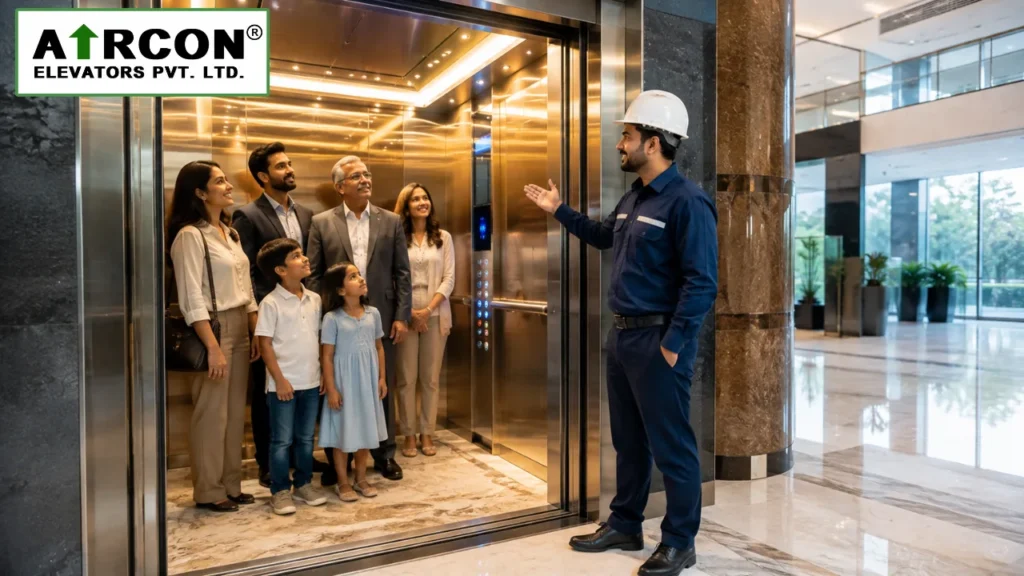
Modern elevators are no longer judged only by their speed or load capacity. Today, passengers expect a ride that feels safe, comfortable, and welcoming. One of the most important design elements that shapes this experience is elevator lighting.
Well-planned lighting improves visibility, enhances the cabin’s appearance, reduces feelings of confinement, and creates a positive impression of the entire building. Whether it’s a residential apartment, office tower, hospital, hotel, or shopping mall, the right elevator lighting contributes to both passenger comfort and operational efficiency. Modern elevator designs increasingly use energy-efficient LED lighting with even illumination to improve visibility and reduce glare.
Elevator Lighting at a Glance
| Lighting Feature | Passenger Benefit |
| LED Lighting | Energy efficient and long-lasting |
| Uniform Illumination | Better visibility and comfort |
| Warm or Neutral White Light | Pleasant cabin atmosphere |
| Emergency Lighting | Improved safety during power outages |
| Low-Heat Lighting | Cooler cabin environment |
| Modern Ceiling Design | Premium visual appearance |
Why Elevator Lighting Matters
Lighting is one of the first things passengers notice when they enter an elevator. A bright, evenly lit cabin feels cleaner, larger, and more comfortable, while poor lighting can make even a premium elevator appear outdated.
Proper elevator lighting helps:
- Improve passenger comfort
- Increase visibility inside the cabin
- Make enclosed spaces feel more open
- Support passenger confidence
- Enhance the overall appearance of the elevator
- Improve accessibility for all users
How Lighting Influences Passenger Experience
Creates a Comfortable Environment
Soft, evenly distributed lighting makes passengers feel more relaxed throughout their journey. Harsh or uneven lighting may create discomfort, especially in elevators used frequently throughout the day.
Makes the Cabin Feel Larger
Elevators are naturally enclosed spaces. Proper lighting combined with reflective cabin finishes can create the visual impression of a larger cabin, reducing feelings of confinement.
Improves Visibility
Well-designed lighting allows passengers to easily identify floor indicators, control buttons, handrails, and emergency features, making the elevator more user-friendly.
Enhances Building Image
A stylish elevator with modern lighting creates a positive first impression. Luxury hotels, premium offices, and high-end residential buildings often use decorative LED lighting to complement their interior design.
Supports Passenger Safety
Adequate illumination helps passengers move safely when entering or leaving the elevator and makes emergency controls easier to locate. Emergency lighting is also an essential safety feature during power interruptions.
Types of Elevator Lighting
Different buildings require different lighting styles depending on their design and usage.
LED Ceiling Lights
The most popular option due to their long lifespan, low energy consumption, and bright illumination.
Indirect Ambient Lighting
Hidden LED strips provide soft lighting that reduces glare while giving the cabin a premium appearance.
Decorative Accent Lighting
Often installed in luxury residential elevators, hotels, and panoramic elevators to enhance aesthetics.
Emergency Lighting
Battery-backed emergency lights automatically illuminate the cabin during power failures, allowing passengers to remain calm and safely identify controls.
Choosing the Right Elevator Lighting
When selecting elevator lighting, consider the following factors:
Building Type
A residential elevator may require warm, welcoming lighting, while commercial buildings often prefer brighter neutral lighting.
Cabin Size
Larger cabins require evenly distributed lighting to eliminate shadows and maintain consistent visibility.
Energy Efficiency
Modern LED systems consume significantly less electricity and require less maintenance than traditional lighting.
Colour Temperature
Neutral white lighting usually provides the best balance between comfort and visibility. Very cool lighting may feel harsh, while overly warm lighting can reduce clarity.
Maintenance Requirements
Choose durable lighting fixtures that offer a long service life and easy replacement when needed.
Common Lighting Mistakes to Avoid
Many elevator installations lose their premium appearance because of poor lighting design.
Avoid:
- Uneven brightness
- Excessive glare
- Dim cabins
- Poor-quality lighting fixtures
- Mismatched lighting colour
- Lack of emergency lighting
Proper lighting design should always complement the cabin interior rather than overpower it.
Why Professional Elevator Design Matters
An elevator is one of the most frequently used spaces inside any building. Professional planning ensures that lighting, cabin dimensions, ventilation, accessibility, and safety features work together to deliver a superior passenger experience.
Why Choose Aircon Elevators Pvt. Ltd.?
Aircon Elevators Pvt. Ltd. designs customized elevator solutions that combine advanced engineering with premium cabin interiors. Our elevators feature modern LED lighting, elegant ceiling designs, energy-efficient technology, and carefully planned interiors that enhance passenger comfort across residential, commercial, hospital, hotel, and industrial applications.
Frequently Asked Questions
LED lighting provides bright illumination, consumes less electricity, generates less heat, and lasts significantly longer than conventional lighting.
Yes. Proper lighting creates a brighter, more welcoming environment that makes passengers feel safer and more comfortable.
Yes. Evenly distributed lighting and reflective interior finishes can make compact elevator cabins appear more spacious.
Most modern passenger elevators include emergency lighting to maintain visibility during power interruptions and support passenger safety.
Neutral white lighting generally offers the best combination of visibility, comfort, and aesthetics for most building types.
Elevator Lighting Comparison
| Good Lighting Design | Poor Lighting Design |
| Bright and uniform | Uneven illumination |
| Comfortable atmosphere | Harsh or dim environment |
| Better visibility | Difficult to read controls |
| Premium appearance | Outdated cabin look |
| Energy-efficient LED | High power consumption |
Final Thoughts
Elevator lighting is much more than a decorative feature. It influences passenger comfort, perceived safety, visibility, accessibility, and the overall impression of a building. By selecting the right lighting design, building owners can create elevators that feel brighter, more spacious, and more inviting while improving energy efficiency and reducing maintenance costs.