
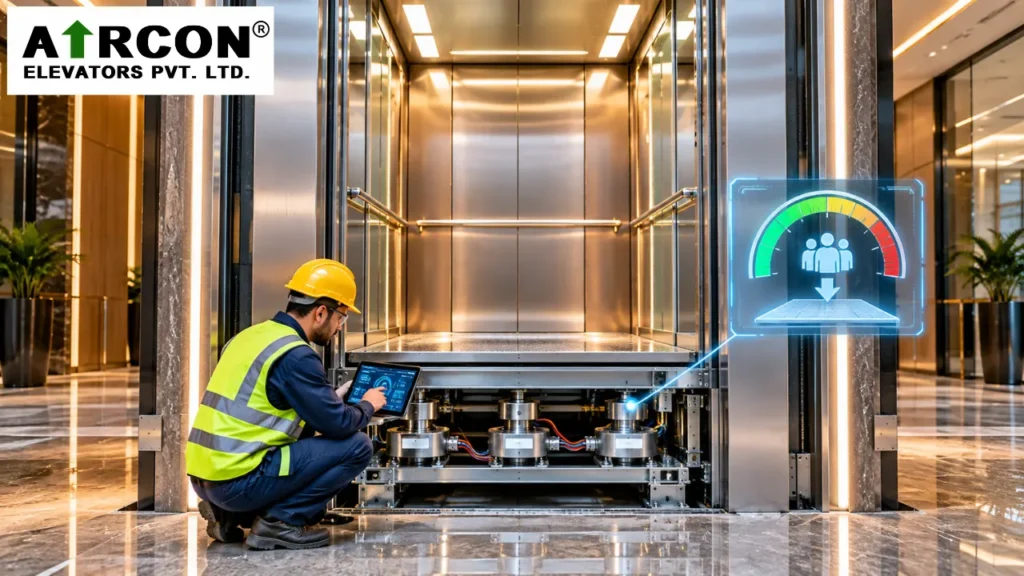
Elevator load sensors are among the most important safety components in modern elevator systems. They continuously monitor the weight inside the elevator cabin to prevent overloading, improve passenger safety, and protect critical mechanical components. Modern elevators are designed with multiple safety systems that work together to provide smooth, reliable, and secure transportation. While most passengers notice features like automatic doors, emergency alarms, and floor indicators, one of the most important safety devices remains hidden beneath the elevator cabin or within its suspension system—the elevator load sensor.
An elevator load sensor continuously measures the weight inside the elevator cabin. If the total load exceeds the elevator’s rated capacity, the system prevents the elevator from moving until enough weight has been removed. This simple yet highly effective technology helps prevent mechanical stress, improves passenger safety, reduces wear on elevator components, and supports long-term equipment reliability.
Whether it’s a residential home lift, a commercial passenger elevator, a hospital lift carrying stretchers, or an industrial goods elevator transporting heavy materials, load sensors play a critical role in ensuring safe operation every day.
In this guide, you’ll learn how elevator load sensors work, the different technologies used in modern elevators, why they are essential for accident prevention, common signs of sensor failure, maintenance best practices, and answers to frequently asked questions.
What are Elevator Load Sensors?
An elevator load sensor is an electronic or mechanical safety device that continuously measures the total weight inside an elevator cabin. It compares the measured weight with the elevator’s maximum rated capacity programmed into the controller.
When the cabin load approaches or exceeds the permitted limit, the load sensor sends information to the elevator control system. Depending on the programmed safety settings, the system may:
- Display an overload warning.
- Activate an audible alarm.
- Prevent the elevator doors from closing.
- Stop the elevator from starting until excess weight is removed.
- Record overload events for maintenance diagnostics.
Unlike a simple overload switch used in older elevators, modern load sensors provide continuous weight monitoring. This allows the elevator controller to make intelligent decisions that improve both safety and ride performance.
For example, if an elevator is rated to carry eight passengers or 544 kilograms, the load sensor continuously verifies that the total cabin weight remains within this safe operating range. If passengers exceed this limit, the elevator will remain stationary until enough weight is removed.
This system protects not only the passengers but also critical mechanical and electrical components such as the traction machine, brake system, suspension ropes, guide rails, and controller.
Why Modern Elevator Load Sensors Are Essential
Today’s elevators are far more advanced than those installed decades ago. Instead of relying on a single safety mechanism, modern elevators use multiple independent systems that constantly monitor operating conditions.
The load sensor is one of these essential safety systems because it helps:
- Prevent dangerous overloading.
- Reduce unnecessary strain on motors and suspension ropes.
- Improve ride comfort by maintaining proper acceleration and braking.
- Extend the lifespan of expensive elevator components.
- Improve leveling accuracy at each floor.
- Reduce unexpected maintenance issues.
- Increase overall passenger safety.
Without accurate load monitoring, an overloaded elevator could experience excessive stress on mechanical parts, leading to premature wear, reduced efficiency, and potentially unsafe operating conditions.
How Elevator Load Sensors Work (Basic Overview)
Many people assume that elevators can simply carry “a little extra weight” without consequences. In reality, every elevator is engineered to operate within a carefully calculated weight limit established during design, manufacturing, and safety certification.
Exceeding that limit—even repeatedly by small amounts—can significantly affect the performance and longevity of the entire elevator system.
Elevator load sensors help prevent these risks before they become serious problems.
1. Prevent Passenger Overloading
The primary purpose of a load sensor is to stop an overloaded elevator from operating.
When too many passengers or excessive cargo enter the cabin, the sensor immediately detects the increased weight. Instead of allowing the elevator to move under unsafe conditions, the control system keeps the elevator stationary and alerts passengers to reduce the load.
This prevents unnecessary stress on the lifting system while protecting everyone inside the cabin.
2. Protect Critical Elevator Components
Every moving part inside an elevator is designed for a specific operating load.
When elevators repeatedly carry more than their rated capacity, important components experience excessive stress, including:
- Traction machine
- Brake assembly
- Steel suspension ropes
- Drive sheave
- Counterweight system
- Guide rails
- Bearings
- Door operator
- Motor controller
By preventing overload conditions, load sensors help reduce wear and improve equipment reliability. To learn more about what happens when an elevator exceeds its rated capacity, read our guide on elevator overload warning signs.
3. Improve Ride Quality
Modern elevators automatically adjust several operating characteristics based on cabin load.
These include:
- Starting acceleration
- Travel speed
- Braking force
- Floor leveling accuracy
Without accurate load measurement, elevators may experience:
- Jerky starts
- Sudden stops
- Uneven floor leveling
- Increased vibration
- Reduced passenger comfort
Load sensors provide the controller with real-time information, allowing the elevator to deliver a smoother and more comfortable ride.
4. Support Energy Efficiency
Many modern elevator systems optimize motor performance according to the cabin load.
When fewer passengers are inside the elevator, the controller can reduce unnecessary power consumption. When the cabin is heavily loaded, the system automatically adjusts motor output to maintain safe and efficient operation.
This intelligent load management contributes to lower energy consumption and improved operational efficiency over the elevator’s lifetime.
5. Reduce Maintenance Costs
Operating an elevator beyond its designed capacity accelerates wear on critical components.
Over time, repeated overloading can lead to:
- Rope stretching
- Brake wear
- Motor overheating
- Increased vibration
- Controller faults
- Premature component replacement
A properly functioning load sensor helps prevent these issues, reducing repair costs and extending the service life of the elevator.
6. Improve Building Safety Compliance
Most modern building codes and elevator safety standards require elevators to include reliable overload protection.
Load sensors help building owners demonstrate compliance with safety requirements while reducing operational risks.
Routine inspection and calibration of load sensors also form an important part of preventive elevator maintenance programs.
How Elevator Load Sensors Work (Basic Overview)
Although different elevator manufacturers use different sensing technologies, the basic operating principle remains the same.
The load sensor continuously measures the force created by passengers or goods inside the elevator cabin.
The information is then transmitted to the elevator controller, which compares the measured weight with the elevator’s rated capacity.
The process typically works as follows:
Step 1: Weight Is Applied
Passengers or cargo enter the elevator cabin.
Their combined weight creates downward force on the cabin structure, suspension ropes, hydraulic system, or supporting frame, depending on the elevator design.
Step 2: The Sensor Measures the Load
Specialized sensors detect this force using one of several technologies, such as:
- Strain gauges
- Rope tension sensors
- Hydraulic pressure sensors
- Electronic load cells
Each technology converts physical force into an electrical signal.
Step 3: Data Is Sent to the Elevator Controller
The electrical signal is transmitted to the elevator’s control panel.
The controller continuously calculates the total cabin weight in real time.
This monitoring occurs throughout elevator operation—not just when passengers enter the cabin.
Step 4: The Controller Compares the Load
The controller compares the measured weight against the elevator’s programmed rated capacity.
If the load remains within safe limits, normal operation continues.
If the cabin exceeds its maximum permitted capacity, the controller immediately activates overload protection.
Step 5: Safety Functions Activate
Depending on the elevator manufacturer and system configuration, the controller may:
- Prevent the elevator from moving.
- Keep the doors open.
- Display an overload warning message.
- Sound an audible alarm.
- Wait until sufficient weight is removed.
Once the load returns to a safe level, the elevator resumes normal operation automatically.
Why This Technology Matters
An elevator load sensor does much more than prevent overloading. It acts as an intelligent monitoring system that helps the elevator controller make safer and more efficient operating decisions throughout every journey.
By continuously monitoring cabin weight, load sensors protect passengers, reduce stress on expensive equipment, improve ride quality, support energy-efficient operation, and help extend the overall lifespan of the elevator system.
Components and Types of Modern Elevator Load Sensors
In Part 1, we learned what an elevator load sensor is, why it is important, and how it helps prevent elevator overloading. Now, let’s take a closer look at the components that make up a load sensing system and the different technologies manufacturers use to measure cabin weight accurately.
Although all elevator load sensors perform the same basic function, they don’t all work in the same way. The sensing technology used depends on the elevator type, capacity, installation environment, and manufacturer.
Main Components of an Elevator Load Sensors System
A modern elevator load monitoring system consists of several components working together to ensure accurate weight measurement and safe elevator operation.
1. Load Sensor
The load sensor is the primary measuring device. It detects the force created by passengers or goods inside the elevator cabin.
Depending on the elevator design, the sensor may be installed:
- Under the elevator cabin
- On the suspension ropes
- Inside the hydraulic system
- On the cabin frame
- Near the traction mechanism
Its main responsibility is to convert mechanical force into electrical data that the controller can understand.
2. Signal Conditioning Unit
The raw signal produced by a load sensor is often very small and cannot be used directly.
A signal conditioning unit:
- Amplifies the sensor signal
- Filters electrical noise
- Improves measurement accuracy
- Converts signals into a format suitable for the controller
Without proper signal conditioning, the elevator controller may receive incorrect weight readings.
3. Elevator Controller
The elevator controller acts as the system’s brain.
It continuously receives information from the load sensor and compares the measured weight with the elevator’s programmed rated capacity.
Based on this information, the controller decides whether to:
- Start elevator movement
- Keep the doors open
- Display overload warnings
- Activate alarms
- Stop elevator operation
The controller also stores diagnostic information that maintenance technicians can review during servicing.
4. Overload Indicator
Passengers usually interact with the load monitoring system through the overload indicator.
When the elevator exceeds its rated capacity, the indicator may:
- Display “Overload”
- Flash warning lights
- Sound a buzzer
- Prevent door closing
This informs passengers that some weight must be removed before the elevator can operate safely.
5. Wiring and Communication System
Reliable communication between sensors and the controller is essential.
Modern elevators use shielded communication cables that minimize electrical interference and ensure accurate data transmission.
Some advanced elevator systems also use digital communication protocols for improved reliability and diagnostics.
Types of Elevator Load Sensors
Different elevator manufacturers use different sensing technologies depending on the application. Each type has its own advantages, limitations, and ideal use cases.
Let’s explore the most common load sensing technologies used in modern elevators.
1.Strain Gauge Elevator Load Sensors
Strain gauge load sensors are among the most accurate and widely used load sensing technologies in modern elevators.
How They Work
A strain gauge is a thin electrical resistor attached to a metal component.
When passengers enter the elevator, the cabin frame experiences a tiny amount of deformation—often too small to see with the naked eye.
The strain gauge detects this microscopic deformation.
As the metal stretches or compresses, the electrical resistance changes.
The sensor converts this change into an electrical signal that represents the cabin load.
The elevator controller then calculates the total weight based on these measurements.
Where They’re Installed
Strain gauge sensors are commonly installed on:
- Cabin support frame
- Suspension frame
- Load-bearing beams
- Structural members
They are generally not visible to passengers.
Advantages
- Very high accuracy
- Continuous real-time monitoring
- Fast response
- Long service life
- Reliable overload detection
- Suitable for residential and commercial elevators
Limitations
- Requires proper calibration
- Sensitive to improper installation
- May require recalibration after major repairs
Common Applications
Strain gauge sensors are widely used in:
- Passenger elevators
- Home elevators
- Commercial office buildings
- Hotels
- Hospitals
- Shopping malls
2. Rope Tension Elevator Load Sensors
Traction elevators use steel suspension ropes to lift and lower the elevator cabin.
Instead of measuring weight directly, rope tension sensors calculate cabin load by measuring the tension in these ropes.
How They Work
Every passenger entering the elevator increases the tension on the suspension ropes.
Rope tension sensors continuously measure this change.
The controller uses advanced calculations to estimate the cabin weight based on the rope tension.
This method provides highly accurate load information without installing sensors beneath the cabin floor.
Installation Location
These sensors are usually installed near:
- Suspension ropes
- Traction machine
- Rope anchorage
- Rope termination points
Advantages
- No cabin floor modifications required
- High reliability
- Excellent for traction elevators
- Accurate load estimation
- Easy integration with modern control systems
Limitations
- Requires periodic calibration
- Less suitable for hydraulic elevators
- Accuracy depends on rope condition and proper tension adjustment
Common Applications
Rope tension sensors are commonly found in:
- High-rise office buildings
- Commercial elevators
- Residential apartment towers
- Machine Room Less (MRL) elevators
3. Hydraulic Pressure Elevator Load Sensors
Hydraulic elevators use hydraulic cylinders instead of suspension ropes.
In these systems, cabin weight is measured through hydraulic pressure.
How They Work
As passengers enter the cabin, the hydraulic cylinder must generate more pressure to support the additional weight.
Pressure sensors installed within the hydraulic system continuously monitor this pressure.
The controller converts hydraulic pressure into an estimated cabin load.
Installation Location
Hydraulic pressure sensors are generally installed:
- Inside hydraulic lines
- Near the hydraulic cylinder
- Within the hydraulic power unit
Advantages
- Simple design
- Reliable operation
- Minimal moving parts
- Good accuracy
- Well suited for hydraulic elevators
Limitations
- Cannot be used in traction elevators
- Hydraulic oil temperature can affect readings
- Requires occasional calibration
Common Applications
Hydraulic pressure sensors are commonly used in:
- Residential home lifts
- Low-rise buildings
- Villas
- Small commercial elevators
4. Digital Elevator Load Monitoring Systems
Modern premium elevators increasingly use intelligent digital load monitoring systems.
These systems combine multiple sensors with advanced software algorithms for highly accurate weight measurement.
How They Work
Instead of relying on a single sensor, digital systems collect data from multiple sources, such as:
- Load cells
- Rope tension sensors
- Strain gauges
- Motion sensors
- Controller feedback
The software analyzes all incoming data in real time to calculate the most accurate cabin load.
Many systems also perform automatic self-diagnostics and alert technicians if abnormal readings are detected.
Advantages
- Extremely accurate
- Continuous monitoring
- Advanced diagnostics
- Predictive maintenance support
- Improved ride quality
- Better energy management
Limitations
- Higher installation cost
- More complex electronics
- Requires trained technicians for servicing
Common Applications
Digital monitoring systems are typically installed in:
- Smart buildings
- Premium commercial towers
- Airports
- Hospitals
- Luxury hotels
- Large shopping centers
Comparison of Elevator Load Sensor Technologies
| Feature | Strain Gauge | Rope Tension | Hydraulic Pressure | Digital Monitoring |
| Accuracy | Excellent | Very Good | Good | Excellent |
| Real-Time Monitoring | Yes | Yes | Yes | Yes |
| Best for Traction Elevators | Yes | Yes | No | Yes |
| Best for Hydraulic Elevators | No | No | Yes | Yes |
| Installation Complexity | Medium | Medium | Low | High |
| Maintenance Requirement | Low | Medium | Low | Medium |
| Cost | Moderate | Moderate | Low | High |
| Suitable for Smart Elevators | Yes | Yes | Limited | Excellent |
Which Elevator Load Sensors Are Best?
There is no single “best” load sensor for every elevator. The ideal choice depends on the elevator’s design, application, and operating environment.
- Strain gauge sensors offer excellent accuracy and are widely used in passenger elevators.
- Rope tension sensors are ideal for traction elevators because they measure changes in suspension rope tension without modifying the cabin.
- Hydraulic pressure sensors are the preferred choice for hydraulic elevators, where cabin weight is directly reflected in hydraulic pressure.
- Digital load monitoring systems provide the highest level of precision, diagnostics, and intelligent monitoring, making them suitable for premium and high-traffic buildings.
Choosing the right load sensing technology ensures reliable overload protection, smoother elevator performance, and lower long-term maintenance costs.
How Elevator Load Sensors Prevent Accidents, Common Problems, and Maintenance
By now, you understand what an elevator load sensor is and the different technologies used to measure cabin weight. However, the true value of a load sensor lies in its ability to prevent accidents before they happen.
Every day, elevators transport thousands of passengers in residential buildings, offices, hospitals, shopping malls, hotels, and industrial facilities. During peak hours, many people unknowingly attempt to board an already full elevator. Without an accurate load monitoring system, this could place excessive stress on critical components and compromise passenger safety.
In this section, we’ll explore how elevator load sensors help prevent accidents, identify signs of sensor failure, discuss common causes of problems, and share practical maintenance tips to ensure reliable long-term performance.
How Elevator Load Sensors Prevent Accidents
An elevator load sensor is more than just an overload warning device. It continuously communicates with the elevator controller to help maintain safe operating conditions throughout every trip.
Here are the key ways load sensors contribute to elevator safety.
1. Preventing Elevator Overloading
The most important function of a load sensor is to prevent an elevator from operating when the cabin exceeds its rated capacity.
As passengers or goods enter the cabin, the sensor measures the increasing load in real time. If the total weight exceeds the allowable limit, the controller immediately activates the overload protection system.
Depending on the elevator’s configuration, the system may:
- Display an overload warning on the control panel.
- Sound an audible alarm.
- Keep the elevator doors open.
- Prevent the elevator from moving until excess weight is removed.
This simple safety feature significantly reduces the risk of mechanical stress and unsafe operation.
Related Reading: If you’d like to learn more about overload conditions and warning systems, read our guide on Elevator Overload Warning System.
2. Protecting the Traction Machine
In traction elevators, the motor and traction machine are designed to lift a specific maximum load.
Repeated overloading forces the motor to work harder than intended, increasing operating temperature and accelerating wear.
An accurate load sensor prevents this unnecessary stress by ensuring the elevator operates only within its safe design limits.
As a result:
- The motor experiences less strain.
- Brake performance remains consistent.
- Drive components last longer.
- Energy efficiency improves.
3. Reducing Wear on Suspension Ropes
Steel suspension ropes carry the entire weight of the elevator cabin and its passengers.
When elevators are overloaded regularly, the ropes experience greater tension than their design limits.
Over time, this can lead to:
- Faster rope wear
- Reduced service life
- Increased maintenance requirements
- Higher replacement costs
Load sensors help minimize these risks by preventing repeated overload conditions.
4. Improving Braking Performance
An overloaded elevator requires more braking force than a properly loaded cabin.
If excessive weight is allowed repeatedly, braking components experience greater wear and may require earlier replacement.
By preventing overload operation, load sensors help maintain:
- Consistent braking performance
- Accurate stopping
- Smooth deceleration
- Passenger comfort
5. Maintaining Accurate Floor Leveling
Modern elevators automatically adjust leveling based on cabin weight. Accurate leveling is one of the key performance indicators evaluated during an elevator safety audit.
Without accurate weight information, an elevator may stop slightly above or below floor level.
Even small leveling errors can create trip hazards, particularly for:
- Elderly passengers
- Wheelchair users
- Hospital patients
- People carrying heavy luggage
Load sensors provide real-time weight information that helps the controller achieve precise floor leveling.
6. Supporting Predictive Maintenance
Many modern digital elevators continuously record load data.
Maintenance technicians can analyze this information to identify unusual operating patterns, such as:
- Frequent overload events
- Abnormal weight readings
- Sensor calibration drift
- Uneven loading habits
This allows potential issues to be addressed before they develop into expensive repairs or unexpected breakdowns.
Real-Life Situations Where Elevator Load Sensors Improve Safety
Understanding how load sensors work becomes easier when we look at practical examples.
Scenario 1: Office Building During Peak Hours
At the start of the workday, several employees enter an elevator already carrying passengers.
As the weight exceeds the rated capacity, the overload alarm activates, and the doors remain open until a few passengers step out.
Without this protection, the elevator would experience unnecessary mechanical stress every morning.
Scenario 2: Hospital Elevator
A hospital elevator carrying a patient on a stretcher is joined by medical staff and equipment.
The load sensor continuously measures the increasing weight.
If the safe capacity is exceeded, the elevator prevents operation until the load is reduced, ensuring patient safety and reliable performance.
Scenario 3: Residential Apartment
During a family celebration, several adults and children attempt to use the elevator together.
Instead of operating under unsafe conditions, the load sensor activates the overload warning, encouraging passengers to divide into two trips.
This simple action protects both passengers and the elevator system.
Signs of Faulty Elevator Load Sensors
Like any electronic safety device, load sensors can develop faults over time due to wear, environmental conditions, or improper calibration.
Building owners and maintenance personnel should watch for these warning signs.
Frequent False Overload Warnings
The elevator displays overload messages even when only a few passengers are inside.
This often indicates:
- Incorrect calibration
- Sensor damage
- Wiring issues
Elevator Operates While Overloaded
If an overloaded elevator continues operating without warning, the load sensor may not be measuring weight correctly.
This is a serious safety concern that requires immediate inspection.
Incorrect Floor Leveling
A faulty load sensor can provide inaccurate weight information.
As a result, the controller may miscalculate braking force, causing the elevator to stop slightly above or below the floor.
Jerky Starts and Stops
When load data becomes unreliable, the controller may apply incorrect acceleration or braking profiles.
Passengers may notice:
- Sudden movement
- Rough stopping
- Increased vibration
Inconsistent Performance
If the elevator behaves differently with similar passenger loads, the load sensor or its associated electronics should be inspected.
Common Causes of Elevator Load Sensor Failure
Although modern load sensors are designed for long service life, several factors can affect their performance.
Normal Wear and Aging
Electronic components naturally age over time.
Continuous daily operation may gradually reduce sensor accuracy.
Poor Calibration
Improper calibration after installation or maintenance is one of the most common causes of inaccurate weight measurement.
Regular calibration helps maintain reliable performance.
Mechanical Damage
Physical impacts during repairs or modernization work can damage sensors or mounting brackets.
Even slight movement of the sensor assembly may affect accuracy.
Moisture and Dust
Elevator pits and machine rooms may expose electronic components to:
- Dust
- Humidity
- Water ingress
- Corrosion
Proper environmental protection is essential.
Wiring Problems
Loose electrical connections, damaged cables, or electrical interference can interrupt communication between the sensor and controller.
Routine inspections help identify these issues before they cause system faults.
Improper Installation
Incorrect sensor positioning or mounting can lead to inaccurate readings from the first day of operation.
This highlights the importance of installation by qualified elevator professionals.
Elevator Load Sensor Maintenance Checklist
Routine maintenance is essential for ensuring long-term accuracy and reliability.
Maintenance technicians should include the following checks during scheduled service visits.
Visual Inspection
Check sensor mounting points.
Inspect cables for damage.
Look for corrosion or moisture.
Verify connector condition.
Functional Testing
Test overload warning operation.
Confirm accurate weight readings.
Verify door behavior during overload conditions.
Check communication with the elevator controller.
Calibration
Compare sensor readings with certified test weights.
Recalibrate if readings fall outside acceptable tolerances.
Record calibration results for maintenance history.
Electrical Inspection
Inspect wiring continuity.
Tighten loose connections.
Test signal quality.
Verify controller input values.
Software Diagnostics
For digital load monitoring systems:
- Review stored fault codes.
- Check overload event history.
- Verify sensor communication.
- Update controller software if recommended by the manufacturer.
Best Practices for Maintaining Elevator Load Sensors
Building owners can improve elevator reliability by following a few simple practices:
- Never allow elevators to operate repeatedly above their rated capacity.
- Schedule preventive maintenance according to the manufacturer’s recommendations.
- Have load sensors calibrated whenever major elevator components are replaced.
- Train maintenance staff to investigate overload warnings instead of ignoring them.
- Keep the machine room and elevator pit clean and dry to protect electronic components.
- Record all inspections, repairs, and calibration activities for future reference.
A proactive maintenance approach not only improves passenger safety but also helps reduce unexpected repair costs and extends the lifespan of the entire elevator system.
Frequently Asked Questions About Elevator Load Sensors
Most modern elevator load sensors are highly accurate when properly installed and calibrated. Advanced digital systems can measure cabin load with excellent precision, ensuring reliable overload detection and smooth elevator performance.
In many modern elevators, a serious load sensor fault may trigger a fault condition that limits normal operation until the issue is resolved. The exact behavior depends on the elevator manufacturer and control system.
Calibration intervals vary depending on the manufacturer, usage, and local maintenance requirements. As a general practice, load sensors should be checked during periodic preventive maintenance and recalibrated whenever major components are replaced or weight readings appear inaccurate.
Yes. Many modern home elevators include load sensors or overload protection systems to prevent operation beyond the rated capacity. While residential systems are typically smaller than commercial elevators, overload protection remains an important safety feature.
Yes. Incorrect load measurements can place unnecessary stress on motors, brakes, suspension systems, and other components, leading to premature wear and higher repair expenses if the problem is not corrected promptly.
Conclusion: Why Elevator Load Sensors Matter
Elevator load sensors are one of the most important yet often overlooked safety components in modern elevator systems. By continuously monitoring cabin weight, they help prevent overloading, protect critical mechanical and electrical components, improve ride quality, and support long-term reliability.
Whether installed in a residential home lift, a commercial passenger elevator, a hospital lift, or an industrial goods elevator, a properly functioning load sensor contributes significantly to passenger safety and efficient operation.
Regular inspection, accurate calibration, and preventive maintenance ensure that the load sensing system continues to perform as intended throughout the elevator’s service life.
As elevator technology continues to evolve, intelligent digital load monitoring systems will play an even greater role in enhancing safety, improving energy efficiency, and supporting predictive maintenance strategies for modern buildings.
Elevator owners should also ensure that installation and maintenance practices align with the latest recommendations published by the Bureau of Indian Standards (BIS) wherever applicable.