
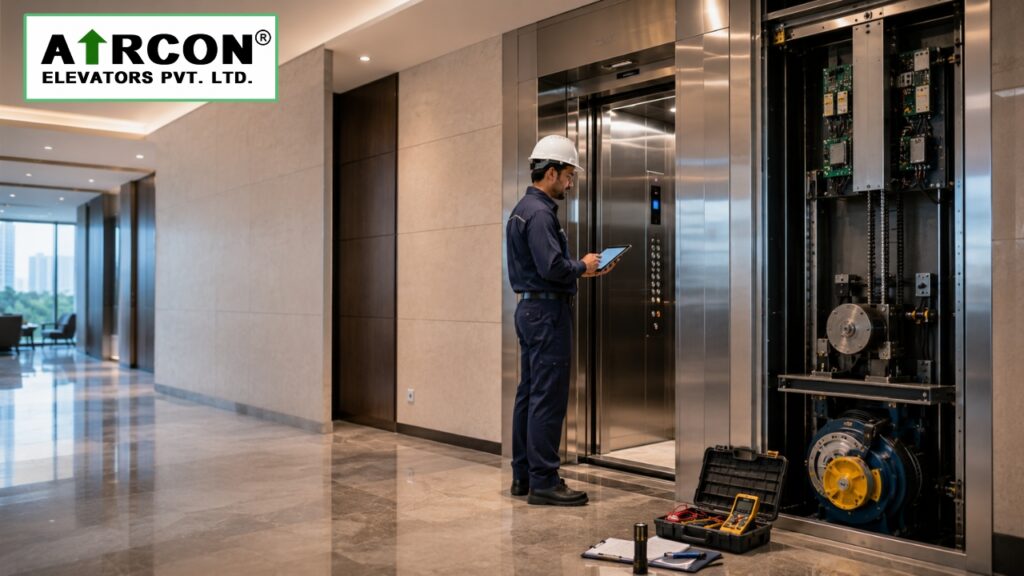
Commercial elevators operate continuously in offices, shopping malls, hospitals, hotels, schools, and residential complexes. Because they handle heavy daily traffic, regular inspections are essential for passenger safety, smooth performance, and long-term reliability.
One of the most common questions building owners ask is, “How often should a commercial elevator be inspected?”
The answer depends on your elevator’s age, usage, maintenance history, manufacturer recommendations, and the Lift Act applicable in your state. However, monthly preventive maintenance is widely recommended for commercial elevators, while statutory inspections must follow local regulations.
Why Regular Commercial Elevator Inspection is Important
An elevator consists of mechanical, electrical, and safety components that experience normal wear over time. Without routine inspections, small issues can develop into expensive repairs or unexpected breakdowns.
Regular inspections help you:
- Improve passenger safety
- Reduce unexpected downtime
- Detect worn components early
- Extend elevator lifespan
- Lower long-term maintenance costs
- Maintain smooth and reliable operation
Instead of waiting for a failure, preventive inspections allow technicians to identify potential problems before they become serious.
How Often Should a Commercial Elevator Be Inspected?
Although inspection requirements vary by state, most commercial buildings should follow this maintenance schedule:
Monthly Preventive Maintenance
- A qualified elevator technician should inspect the elevator every month. Monthly servicing helps identify wear, check safety systems, inspect doors, verify floor leveling, and ensure the elevator operates smoothly.
Daily Visual Checks
Building maintenance staff can perform simple daily inspections by checking:
- Door operation
- Cabin lighting
- Floor indicators
- Unusual sounds
- Smooth stopping
- Emergency alarm
These quick checks help detect visible issues early.
Statutory Inspections
- In addition to routine maintenance, building owners must comply with the inspection schedule required under their state’s Lift Act. Since inspection rules differ across India, always follow the regulations applicable to your location.
What Does an Elevator Inspection Include?
A professional inspection covers every major system that affects elevator performance and passenger safety.
Mechanical Components
- Technicians inspect the machine, brakes, guide rails, suspension ropes, bearings, and drive system for signs of wear.
Door System
The inspection includes:
- Landing doors
- Cabin doors
- Door sensors
- Door interlocks
- Door operators
Proper door operation is critical because elevator doors experience the highest number of operating cycles.
Electrical & Safety Systems
The technician also checks:
- Control panel
- Controller
- Emergency alarm
- Emergency lighting
- Automatic Rescue Device (if installed)
- Electrical connections
- Earthing
Finally, the elevator’s ride quality, stopping accuracy, and overall performance are evaluated.
Signs Your Elevator Needs an Immediate Inspection
Don’t wait for the next maintenance visit if you notice any of these warning signs:
- Frequent breakdowns
- Jerky movement
- Slow door operation
- Unusual noises or vibrations
- Incorrect floor leveling
- Repeated error messages
- Passenger complaints
- Rising maintenance costs
Prompt inspection can prevent larger failures and reduce repair expenses.
Best Practices for Building Owners
To keep your commercial elevator operating safely and efficiently:
- Schedule preventive maintenance every month.
- Maintain detailed service records.
- Report unusual performance immediately.
- Replace worn components before failure.
- Follow the applicable Lift Act for statutory inspections.
- Consider modernization if breakdowns become frequent.
A proactive maintenance plan is always more cost-effective than repeated emergency repairs.
How Aircon Elevators Can Help
At Aircon Elevators Pvt. Ltd., we provide professional elevator inspection, preventive maintenance, modernization, and repair services for commercial buildings across India.
Our experienced engineers carefully inspect every major component, identify potential issues, and recommend practical solutions that improve safety, reliability, and performance. Whether you need routine maintenance or a complete modernization plan, our team can help keep your elevators operating smoothly.
Frequently Asked Questions
Most commercial elevators should receive preventive maintenance once every month, while statutory inspections must follow your state’s Lift Act.
Technicians inspect the mechanical system, doors, electrical components, controller, safety devices, emergency systems, and ride performance.
Routine inspections help identify problems early, improve passenger safety, reduce downtime, and extend the elevator’s service life.
Yes. Finding and fixing minor issues early often prevents expensive repairs and unexpected breakdowns.
Regular elevator inspections are essential for maintaining a safe, reliable, and efficient commercial building. While monthly preventive maintenance is the best practice for most elevators, statutory inspections should always follow local regulations.
By investing in routine inspections and preventive maintenance, building owners can improve passenger safety, reduce operating costs, and extend the life of their elevator system.