
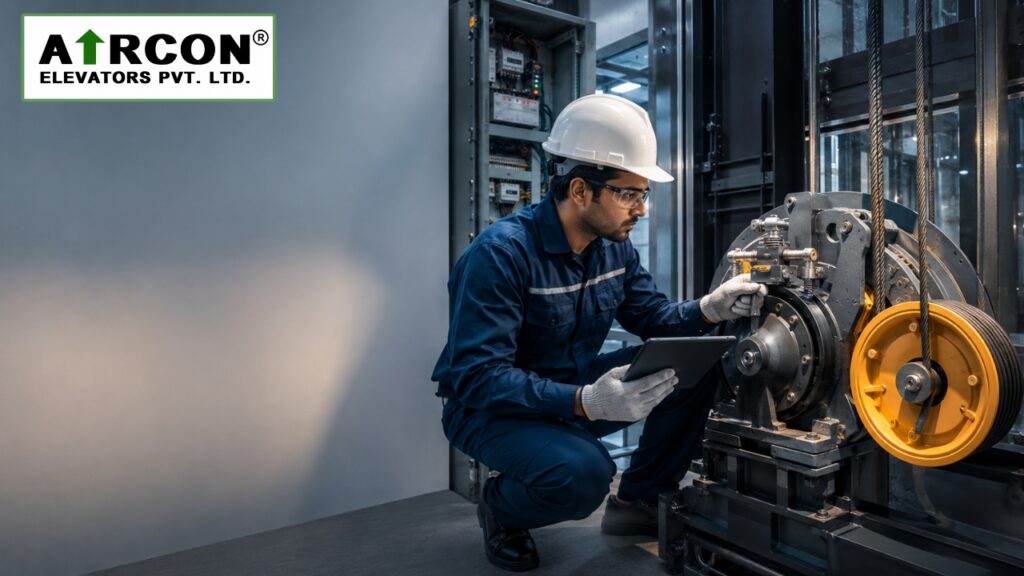
Elevator brakes are one of the most important safety components in any lift system. Every time an elevator stops at a floor, the brake holds the car securely in place. If the brake wears out or fails to perform correctly, the elevator could move unexpectedly, creating a serious safety risk.
This condition is known as Unintended Car Movement (UCM). Modern elevator safety standards require lifts to detect and prevent uncontrolled movement, especially when the doors are open. Regular brake inspections and preventive maintenance help ensure the braking system operates safely and reliably.
What Is Unintended Car Movement?
Unintended Car Movement occurs when an elevator moves away from the landing without a command, usually because of a fault in the braking or drive system.
Although modern elevators include multiple safety features, brake wear, mechanical defects, or control system failures can increase the risk if maintenance is neglected.
Today’s safety standards require elevators to detect this condition and stop the car before it creates a dangerous situation.
Why Lift Brake Inspections Matter
The elevator brake works every time the lift starts or stops. Over thousands of operating cycles, brake components naturally wear down.
Routine brake inspections help:
- Improve passenger safety
- Detect brake wear early
- Prevent unintended car movement
- Reduce unexpected breakdowns
- Extend elevator life
- Lower long-term repair costs
Preventive maintenance is always more affordable than emergency repairs.
What Technicians Check During a Brake Inspection
A professional lift brake inspection includes several important checks.
Brake Components
Technicians inspect:
- Brake shoes or pads
- Springs
- Brake lining wear
- Brake clearance
- Mounting bolts
- Mechanical alignment
Any worn or damaged component should be repaired or replaced before it affects elevator performance.
Electrical System
The inspection also includes:
- Brake coils
- Electrical wiring
- Control circuits
- Power supply
- Brake release operation
Reliable electrical performance is essential for proper brake operation.
Brake Performance Testing
Technicians verify that the brake can:
- Hold the elevator securely at the landing
- Stop the elevator smoothly
- Respond correctly during normal operation
- Work together with the elevator’s safety systems
Modern standards also require protection against unintended car movement through monitoring and safety functions.
Warning Signs of Brake Problems
Don’t ignore these symptoms:
- Elevator drifts slightly after stopping
- Jerky starts or stops
- Grinding or squealing noises
- Burning smell near the machine room
- Frequent fault codes
- Increased stopping distance
- Repeated service calls
If you notice any of these signs, arrange a professional inspection immediately.
Best Practices for Building Owners
A proactive maintenance plan helps keep elevators safe and reliable.
Follow these best practices:
- Schedule preventive maintenance regularly.
- Inspect brake components for wear.
- Replace worn parts before failure.
- Maintain detailed service records.
- Respond quickly to unusual elevator behavior.
- Use trained and qualified elevator technicians.
Regular maintenance not only improves safety but also helps reduce costly emergency repairs.
How Aircon Elevators Can Help
At Aircon Elevators Pvt. Ltd., we provide professional elevator inspection, preventive maintenance, modernization, and repair services for residential, commercial, industrial, and institutional buildings.
Our experienced engineers inspect brake systems, safety devices, electrical components, and mechanical parts to identify potential problems before they become major failures. With a preventive maintenance plan, your elevator remains safe, reliable, and ready for daily operation.
Frequently Asked Questions
It refers to an elevator moving away from the landing without a command, often due to a fault in the braking or drive system. Modern safety standards require systems to detect and stop this movement.
Brake inspections help detect wear early, improve passenger safety, reduce breakdowns, and ensure reliable elevator operation.
Brake inspections should be included in every scheduled preventive maintenance visit. The exact frequency depends on elevator usage, manufacturer recommendations, and applicable local regulations.
Yes. Regular inspections allow technicians to identify worn components and replace them before they affect elevator safety or performanc
Lift brakes play a critical role in passenger safety. Regular inspections help identify wear before it becomes a serious problem and support the systems designed to prevent unintended car movement.
By following a preventive maintenance schedule and working with experienced professionals, building owners can improve safety, reduce downtime, and extend the life of their elevators.