
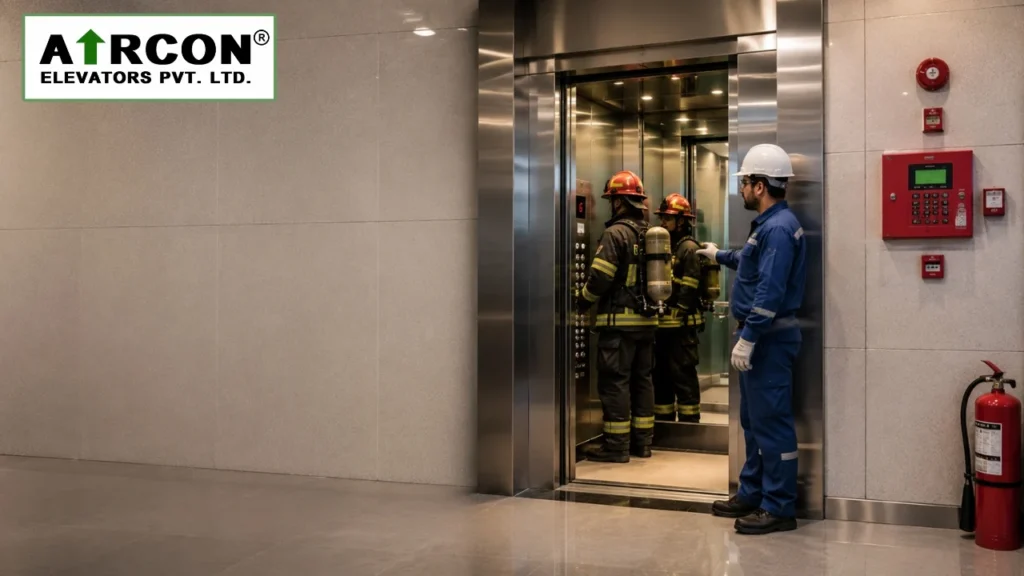
Fire safety is one of the most important aspects of elevator design. During a fire emergency, elevators must follow a controlled sequence that protects passengers and allows firefighters to respond safely. This is where Phase I and Phase II Fire Recall Systems play a vital role.
These emergency operations automatically remove elevators from normal passenger service and, when conditions are safe, allow trained firefighters to take manual control of the lift. Proper testing and maintenance ensure these systems work when they are needed most.
What Is Phase I Fire Recall?
Phase I Recall is an automatic emergency operation that activates when the building’s fire alarm system detects smoke or another qualifying fire event near the elevator system.
Once activated, the elevator:
- Cancels all passenger calls.
- Travels directly to the designated recall floor.
- Opens its doors.
- Remains out of normal passenger service.
If the fire affects the designated recall floor, the elevator automatically travels to a pre-programmed alternate recall floor instead. This helps keep passengers away from potentially hazardous areas.
What Is Phase II Firefighter Operation?
After Phase I recall, Phase II allows authorized firefighters to operate the elevator manually using a dedicated key switch inside the elevator.
During Phase II:
- Only trained emergency personnel can control the elevator.
- Automatic passenger operation remains disabled.
- Firefighters decide where the elevator travels.
- The lift supports rescue and firefighting operations when conditions are safe.
This manual control improves emergency response while reducing unnecessary risks.
Why Are Phase I and Phase II Systems Important?
Fire emergencies can spread smoke quickly through elevator lobbies and shafts. Without an emergency recall system, passengers could unknowingly travel toward a dangerous floor or become trapped.
These systems help:
- Improve passenger safety
- Keep elevators away from fire-affected areas
- Support faster firefighter access
- Reduce the risk of smoke-related incidents
- Improve overall emergency response
Because of these benefits, modern fire safety and elevator codes include Phase I and Phase II emergency operations as important safety features.
What Should Be Inspected?
Regular inspections help ensure emergency recall systems remain reliable.
Technicians typically inspect:
- Fire recall operation
- Smoke detector interface
- Recall floor settings
- Firefighter control switches
- Emergency communication system
- Door operation during recall
- Control panel response
- Electrical connections
Routine testing helps identify faults before they affect elevator performance during an emergency.
Signs Your Fire Recall System Needs Attention
Arrange a professional inspection if you notice:
- Elevator fails to return to the recall floor during testing
- Fire alarm and elevator do not communicate properly
- Firefighter controls do not respond correctly
- Frequent control panel faults
- Delayed door operation
- Recurring electrical issues
Ignoring these warning signs can reduce the effectiveness of the emergency system.
Best Practices for Building Owners
To maintain a safe elevator system:
- Schedule preventive maintenance regularly.
- Test Phase I and Phase II functions as required.
- Keep maintenance and inspection records.
- Repair faults immediately.
- Train facility staff on emergency procedures.
- Work with qualified elevator professionals.
A proactive maintenance plan improves both safety and system reliability.
How Aircon Elevators Can Help
At Aircon Elevators Pvt. Ltd., we provide professional elevator installation, modernization, inspection, and preventive maintenance services for residential, commercial, industrial, and institutional buildings.
Our experienced engineers inspect fire emergency systems, verify safety functions, and help ensure your elevators operate reliably in both normal and emergency conditions.
Frequently Asked Questions
Phase I is an automatic emergency function that recalls elevators to a designated safe floor, opens the doors, and removes them from normal passenger service after a qualifying fire alarm event.
Phase II allows authorized firefighters to manually control the elevator using a dedicated key switch after Phase I recall has activated.
Elevators may become unsafe because of smoke, heat, or power-related issues. Follow the building’s emergency procedures and use designated evacuation routes unless instructed otherwise by emergency personnel.
Testing should follow the manufacturer’s recommendations and all applicable local codes and inspection requirements to verify proper operation.
Phase I and Phase II recall systems are essential elevator safety features that help protect passengers and support emergency responders during a fire. Regular inspection, preventive maintenance, and timely repairs help ensure these systems perform as intended when every second counts.