
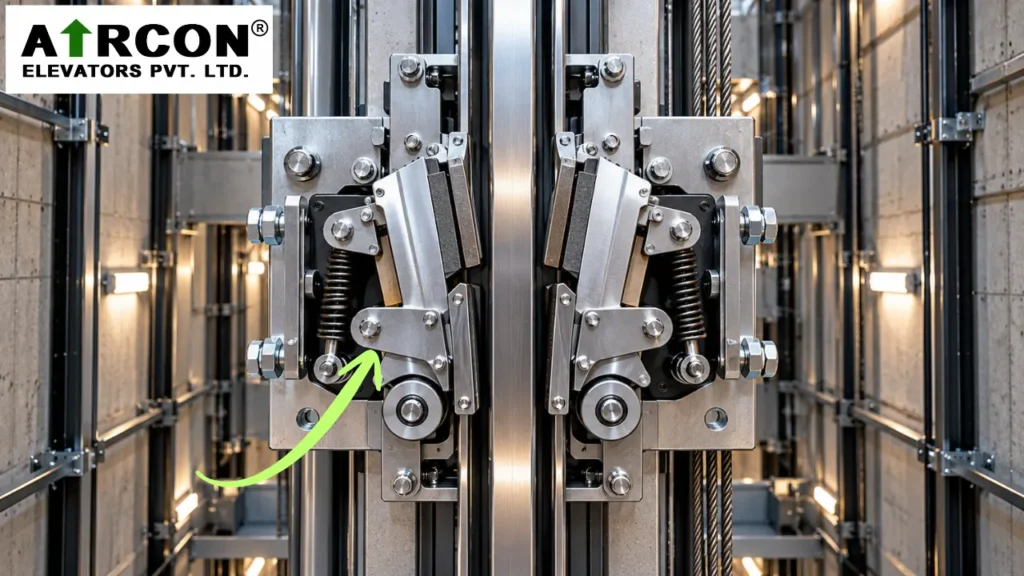
Every modern elevator contains multiple safety devices that work together to protect passengers and keep the lift operating safely. Among these components, the elevator safety gear is one of the most critical because it can stop the elevator cabin if it begins moving uncontrollably.
Most passengers never see this hidden mechanism, yet it remains ready to operate whenever an emergency occurs. If a mechanical fault or control system malfunction causes the elevator to exceed its permitted operating speed, the safety gear works together with the elevator overspeed governor to engage the guide rails and safely bring the cabin under control.
Whether the lift is installed in a residential building, commercial complex, hospital, or industrial facility, the elevator safety gear provides an additional layer of protection that helps reduce the risk of serious accidents.
In this guide, you’ll learn what an elevator safety gear is, how it works, its main components, different types, installation location, maintenance requirements, and why it is one of the most important safety devices in every elevator.
What Is an Elevator Safety Gear?
This mechanical safety device is installed beneath or alongside the elevator cabin to stop uncontrolled movement during an emergency. Its primary purpose is to stop the cabin safely if it begins moving at an unsafe speed or loses normal control.
Unlike the traction machine, motor, or braking system, the safety gear remains inactive during everyday elevator operation. It activates only when the overspeed governor detects that the elevator has exceeded its safe operating speed and sends a mechanical signal through the governor rope.
Once activated, the safety gear firmly grips the elevator guide rails, preventing the cabin from continuing its uncontrolled movement.
In simple words, the safety gear acts as the elevator’s emergency mechanical braking system.
Why Is Elevator Safety Gear Important?
Although elevator failures are rare, manufacturers include safety gear because it provides an essential backup layer of protection during unexpected situations.
Its main benefits include:
- Helps stop uncontrolled elevator movement.
- Protects passengers during overspeed conditions.
- Works together with the overspeed governor.
- Reduces the risk of severe mechanical damage.
- Improves overall elevator safety.
- Meets modern elevator safety requirements.
- Increases passenger confidence.
Without properly functioning safety gear, an elevator would lose one of its most important emergency protection systems.
How Does Elevator Safety Gear Work?
This safety mechanism operates only when an abnormal condition occurs. During everyday elevator operation, the mechanism stays inactive and allows the cabin to travel freely without interfering with its normal movement.
Step 1: Elevator Operates Normally
The elevator travels between floors while the overspeed governor continuously monitors the cabin’s speed.
Step 2: Overspeed Occurs
If the cabin begins moving faster than its permitted speed because of a mechanical fault, brake failure, or another abnormal condition, the overspeed governor immediately detects the excessive speed.
Step 3: Governor Activates the Safety Gear
After detecting overspeed, the governor locks its mechanism and pulls the governor rope connected to the cabin’s safety gear.
This mechanical action causes the safety gear assembly to engage automatically.
Step 4: Safety Gear Grips the Guide Rails
As soon as the mechanism activates, specially designed gripping components clamp securely onto the elevator guide rails.
Depending on the elevator design, the cabin either stops immediately or slows down in a controlled manner before coming to a complete stop.
Step 5: Elevator Remains Secure
Once the cabin stops, the safety gear keeps it securely locked in position until qualified elevator technicians inspect the system, identify the cause of the overspeed condition, and safely reset the equipment.
Main Components of Elevator Safety Gear
Although manufacturers may use different designs, most elevator safety gear systems include similar mechanical components.
Safety Gear Body
The main housing supports all internal components and provides the structural strength required during emergency operation.
Wedge or Roller Mechanism
This component grips the guide rails when the safety gear activates.
Depending on the design, manufacturers use either wedge-type or roller-type mechanisms.
Guide Shoes
Guide shoes help keep the elevator cabin properly aligned with the guide rails during normal travel while supporting smooth movement inside the shaft.
Operating Linkage
The operating linkage transfers mechanical force from the overspeed governor rope to the safety gear mechanism, allowing the system to activate immediately when required.
Return Springs
Return springs help reset certain moving parts after maintenance and keep the mechanism correctly positioned during normal elevator operation.
Mounting Frame
The mounting frame securely attaches the safety gear assembly to the elevator cabin, ensuring the mechanism remains properly aligned throughout its service life.
Elevator Safety Gear: Working, Types & Importance
Types of Elevator Safety Gear
Elevator manufacturers use different types of safety gear depending on the elevator’s rated speed, load capacity, and application. Each type is designed to stop the cabin safely while minimizing damage to passengers and elevator components.
1. Instantaneous Safety Gear
Instantaneous safety gear is commonly used in low-speed elevators.
When activated, it grips the guide rails immediately and brings the elevator cabin to a quick stop. Because the stopping action is rapid, this type is generally suitable for elevators operating at lower speeds.
Its simple construction, reliable operation, and lower maintenance requirements make it a popular choice for residential lifts and low-rise buildings.
2. Progressive Safety Gear
Progressive safety gear is widely used in medium-speed and high-speed elevators.
Instead of stopping the cabin abruptly, it gradually increases the braking force while gripping the guide rails. By slowing the cabin in a gradual and controlled manner, this system improves passenger comfort while reducing the mechanical load on key elevator components.
Most commercial buildings, hospitals, hotels, and high-rise office towers use progressive safety gear because it offers smoother emergency stopping performance.
3. Roller-Type Safety Gear
Roller-type safety gear uses specially designed rollers that engage with the guide rails during an emergency.
As the governor activates the mechanism, the rollers create controlled friction against the guide rails, allowing the elevator to slow down smoothly before stopping.
This design reduces wear on both the guide rails and the safety gear components, making it suitable for elevators that experience frequent use.
4. Wedge-Type Safety Gear
Wedge-type safety gear uses hardened steel wedges that move between the guide rail and the safety gear body during activation.
As the wedges tighten, they firmly grip the guide rails and stop the elevator cabin.
Because of its strong holding capability and dependable performance, wedge-type safety gear is commonly installed in passenger elevators, freight lifts, and industrial lifting equipment.
Where Is Elevator Safety Gear Installed?
This assembly is normally mounted underneath or along the lower side of the elevator cabin frame.
Its exact installation position depends on the elevator manufacturer and system design, but it always remains connected to both the overspeed governor and the guide rails.
Typical installation locations include:
- Beneath the elevator cabin frame
- On both sides of the cabin near the guide rails
- Connected to the governor rope linkage
- Adjacent to the guide shoe assembly
- Integrated with the cabin safety frame
This installation arrangement allows the safety gear to react immediately whenever the overspeed governor activates.
How Is Elevator Safety Gear Tested?
Routine inspection and testing help verify that the safety gear will operate correctly during an emergency.
During scheduled inspections, qualified elevator technicians generally carry out the following safety checks to verify proper operation:
- Inspect the safety gear for visible damage.
- Check all mounting bolts and fasteners.
- Verify smooth movement of the operating linkage.
- Inspect wedges or rollers for wear.
- Confirm correct governor rope connection.
- Perform a controlled safety gear test according to the manufacturer’s procedures.
- Reset and inspect the mechanism after testing.
Regular testing helps identify worn components before they affect elevator safety.
Common Problems with Elevator Safety Gear
Although safety gear is highly reliable, years of continuous operation can eventually cause wear or adjustment issues.
Some common problems include:
- Worn wedges or rollers
- Rust or corrosion on moving parts
- Loose mounting bolts
- Poor lubrication
- Misaligned operating linkage
- Governor rope adjustment problems
- Dirt or debris around the mechanism
- Damage caused by improper maintenance
Failing to correct these problems promptly can affect the safety gear’s ability to respond effectively when an emergency situation occurs.
Signs of a Faulty Elevator Safety Gear
A damaged or improperly adjusted safety gear may produce several warning signs.
Common symptoms include:
- Unusual noise during elevator travel
- Frequent safety-related shutdowns
- Rough or jerky elevator movement
- Visible wear on guide rails
- Governor test failures
- Safety gear does not reset correctly after inspection
- Maintenance reports indicate abnormal wear
If these warning signs appear repeatedly, qualified elevator technicians should inspect the system without delay.
Elevator Safety Gear Maintenance Tips
Preventive maintenance plays an important role in keeping this mechanism ready for emergency operation.
Technicians should:
- Inspect the complete safety gear assembly regularly.
- Clean dirt and debris from moving components.
- Check wedges or rollers for excessive wear.
- Verify proper governor rope adjustment.
- Lubricate approved moving parts where recommended.
- Inspect the guide rails for abnormal wear.
- Test the complete safety system during scheduled maintenance.
- Replace worn components before they affect system performance.
Routine maintenance improves reliability and helps extend the service life of the complete elevator protection system.
Importance of Elevator Safety Gear
This mechanical safety system serves as the final line of protection if an elevator experiences uncontrolled movement.
Its importance includes:
- Prevents uncontrolled elevator travel.
- Protects passengers during overspeed situations.
- Works together with the elevator overspeed governor.
- Helps reduce damage to major elevator components.
- Improves overall elevator reliability.
- Supports compliance with modern elevator safety requirements.
- Increases passenger confidence in elevator safety.
- Serves as an independent emergency braking mechanism.
Without this mechanism functioning correctly, an elevator would lose one of its most important emergency protection features.
Frequently Asked Questions (FAQs)
It is a mechanical safety device that grips the guide rails and stops the elevator cabin if it moves beyond its safe operating speed. It works together with the elevator overspeed governor to help protect passengers during emergency situations.
Yes. Most modern traction elevators are equipped with safety gear because it is one of the essential safety devices required for safe elevator operation.
The elevator overspeed governor activates this mechanism whenever it detects that the elevator cabin has exceeded its preset speed limit. The governor transfers mechanical force through the governor rope, allowing the safety gear to engage the guide rails.
Qualified elevator technicians should inspect and test the safety gear during every scheduled preventive maintenance visit. They should also perform detailed safety tests according to the manufacturer’s recommendations and applicable safety regulations.
Yes. In many cases, technicians can reset and reuse the safety gear after identifying and repairing the cause of activation. However, they should carefully inspect all related components before returning the elevator to normal service.
Conclusion
This mechanical safety device is one of the most important protection systems found in modern elevators. Although passengers rarely notice it during normal operation, it remains ready to protect the cabin whenever an overspeed condition occurs.
By working together with the elevator overspeed governor, guide rails, and other safety systems, the safety gear helps stop uncontrolled elevator movement and improves overall passenger safety.
Regular inspections, timely maintenance, and proper testing ensure that the safety gear operates reliably whenever it is needed. Whether installed in a residential lift, commercial elevator, hospital lift, or industrial goods lift, this safety device plays a vital role in delivering dependable and secure elevator operation.