
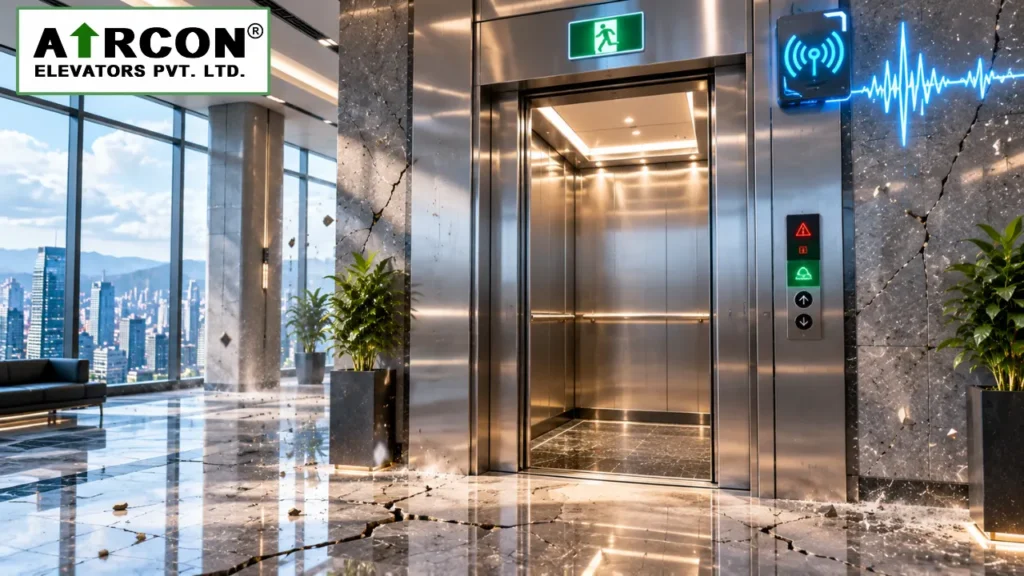
Imagine you’re riding an elevator when the building suddenly starts shaking due to an earthquake. Within moments, the elevator slows down, stops at the nearest available floor, opens its doors automatically, and allows passengers to exit safely. While this may seem like a remarkable coincidence, it is actually the result of advanced Elevator Earthquake Safety systems designed specifically to protect passengers during seismic events.
Modern elevators are no longer just vertical transportation systems. They are equipped with intelligent sensors, programmable controllers, emergency braking systems, and automated safety features that constantly monitor operating conditions. In earthquake-prone regions, these technologies play a critical role in reducing risks by detecting seismic activity and placing the elevator into a controlled emergency mode before dangerous conditions develop.
Whether you’re a homeowner planning to install a residential lift, a commercial building owner, a facility manager, or simply someone curious about elevator technology, understanding how Elevator Earthquake Safety works can help you appreciate the engineering that keeps millions of passengers safe every day.
In this guide, we’ll explain how modern elevators detect earthquakes, what happens when seismic activity is detected, and the safety systems that help protect both passengers and elevator equipment.
What Is Elevator Earthquake Safety?
Elevator Earthquake Safety refers to a collection of technologies and emergency operating procedures that allow elevators to respond safely when seismic activity is detected.
Unlike conventional elevator safety systems that react to mechanical failures or power interruptions, earthquake protection systems continuously monitor ground movement. When seismic vibrations exceed predetermined safety thresholds, the elevator controller immediately initiates an emergency sequence to minimize passenger risk.
Depending on the elevator design and the intensity of the earthquake, the system may automatically:
- Stop accepting new hall and cabin calls
- Reduce travel speed safely
- Move the elevator to the nearest available floor
- Open the elevator doors automatically
- Keep the elevator out of service until a complete safety inspection is performed
These automated actions reduce the possibility of passengers becoming trapped inside the cabin while also protecting critical elevator components from unnecessary stress caused by structural movement.
Why Is Elevator Earthquake Safety Important?
Earthquakes can affect an entire building within seconds. Although modern structures are designed to withstand seismic forces, elevators operate inside vertical shafts where even slight structural movement can influence their performance.
During an earthquake, several critical elevator components may experience unusual forces, including:
- Guide rails
- Suspension ropes
- Counterweight system
- Elevator cabin
- Door mechanisms
- Drive machine
- Control panels
- Electrical wiring
Without an earthquake protection system, continuing normal elevator operation during strong ground movement could increase the risk of equipment damage or unsafe operating conditions.
For this reason, elevators installed in seismic regions often include dedicated earthquake protection features that automatically switch the lift into a safe operating mode whenever significant ground movement is detected.
How Do Earthquakes Affect Elevator Earthquake Safety Systems?
Many people assume that the greatest danger during an earthquake is the elevator itself. In reality, the building’s movement is what creates potential challenges for elevator systems.
As seismic waves travel through the ground, the building begins to sway and vibrate. Because the elevator travels inside a fixed shaft, even small structural shifts can influence component alignment.
Possible effects include:
Guide Rail Movement
Guide rails help keep the elevator cabin and counterweight moving smoothly. Strong building movement can place additional stress on these rails.
Counterweight Oscillation
The counterweight moves in the opposite direction of the elevator cabin to balance the load. During seismic activity, excessive lateral movement may occur if the elevator continues operating.
Suspension Rope Movement
Steel suspension ropes remain under constant tension. Earthquake vibrations can cause the ropes to sway more than they normally would.
Door Alignment
Elevator doors require precise alignment to open and close correctly. Structural movement may temporarily affect this alignment.
Machine Room Equipment
For elevators with a machine room, motors, controllers, and electrical panels may also experience vibration during an earthquake.
Fortunately, modern earthquake safety systems are designed to recognize these conditions early and respond before they become hazardous.
How Does Elevator Earthquake Safety Detect an Earthquake?
Modern elevators don’t wait for passengers or building staff to report an earthquake. Instead, they rely on advanced monitoring equipment that continuously measures ground motion in real time.
These systems can identify abnormal seismic vibrations within milliseconds and communicate directly with the elevator controller.
Some of the most common earthquake detection technologies include:
Seismic Sensors
Seismic sensors are specially designed devices that detect both horizontal and vertical ground movement associated with earthquakes.
Unlike ordinary vibration sensors, seismic sensors are calibrated to distinguish earthquake motion from everyday building vibrations caused by traffic, wind, or nearby machinery.
When movement exceeds a programmed safety threshold, the sensor immediately sends an emergency signal to the elevator controller.
Accelerometers
Many modern elevators use high-precision accelerometers to measure sudden changes in acceleration.
These electronic sensors continuously monitor movement and compare it against predefined safety limits.
If acceleration levels indicate seismic activity, the controller automatically initiates emergency elevator operation.
Because accelerometers respond extremely quickly, they provide valuable time for the elevator to move passengers to a safe floor before stronger shaking develops.
Building Seismic Monitoring Systems
Large commercial buildings often include centralized seismic monitoring systems integrated with the Building Management System (BMS).
When the building’s earthquake detection equipment identifies seismic activity, it communicates simultaneously with every elevator controller in the building.
This coordinated response allows multiple elevators to enter emergency operation at nearly the same time, improving passenger safety throughout the property.
How Quickly Do Elevator Earthquake Safety Systems Respond?
One of the most impressive aspects of Elevator Earthquake Safety is the speed of response.
Modern elevator controllers process sensor information continuously—many times every second.
As soon as seismic activity exceeds the programmed safety threshold, the controller immediately begins its emergency sequence. In many cases, this response starts within fractions of a second, giving the elevator enough time to safely reach the nearest floor before stronger ground motion affects normal operation.
This rapid response helps reduce the risk of passengers becoming stranded inside the elevator while also minimizing stress on critical mechanical and electrical components.
What Happens When Elevator Earthquake Safety Is Activated?
One of the biggest advantages of modern Elevator Earthquake Safety systems is that they react automatically without requiring any action from passengers.
As soon as the elevator controller receives a signal from the seismic sensor or building monitoring system, it follows a carefully programmed emergency sequence. Although the exact procedure may vary depending on the elevator manufacturer and local safety regulations, the overall process is very similar in most modern elevators.
The primary objective is simple: move passengers to safety while preventing unnecessary damage to the elevator system.
1. The Elevator Stops Accepting New Calls
The first action performed by the controller is to cancel or ignore all new hall and cabin requests.
If passengers continue pressing floor buttons, the elevator will not register additional destinations. Instead, the controller focuses entirely on carrying out its emergency safety procedure.
This prevents unnecessary movement while the building may still be experiencing seismic activity.
2. The Elevator Travels to the Nearest Safe Floor
Rather than continuing toward its original destination, the controller calculates the closest available landing floor.
The elevator then travels at a controlled speed to that floor whenever it is safe to do so.
Stopping at the nearest floor reduces the time passengers remain inside the elevator during the earthquake.
3. Doors Open Automatically
After reaching the landing floor, the doors open automatically.
Passengers can safely leave the cabin and move to the building’s designated evacuation area.
Keeping passengers inside the elevator during ongoing seismic activity is avoided whenever possible.
4. The Elevator Remains Out of Service
Once everyone has exited, the elevator automatically switches into inspection mode or earthquake emergency mode.
The elevator remains unavailable until qualified technicians inspect the equipment and verify that all critical components are functioning correctly.
This precaution helps prevent the elevator from operating if hidden damage has occurred.
Modern Elevator Earthquake Safety Systems Used in Lifts
Modern elevators often combine several safety technologies to provide comprehensive earthquake protection.
The exact combination depends on the building height, elevator type, local building codes, and seismic risk of the region.
1. Seismic Sensors
Seismic sensors are the primary devices responsible for detecting earthquake vibrations.
These highly sensitive sensors continuously monitor ground motion and immediately notify the elevator controller when movement exceeds the programmed safety threshold.
Unlike ordinary vibration detectors, seismic sensors are specifically designed to recognize earthquake-related movement while ignoring normal building vibrations.
2. Earthquake Emergency Operation (EEO)
Many modern elevators include an Earthquake Emergency Operation (EEO) feature.
When activated, the controller automatically performs several emergency actions, including:
- Cancelling all pending floor requests
- Slowing the elevator safely
- Moving to the nearest available floor
- Opening the doors automatically
- Preventing further operation until inspection
This process helps minimize passenger exposure during seismic events.
3. Automatic Rescue Device (ARD)
Power failures sometimes occur during major earthquakes.
To prevent passengers from becoming trapped inside the elevator, many modern lifts include an Automatic Rescue Device (ARD).
When the main electrical supply fails, the ARD temporarily powers the elevator using batteries or an emergency backup system.
The controller then:
- Moves the cabin to the nearest floor
- Opens the doors automatically
- Allows passengers to exit safely
This feature is especially valuable in residential buildings, hospitals, and commercial facilities where uninterrupted passenger safety is essential.
4. Seismic Switches
Some commercial buildings also install dedicated seismic switches.
These devices automatically disable elevator operation after significant seismic activity has been detected.
Before the elevator returns to service, technicians inspect important components such as:
- Guide rails
- Suspension ropes
- Counterweight alignment
- Drive machine
- Brake system
- Controller electronics
- Safety gear
Only after a complete inspection is normal elevator service restored.
5. Counterweight Protection Systems
The elevator counterweight also experiences movement during an earthquake.
Modern elevators use several protective components to keep the counterweight safely aligned, including:
- Reinforced guide rails
- Guide shoes
- Seismic retaining brackets
- Anti-derailment devices
These components help reduce the possibility of the counterweight leaving its guide rails during severe building movement.
Can Elevator Earthquake Safety Prevent Elevators from Falling?
One of the most common myths is that elevators can suddenly fall if an earthquake occurs.
Fortunately, this is extremely unlikely.
Modern elevators are built with multiple independent safety systems designed specifically to prevent uncontrolled movement.
Some of these include:
- Electromagnetic braking systems
- Mechanical safety gear
- Overspeed governors
- High-strength steel suspension ropes
- Counterweight guidance systems
- Intelligent elevator controllers
Even if electrical power is lost during an earthquake, the elevator’s fail-safe brakes automatically engage and hold the cabin securely in place.
Rather than falling, a properly functioning modern elevator is far more likely to stop safely and remain stationary until inspected.
How Does Elevator Earthquake Safety Protect Home Elevators?
Many homeowners ask whether residential lifts offer the same protection as commercial elevators.
The answer depends on the elevator model and the safety features installed.
Many modern home elevators include:
- Automatic Rescue Device (ARD)
- Battery backup
- Emergency alarm
- Door interlocks
- Emergency communication system
- Automatic braking
- Overload protection
For homes located in earthquake-prone areas, selecting an elevator with advanced seismic safety features provides additional peace of mind and improves passenger protection.
Regular maintenance is equally important because safety devices must remain properly calibrated throughout the elevator’s lifespan.
What Should You Do If You’re Inside an Elevator During an Earthquake?
Although modern elevators include advanced safety systems, passengers should also know how to respond during an emergency.
Stay Calm
Avoid panic.
Modern elevators are specifically designed to protect passengers during emergency situations.
Do Not Force the Doors Open
Never attempt to pry open the elevator doors manually.
Doing so could damage the door mechanism or expose you to unsafe conditions.
Follow Voice Announcements
If the elevator includes an emergency communication system or voice guidance, carefully follow the instructions being provided.
Exit Immediately When the Doors Open
If the elevator reaches the nearest floor and the doors open normally, leave the cabin calmly and move away from the elevator entrance.
Do Not Use the Elevator Again
After an earthquake, avoid using elevators until building management confirms they have been inspected and safely returned to service.
If evacuation becomes necessary, use designated emergency stairways.
Elevator Earthquake Safety Tips for Passengers and Building Owners
Although modern elevators include advanced earthquake protection technologies, following a few simple safety practices can further reduce risks during seismic events.
Whether you’re a homeowner, office employee, facility manager, or building owner, these recommendations can improve passenger safety and help protect elevator equipment.
1. Never Use an Elevator During an Active Earthquake
If you are outside the elevator and an earthquake begins, avoid entering the lift.
Instead, follow your building’s emergency procedures and use designated evacuation routes whenever it is safe to do so.
2. Stay Calm If You’re Inside the Elevator
If seismic activity starts while you’re inside the elevator, avoid panicking.
Modern Elevator Earthquake Safety systems are designed to detect ground movement and automatically place the elevator into a safe operating mode.
Remain inside the cabin until the elevator reaches the nearest floor or emergency instructions are provided.
3. Do Not Attempt to Force the Doors Open
Never try to pry open the elevator doors manually.
Modern elevators are equipped with automatic emergency procedures that are designed to operate more safely than manual intervention.
4. Follow Building Emergency Instructions
After leaving the elevator, move away from the lift lobby and follow the evacuation instructions provided by building management or emergency responders.
Avoid re-entering the elevator until it has been officially cleared for use.
5. Schedule Regular Elevator Maintenance
Routine maintenance plays a major role in ensuring earthquake safety systems continue working properly.
Maintenance technicians should periodically inspect:
- Seismic sensors
- Automatic Rescue Device (ARD)
- Emergency brakes
- Guide rails
- Suspension ropes
- Counterweight system
- Door mechanisms
- Elevator controller
Regular servicing helps ensure every safety feature operates correctly when needed.
Building Codes and Standards for Elevator Earthquake Safety
Modern elevators installed in seismic regions are designed according to strict engineering standards and safety regulations.
Depending on the country and project location, applicable requirements may include:
- National Building Code (NBC)
- Bureau of Indian Standards (BIS)
- Local seismic building regulations
- Elevator safety standards
- Fire and emergency evacuation codes
These regulations typically specify requirements for:
- Seismic sensors
- Earthquake Emergency Operation (EEO)
- Counterweight restraints
- Guide rail reinforcement
- Automatic Rescue Devices
- Emergency braking systems
- Post-earthquake inspection procedures
Following these standards helps improve passenger safety while reducing the likelihood of equipment damage during seismic events.
Common Myths About Elevator Earthquake Safety
Many misconceptions exist about elevators and earthquakes. Understanding the facts helps passengers make better decisions during emergencies.
Myth 1: Elevators Always Fall During an Earthquake
False.
Modern elevators include multiple independent safety systems, including electromagnetic brakes, overspeed governors, safety gear, and high-strength suspension ropes.
These systems are specifically designed to prevent uncontrolled cabin movement.
Myth 2: Elevators Continue Running Normally During an Earthquake
False.
Modern Elevator Earthquake Safety systems automatically detect significant seismic activity and move the elevator into emergency operation.
The elevator may stop at the nearest floor, open its doors, and remain out of service until it has been inspected.
Myth 3: Power Failure Causes the Elevator to Fall
False.
Modern elevators use fail-safe electromagnetic brakes that automatically engage whenever electrical power is interrupted.
This prevents the elevator cabin from falling freely inside the shaft.
Myth 4: Home Elevators Don’t Need Earthquake Protection
False.
Many modern residential elevators include emergency braking systems, battery backup, Automatic Rescue Devices (ARD), door interlocks, and other safety features that improve passenger protection during unexpected emergencies.
Frequently Asked Questions (FAQs)
Yes. Modern elevators include advanced Elevator Earthquake Safety systems such as seismic sensors, emergency braking systems, and intelligent controllers that help protect passengers during seismic activity.
Depending on the elevator system, it may travel to the nearest available floor, open its doors automatically, and remain out of service until technicians inspect the equipment.
No. Modern elevators use fail-safe electromagnetic brakes that automatically engage whenever electrical power is interrupted, preventing uncontrolled cabin movement.
No., Wait until qualified elevator technicians inspect the system and building management confirms that it is safe to resume operation.
Many modern home elevators include safety features such as Automatic Rescue Devices (ARD), battery backup, emergency alarms, door interlocks, and automatic braking systems, particularly in areas where seismic activity is more common.
Final Thoughts
Modern Elevator Earthquake Safety technology has transformed the way elevators respond during seismic events. Instead of continuing to operate under potentially unsafe conditions, today’s intelligent elevator systems can detect ground movement within milliseconds and automatically begin a carefully programmed emergency sequence.
By combining seismic sensors, Earthquake Emergency Operation (EEO), Automatic Rescue Devices (ARD), emergency braking systems, reinforced guide rails, and intelligent controllers, modern elevators help protect both passengers and critical equipment during earthquakes.
While no elevator can completely eliminate the effects of a major earthquake, choosing a lift that complies with current safety standards and ensuring regular maintenance significantly improves overall passenger safety and long-term reliability.
Whether you’re installing a home elevator or managing a commercial building, investing in advanced earthquake safety features is an important step toward creating a safer and more dependable vertical transportation system.