An elevator is one of the hardest-working systems in any building. Whether it’s installed in a commercial complex, apartment, hospital, hotel, or industrial facility, daily operation causes natural wear on mechanical and electrical components. While routine maintenance helps extend an elevator’s lifespan, there comes a point when repairs alone are no longer enough.
If your elevator frequently breaks down, consumes excessive energy, or struggles to meet today’s safety standards, it may be time for elevator modernization. Upgrading key components can improve reliability, enhance passenger comfort, and reduce long-term operating costs without replacing the entire elevator.
In this guide, we’ll discuss five common warning signs that indicate your elevator may need modernization and explain why acting early can save both time and money.
What Is Elevator Modernization?
Elevator modernization is the process of upgrading outdated elevator components while retaining the existing system wherever practical. Instead of replacing the complete elevator, selected mechanical, electrical, and safety components are upgraded to improve performance and extend the equipment’s service life.
Modernization can include replacing the controller, drive system, door operator, cabin interiors, operating panels, and safety devices depending on the condition of the elevator.
1. Frequent Breakdowns and Service Calls
One of the clearest signs that an elevator requires modernization is repeated breakdowns.
If your maintenance team is receiving frequent service requests or passengers regularly experience lift outages, it usually indicates that important components are reaching the end of their operational life.
Common warning signs include:
- Unexpected shutdowns
- Frequent fault codes
- Doors failing to open or close properly
- Random stoppages between floors
- Increasing repair frequency
Repeated repairs may temporarily solve the issue, but upgrading aging equipment often provides a more reliable long-term solution.
2. Jerky Movement or Uncomfortable Ride Quality
A modern elevator should provide smooth acceleration, gentle stopping, and accurate floor leveling.
If passengers notice:
- Jerky starts
- Sudden stops
- Cabin vibration
- Unusual noises
- Poor floor alignment
these symptoms may indicate worn mechanical parts, outdated controllers, or aging drive systems.
Modernization can significantly improve ride comfort and restore smooth elevator operation.
3. Rising Energy Consumption
Older elevator systems are generally less energy-efficient than modern equipment.
If your building’s electricity costs continue to rise without a significant increase in elevator usage, outdated motors or drive systems could be contributing to higher power consumption.
Modern elevator technology offers several energy-saving advantages, including:
- Gearless drive systems
- Variable Frequency Drives (VVVF)
- LED cabin lighting
- Smart standby modes
- Energy-efficient controllers
Upgrading these components can help improve efficiency and reduce operating expenses over time.
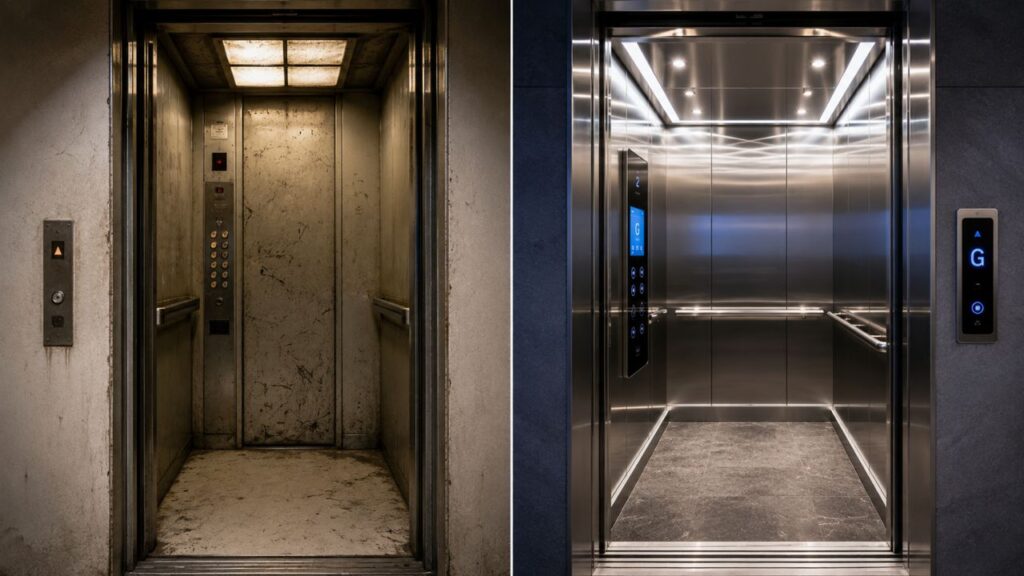
4. Outdated Cabin Design and Controls
The appearance of an elevator often creates the first impression for visitors, customers, and tenants.
If your elevator still has:
- Worn interior panels
- Faded flooring
- Old push-button controls
- Dim lighting
- Scratched stainless-steel surfaces
- Outdated display indicators
it may no longer match the image of a modern building.
Cabin modernization can transform the passenger experience with contemporary finishes, improved lighting, stylish operating panels, and premium materials while retaining the existing lift structure.
5. Difficulty Finding Spare Parts
As elevator systems age, manufacturers may discontinue certain components.
If replacement parts become difficult to source or repair times continue to increase because of unavailable components, modernization becomes a practical long-term solution.
Replacing obsolete equipment with current technology improves parts availability and makes future maintenance more efficient.
Additional Signs That Modernization May Be Needed
Besides the five major warning signs, you should also consider modernization if your elevator:
- Has been operating for many years without major upgrades
- No longer meets your building’s operational needs
- Experiences frequent door-related issues
- Lacks modern safety features
- Requires increasing maintenance expenditure each year
Evaluating these factors early helps prevent unexpected failures and costly emergency repairs.
Benefits of Elevator Modernization
Upgrading your elevator offers advantages beyond improving appearance.
Some key benefits include:
- Better passenger safety
- Smoother and quieter operation
- Improved energy efficiency
- Reduced breakdown frequency
- Faster door operation
- Lower long-term maintenance costs
- Modern cabin aesthetics
- Extended equipment lifespan
- Increased property value
Modernization allows building owners to improve elevator performance without investing in a completely new installation.
How to Know If Modernization Is Better Than Replacement
In many cases, the elevator’s basic structure remains in good condition while only certain components become outdated.
A professional inspection helps determine whether:
- Selected components can be upgraded
- The existing system remains structurally sound
- Modernization is more cost-effective than replacement
- Additional safety improvements are recommended
An experienced elevator company can recommend the most practical solution based on your building’s requirements.
Why Choose Aircon Elevators Pvt. Ltd.?
Aircon Elevators Pvt. Ltd. provides professional elevator modernization services for residential, commercial, hospital, and industrial buildings across India.
Our modernization solutions include:
- Controller Upgrades
- Door Operator Replacement
- VVVF Drive Installation
- Cabin Interior Renovation
- Landing Operating Panels
- Safety System Upgrades
- Energy-Efficient Components
- Performance Optimization
- Annual Maintenance Contracts (AMC)
Our team carefully evaluates your existing elevator and recommends upgrades that improve safety, reliability, and long-term performance.
Frequently Asked Questions
Elevator modernization involves upgrading important mechanical, electrical, and safety components to improve performance without replacing the entire elevator.
If the elevator experiences frequent breakdowns, poor ride quality, rising maintenance costs, outdated controls, or difficulty sourcing spare parts, modernization should be considered.
In many situations, yes. Upgrading selected components can be more economical than installing a completely new elevator, depending on the condition of the existing system.
Yes. Replacing older controllers, drive systems, and lighting with modern technology can help reduce energy consumption and operating costs.
Yes. Aircon Elevators Pvt. Ltd. offers customized modernization solutions for passenger, hospital, commercial, residential, and industrial elevators throughout India.
Ignoring early warning signs can lead to higher repair costs, more frequent downtime, and a poor experience for building occupants. If your elevator shows signs such as repeated breakdowns, uncomfortable rides, outdated interiors, or increasing energy consumption, modernization may be the smartest investment.
With the right upgrades, your existing elevator can deliver improved safety, smoother performance, and greater efficiency for years to come. Aircon Elevators Pvt. Ltd. provides tailored modernization solutions that help building owners extend elevator life while meeting modern performance and safety expectations.