Choosing the right elevator is one of the most important decisions when planning a residential, commercial, or industrial building. Understanding the differences between Hydraulic vs Traction Elevators is essential before making the right choice. Two of the most common options are hydraulic elevators and traction elevators. While both provide safe and reliable vertical transportation, they differ in technology, performance, installation requirements, and ideal applications.
This Hydraulic vs Traction Elevators comparison explains the differences in working principle, speed, energy efficiency, installation requirements, maintenance, ride comfort, cost, and ideal applications. By the end of this guide, you’ll be able to choose the most suitable elevator system for your project with confidence.
Hydraulic Elevators
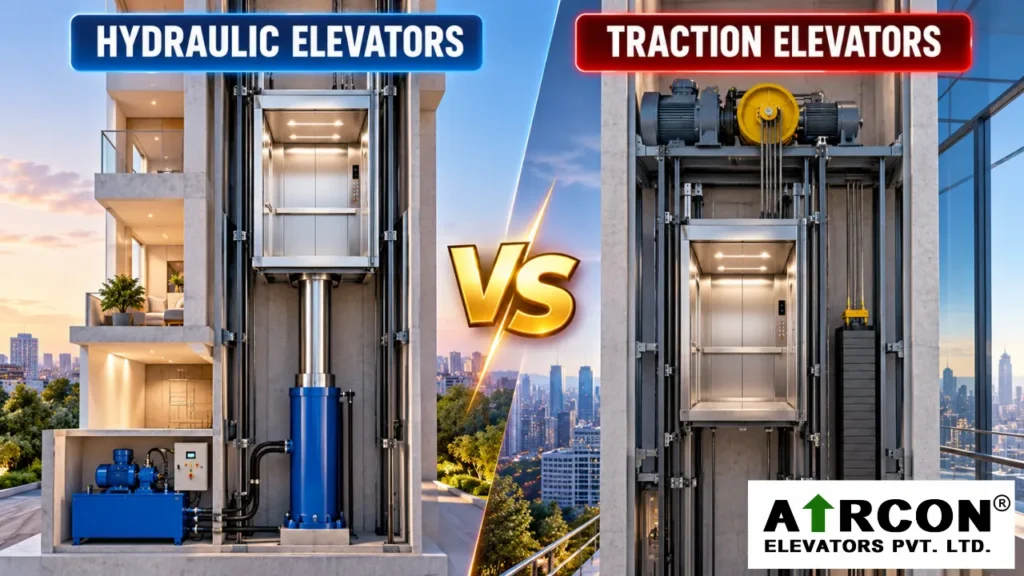
Hydraulic elevators use a hydraulic cylinder, piston, and power unit to raise the elevator cabin. An electric motor pumps hydraulic oil into the cylinder, pushing the piston upward and lifting the cabin. When the elevator travels downward, the control valve gradually releases the oil back into the reservoir, allowing the cabin to descend smoothly. They are commonly installed in low-rise buildings where smooth operation and high load capacity are required.
Hydraulic vs Traction Elevators: Best Applications
- Homes and Villas
- Hospitals
- Warehouses
- Small Commercial Buildings
- Low-Rise Apartments
Advantages:
- Smooth and comfortable ride quality
- High load-carrying capacity for heavy-duty applications
- Cost-effective for low-rise buildings
- Requires less overhead space than many traction systems
- Simple mechanical design that makes servicing easier
- Suitable for residential, hospital, and industrial installations
Traction Elevators
Traction elevators use an electric motor, steel ropes (or belts), a drive sheave, and a counterweight to move the elevator cabin. As the motor rotates the drive sheave, the ropes move the cabin upward or downward while the counterweight balances the load, improving efficiency and reducing power consumption. They are designed for medium and high-rise buildings with frequent passenger movement.
Best For:
- High-Rise Residential Towers
- Office Buildings
- Hotels
- Shopping Malls
- Commercial Complexes
Advantages:
- Higher operating speeds for medium and high-rise buildings
- Excellent energy efficiency because of the counterweight system
- Suitable for continuous passenger traffic
- Smooth acceleration and deceleration
- Lower long-term operating cost in busy buildings
- Ideal for commercial and high-rise applications
Hydraulic vs Traction Elevators: Quick Comparison
| Feature | Hydraulic Elevator | Traction Elevator |
| Best Building Height | Low-rise | Mid & High-rise |
| Speed | Moderate | High |
| Load Capacity | Excellent | Very Good |
| Energy Efficiency | Good | Excellent |
| Installation Cost | Lower | Higher |
| Maintenance | Simple | Moderate |
| Ride Comfort | Smooth | Very Smooth |
| Ideal Use | Homes, Hospitals, Warehouses | Offices, Hotels, Malls |
| Working Principle | Hydraulic Cylinder & Piston | Motor, Counterweight & Ropes |
| Machine Room | Usually Required | MRL Option Available |
| Noise Level | Very Quiet | Quiet |
| Recommended Floors | Up to 5 Floors | 6 Floors and Above |
Which Elevator Should You Choose?
If your building has up to four or five floors, a hydraulic elevator is often a practical and cost-effective solution. It offers reliable performance, smooth operation, and is well-suited for residential and light commercial applications.
For taller buildings with heavy daily traffic, a traction elevator is generally the better choice. Its higher speed, energy efficiency, and ability to serve multiple floors make it ideal for commercial and high-rise projects.
When comparing Hydraulic vs Traction Elevators, the best choice depends on several factors, including the building height, daily passenger traffic, available installation space, budget, maintenance requirements, and future expansion plans. Consulting an experienced elevator manufacturer before installation helps ensure the right choice for long-term performance and safety.
Why Choose Aircon Elevators Pvt. Ltd.?
Aircon Elevators Pvt. Ltd. provides customized hydraulic and traction elevator solutions for residential, commercial, healthcare, and industrial projects across India.
Our services include:
- Customized Elevator Design
- Professional Installation
- Advanced Safety Features
- Modern Technology
- Annual Maintenance Contracts (AMC)
- Reliable After-Sales Support
Our team helps you select the elevator system that best matches your building and future requirements.
Hydraulic vs Traction Elevators: Maintenance Comparison
Hydraulic elevators generally have a simpler mechanical design, making routine servicing straightforward for low-rise buildings. However, they require periodic inspection of the hydraulic oil, cylinder, valves, and seals.
Traction elevators include additional components such as steel ropes, counterweights, drive sheaves, and electronic control systems. While they may require more specialized maintenance, they usually offer better energy efficiency and lower operating costs in high-rise buildings with heavy passenger traffic.
Hydraulic vs Traction Elevators: Energy Efficiency Comparison
Traction elevators are generally more energy-efficient because the counterweight balances the cabin’s weight, reducing the load on the motor.
Hydraulic elevators consume more electricity while traveling upward because the hydraulic pump lifts the entire cabin. However, they remain an economical solution for buildings with fewer floors and lower daily traffic.
Frequently Asked Questions
Hydraulic elevators are commonly preferred for homes and villas because of their smooth operation and suitability for low-rise buildings.
Yes. Traction elevators generally consume less energy, especially in medium and high-rise buildings.
Hydraulic elevators usually have a simpler design, making maintenance straightforward for many low-rise applications.
Yes. They are well known for their high load-carrying capacity and are widely used in hospitals, warehouses, and industrial facilities.
A professional site inspection considering building height, usage, space availability, and budget is the best way to determine the most suitable elevator.
Choose the Right Elevator with Expert Guidance
Both Hydraulic vs Traction Elevators provide safe and dependable vertical transportation, but each serves different building requirements. Hydraulic elevators are ideal for low-rise applications that prioritize load capacity and cost-effectiveness, while traction elevators deliver higher speeds, greater energy efficiency, and superior performance in medium and high-rise buildings. Understanding these differences helps you invest in an elevator system that meets your current needs and supports long-term reliability. Selecting the right one depends on your building’s design, usage, and long-term goals. With expert planning and professional installation, you can ensure reliable performance, passenger safety, and lasting value.
Contact Aircon Elevators Pvt. Ltd. today for expert advice and a customized elevator solution for your project.