Factories, warehouses, and manufacturing units rely on efficient material handling to maintain productivity. Moving heavy raw materials, machinery, finished products, and pallets between floors manually is not only time-consuming but also increases the risk of workplace injuries. This is where a Freight & Goods Lift becomes an essential investment.
However, selecting the right lift is more than simply choosing the highest load capacity. You need to evaluate your factory’s operational requirements, building structure, safety standards, and future expansion plans before making a decision.
This guide explains how to choose the right freight and goods lift for your factory, the important features to consider, and the common mistakes businesses should avoid.
What Is a Freight & Goods Lift?
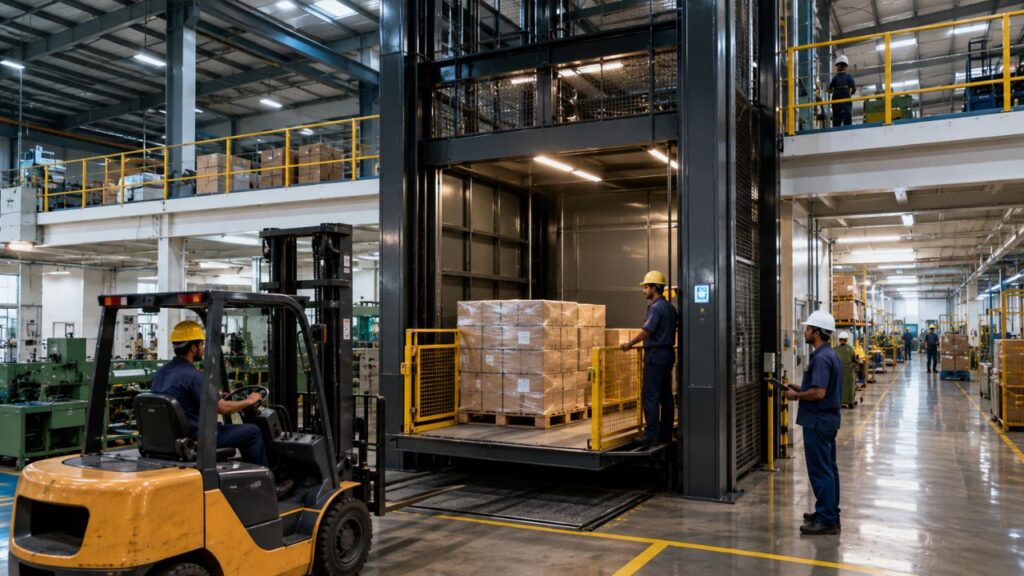
A Freight & Goods Lift is a heavy-duty vertical transportation system designed specifically to move materials, equipment, pallets, cartons, and industrial goods between different levels of a building. Unlike passenger elevators, these lifts are engineered to handle heavier loads and frequent industrial use while prioritizing durability and operational safety.
Freight lifts are commonly used in:
- Manufacturing plants
- Warehouses
- Logistics hubs
- Automobile industries
- Pharmaceutical factories
- Textile units
- Food processing plants
- Retail distribution centers
Why Your Factory Needs the Right Freight & Goods Lift
Choosing the correct lifting solution directly affects your daily operations.
A properly selected freight lift can help you:
- Reduce manual material handling
- Improve workplace safety
- Increase production efficiency
- Save loading and unloading time
- Minimize product damage
- Lower long-term operating costs
- Support future business expansion
An undersized or poorly planned lift may create bottlenecks and increase maintenance expenses over time.
Factors to Consider Before Choosing a Freight & Goods Lift
1. Determine Your Load Capacity
The first and most important factor is the maximum weight your lift needs to carry.
Before selecting a model, calculate:
- Average daily load
- Maximum load per trip
- Future production growth
- Type of material being transported
For example:
- Small manufacturing units may require 500–1000 kg.
- Medium factories often use 1000–3000 kg.
- Heavy industries may need lifts exceeding 5000 kg.
Selecting the correct capacity helps ensure safe and efficient operation without overloading the system.
2. Identify the Type of Goods Being Transported
Not all factories move the same materials.
Consider whether your lift will carry:
- Wooden pallets
- Heavy machinery
- Industrial equipment
- Metal components
- Finished products
- Raw materials
- Chemical containers
- Packaging materials
Large or irregularly shaped items may require a wider cabin or special loading arrangements.
3. Choose the Right Lift Technology
Different lifting systems are suitable for different industrial applications.
Hydraulic Freight Lift
Hydraulic lifts are widely used in low-rise industrial buildings because they provide excellent lifting power and smooth operation.
Suitable For
- Warehouses
- Manufacturing units
- Small factories
Traction Freight Lift
Traction systems use a motor, ropes or belts, and a counterweight to transport heavy loads efficiently. They are commonly preferred for taller industrial buildings with frequent usage.
Suitable For
- Multi-storey factories
- Industrial plants
- High-volume logistics facilities
The right choice depends on your building height, lifting frequency, and operational requirements.
Consider Your Factory Layout
Every factory has unique structural requirements.
Before installation, evaluate:
- Shaft dimensions
- Floor-to-floor height
- Loading area
- Entry and exit points
- Ceiling height
- Pit availability
- Space for maintenance access
A professional site survey helps ensure the lift integrates smoothly with your existing infrastructure while minimizing modifications.
Select the Correct Platform or Cabin Size
Capacity alone is not enough.
The platform should comfortably accommodate your largest load.
Think about:
- Pallet dimensions
- Forklift access
- Trolley movement
- Machine components
- Packaging size
A well-sized cabin allows operators to load and unload materials safely without damaging goods or equipment.
Evaluate Door Configuration
The loading process becomes much easier when the correct door arrangement is selected.
Common options include:
- Single-side opening
- Front and rear opening
- Front and side opening
- Three-side opening
Factories using forklifts often benefit from dual-entry configurations because they improve workflow and reduce handling time.
Safety Features Should Never Be Compromised
Industrial environments demand high safety standards.
A modern Freight & Goods Lift should include:
- Overload monitoring system
- Emergency stop button
- Door interlock mechanism
- Emergency lowering system
- Safety brakes
- Limit switches
- Anti-slip platform
- Emergency alarm
- Backup power options where applicable
Choosing a lift that complies with recognized Indian standards and applicable state lift regulations is essential for safe operation.
Consider Usage Frequency
Some factories operate only one shift, while others run around the clock.
Ask yourself:
- How many trips will the lift make each day?
- Will it operate continuously?
- Is it required during peak production hours?
High-duty operations require robust motors, stronger mechanical components, and durable control systems designed for intensive use.
Energy Efficiency Matters
Electricity costs are an important part of factory operations.
Modern freight lifts often include:
- Energy-efficient motors
- LED cabin lighting
- Standby power-saving mode
- Variable frequency drives (VFD)
These features help reduce power consumption without affecting performance.
Maintenance and After-Sales Support
Even the best freight lift requires regular servicing.
Before selecting a manufacturer, ask about:
- Preventive maintenance schedule
- Spare parts availability
- Emergency service response time
- AMC (Annual Maintenance Contract)
- Warranty coverage
- Local service engineers
Reliable after-sales support reduces downtime and keeps production running smoothly.
Compliance with Indian Standards
Industrial lifts should comply with relevant Indian regulations and building requirements.
When choosing a supplier, verify that the installation follows:
- Applicable Bureau of Indian Standards (BIS) requirements
- National Building Code (NBC) provisions
- State Lift Rules where applicable
Working with an experienced elevator company helps ensure compliance throughout installation and operation.
Common Mistakes to Avoid
Many businesses focus only on the purchase price.
Avoid these common mistakes:
- Choosing a lift with insufficient load capacity
- Ignoring future production growth
- Buying from an inexperienced supplier
- Overlooking maintenance costs
- Skipping site inspection
- Ignoring safety certifications
- Selecting the wrong cabin dimensions
- Not checking spare parts availability
A slightly higher initial investment in the right system often results in lower maintenance costs and better long-term performance.
Questions to Ask Before Buying
Before finalizing your Freight & Goods Lift, ask your supplier:
- What is the recommended load capacity?
- Which technology is best for my factory?
- What is the expected installation timeline?
- What safety systems are included?
- Is preventive maintenance available?
- How quickly can service engineers respond?
- Are spare parts readily available?
- What warranty is provided?
These questions help you compare suppliers and make a confident purchasing decision.
Frequently Asked Questions
A Freight & Goods Lift is an industrial elevator designed to transport heavy materials, equipment, pallets, and goods safely between different floors of a factory or warehouse.
Hydraulic lifts are commonly used for low-rise industrial buildings, while traction lifts are often preferred for taller factories with higher traffic and heavier daily usage.
Calculate the maximum weight moved in a single trip, include future growth, and consult your lift supplier for the appropriate capacity.
Yes. When installed correctly and maintained regularly, modern freight lifts include multiple safety systems and are designed to comply with applicable standards.
Regular preventive maintenance is recommended according to the manufacturer’s schedule and local regulatory requirements to ensure safe and reliable operation
Choosing the right Freight & Goods Lift is a strategic investment for any factory. The ideal solution should match your load requirements, building layout, production volume, and future expansion plans while meeting safety and regulatory requirements.
Instead of focusing only on the purchase price, evaluate the lift’s reliability, energy efficiency, maintenance support, and long-term operating costs. Partnering with an experienced elevator company ensures you receive a lifting solution that improves productivity, enhances workplace safety, and supports uninterrupted industrial operations for years to come.